Ruto secures Sh20.9 billion digital and connectivity deals in Brussels visit
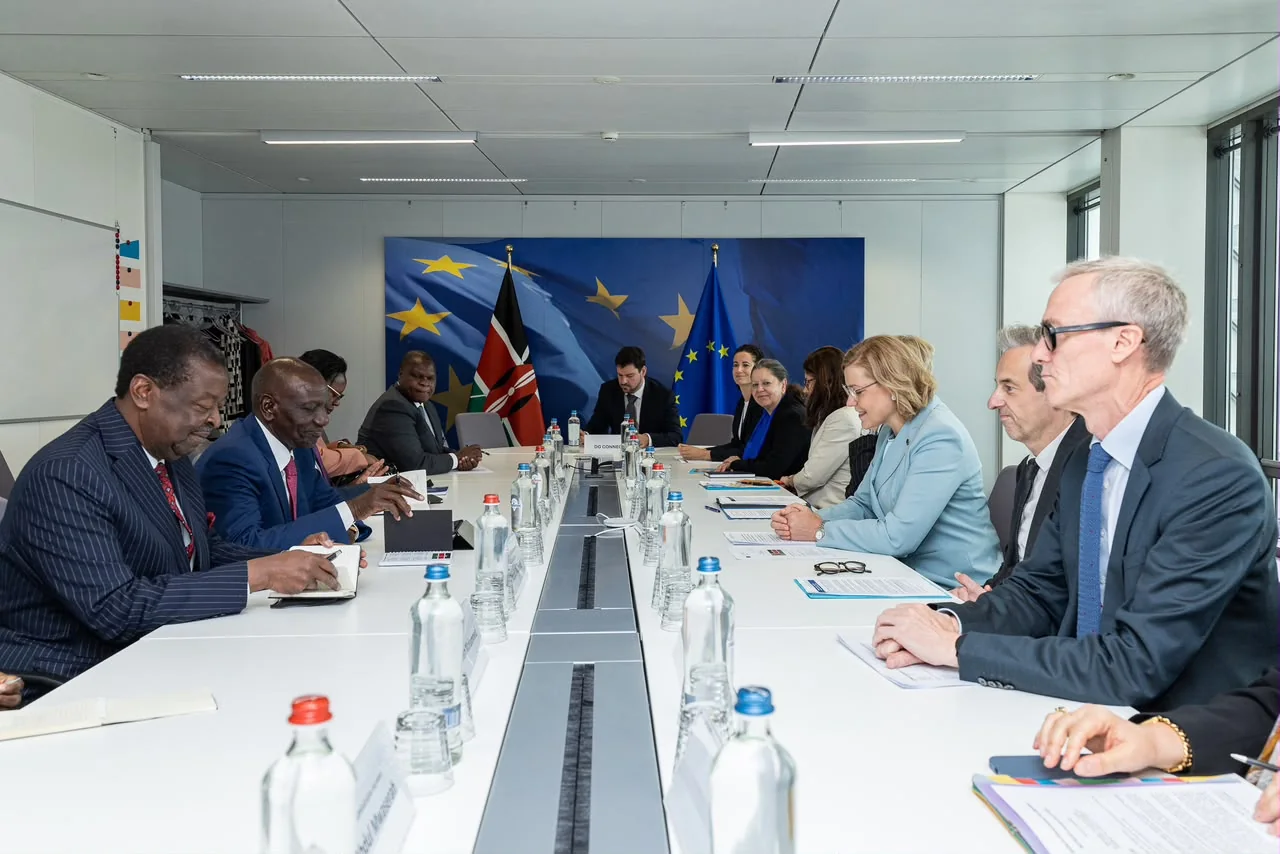
During the visit, President Ruto also launched the Kenya–Benelux Chamber of Commerce, aimed at expanding trade and investment between Kenya and the Benelux region, while also supporting export growth and job creation.
President William Ruto has concluded talks in Brussels, Belgium, where Kenya secured new financing and cooperation agreements aimed at boosting digital development, trade growth, and regional connectivity. The deals, reached during meetings with European partners, are expected to strengthen Kenya’s push to become a regional hub for technology and logistics while opening up fresh investment and job opportunities.
One of the main outcomes of the visit is €102 million, about Sh15.3 billion, under the EU–Kenya Digital Partnership. The funding will support digital transformation programmes, expand internet access, and create jobs in the technology sector.
In another agreement, €37 million, around Sh5.6 billion, has been committed to support the extension of the Blue Raman submarine cable into Africa. The project is expected to improve regional internet connectivity and lower the cost of bandwidth across participating countries.
Kenya also advanced discussions on the EU–Kenya Digital Dialogue and Data Adequacy process. If completed, Kenya could become the first country in Africa to receive a data adequacy decision from the EU. This is expected to make digital trade easier, attract investors, and expand opportunities in the tech industry.
During the visit, President Ruto also launched the Kenya–Benelux Chamber of Commerce, aimed at expanding trade and investment between Kenya and the Benelux region, while also supporting export growth and job creation. The platform is expected to strengthen business links between the two sides.
Discussions also covered wider cooperation between Kenya and Belgium, including efforts to strengthen trade and investment relations and support regional transport infrastructure connecting the Port of Mombasa to the Democratic Republic of Congo.
The talks followed a meeting between Ruto and King Philippe, where both sides focused on deepening economic ties and improving regional connectivity.
President William Ruto said Kenya is seeking a new kind of partnership that moves away from old economic patterns and focuses on shared benefit and investment.
Speaking at the Kenya-Belgium Business Roundtable in Brussels, he emphasised that future cooperation must be based on fairness and mutual growth.
"So let us be clear about the partnership we propose today," President Ruto stated.
"It is not built on dependency but on sovereign equality, not built on aid but on partnership that is mutually beneficial, and not built on extraction but on investment that generates value for all."
Ruto noted that Belgium was among the first European countries to recognise Kenya’s sovereignty in 1963, but said the relationship must now evolve to match current global realities.
He added that Africa should not be viewed only through its challenges, but also as a key driver in solving global problems such as food security, energy transition, and population growth.
"Africa is not part of the problem the world is trying to solve," Ruto declared. "On the defining challenges of our time - food, energy, climate, demography- Africa is in fact the larger part of the solution."
He highlighted Africa’s resources, including vast arable land, renewable energy potential, and a young population as major strengths that can support global growth.
Ruto also said Africa continues to face barriers linked to outdated global financial systems, which need reform to reflect current economic realities.
In separate engagements, Ruto also held discussions with King Philippe focusing on expanding Kenya–Belgium cooperation in trade, investment, and infrastructure development.
The launch of the Kenya–Benelux Chamber of Commerce, along with the digital and connectivity agreements, signals a deeper phase of economic cooperation between Kenya and European partners, with a strong focus on digital growth and regional integration.




Comments
Sign in with Google to comment, reply, and like comments.
Continue with Google