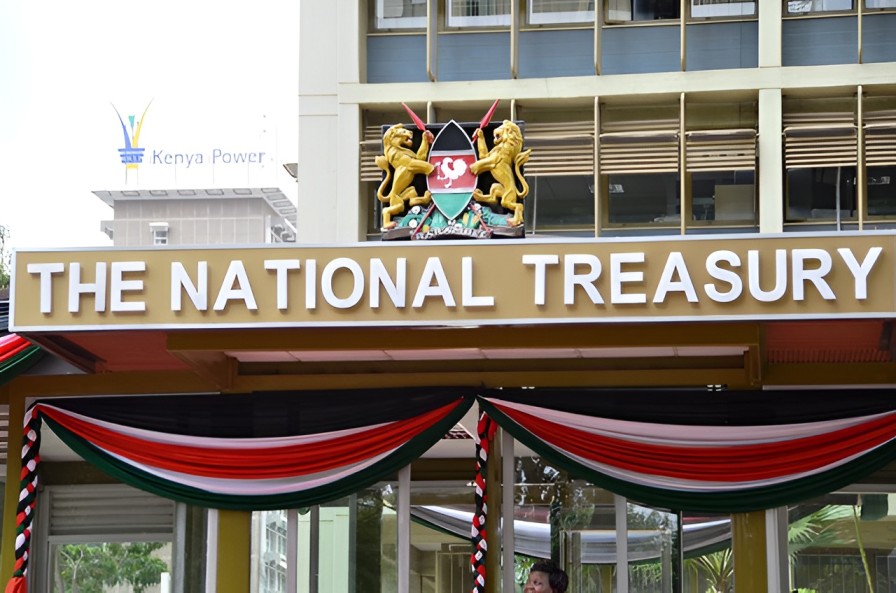
The government borrowed a total of Sh437.8 billion in the first quarter of the 2025/26 fiscal year, ramping up debt to manage revenue shortfalls and cover rising expenditures. The early borrowing provides the Treasury with a cushion to meet upcoming obligations, including payments on large domestic infrastructure projects and external loans.
According to the latest data from the National Treasury, net borrowing from domestic sources reached Sh339.7 billion, while external lenders contributed Sh98.1 billion. This represents nearly half (48.6%) of the annual borrowing target of Sh901 billion, which is set at Sh613.5 billion for local markets and Sh287.4 billion from external sources.
Revenue collection for the quarter fell short of expectations by Sh83.6 billion, while spending exceeded targets by Sh5.9 billion. This pushed the budget deficit to Sh280.4 billion, or 1.5 per cent of GDP, compared with the projected Sh189.5 billion (1.1 per cent of GDP).
“Budget execution in the 2025/26 fiscal year has progressed well but constrained by slow adoption of e-procurement, revenue shortfalls against targets as well as expenditures pressures,” Treasury PS Chris Kiptoo said during budget hearings on Wednesday.
He added that total revenues grew by 1.7 per cent by end of September 2025, a sharp slowdown from the 10.8 per cent growth recorded in the same period last year. Ordinary revenues, meanwhile, fell by 2.9 per cent compared with a 10.1 per cent growth in 2024.
The frontloading of borrowing allows the government to build liquidity ahead of major debt obligations in January and February, which include payments on Eurobonds, loans related to the standard gauge railway, and large infrastructure bonds.
Domestic borrowing included Sh310.6 billion from Treasury bond sales and an additional Sh45 billion from Treasury bills.
The Treasury reissued two infrastructure bonds of 15 and 19 years in August, raising a total of Sh180.14 billion through primary and tap sales. In July, reopened 20 and 25-year bonds brought in Sh66.7 billion, while September sales of three reopened bonds added Sh63.8 billion.
The timing of these borrowings coincided with a period of falling interest rates, helping the government reduce the cost of debt, which forms the largest part of recurrent expenditure. The bonds issued during the quarter carried coupon rates between 12 and 14 per cent, lower than the 18.5 per cent paid on infrastructure bonds in 2023 and 2024.
By securing larger sums early in the fiscal year, the Treasury is strategically managing debt costs while ensuring funds are available for both operational and developmental obligations.































Comments
Sign in with Google to comment, reply, and like comments.
Continue with Google