Mounting financial pressures, unpaid pensions, and disputed government land have put Bomas of Kenya, the Tea Board of Kenya (TBK), and the Kenya Plant Health Inspectorate Service (KEPHIS) under the spotlight, with MPs demanding urgent interventions.
Lawmakers say the agencies’ mismanagement threatens public resources and institutional credibility, calling for immediate corrective action.
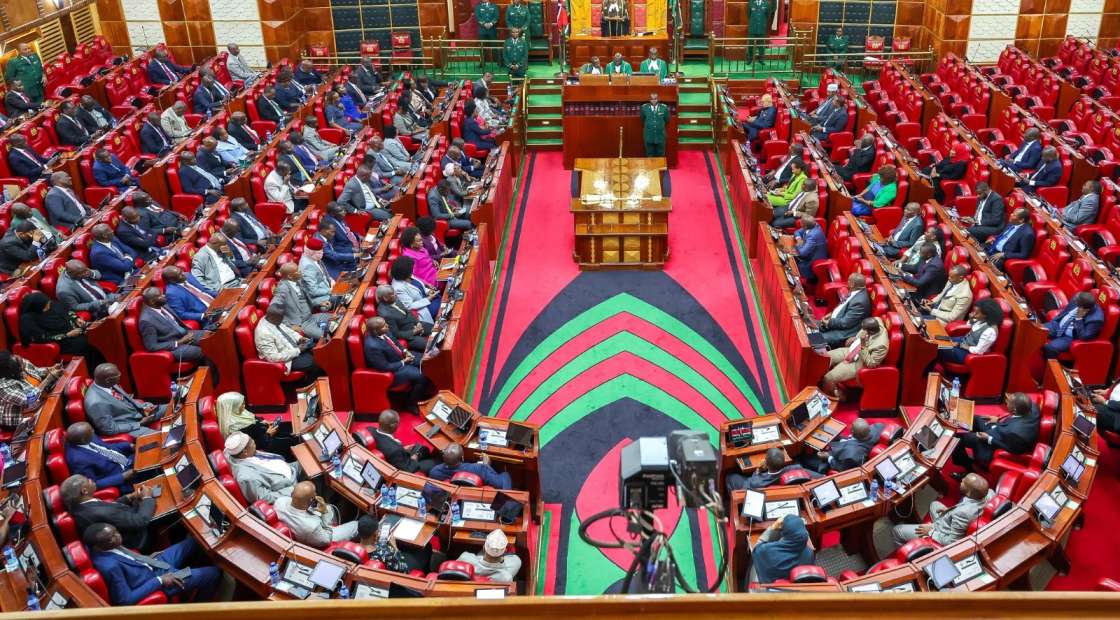
During Wednesday’s session, the Public Investments Committee on Social Services, Administration and Agriculture (PIC-SSAA), led by Navakholo MP Emmanuel Wangwe, identified deep-rooted weaknesses across the three agencies.
Overspending, breaches of financial rules, and improper land allocations were highlighted as major governance failures requiring swift remedy.
Bomas of Kenya was reported to be facing insolvency, with a negative working capital of Sh50.1 million as of June 2024, leaving it unable to meet its obligations on time.
The financial strain is linked to a long-running dispute with Standard Investment Bank over a 2015 feasibility study for a planned convention centre.
A November 2022 court ruling confirmed an arbitrator’s award of Sh81.3 million against Bomas, but interest, costs, and computation errors have raised the total liability to over Sh108 million. Management cautioned the Committee that this ruling has created “material uncertainty” regarding its financial position.
“Partial payments have reduced the debt from Sh148 million to Sh62 million, yet strict government funding rules restrict access to funds for salaries and capital projects,” the agency said. MPs noted that revenue had grown by 11 per cent during the 2022 General Election, partly due to hosting the IEBC national tallying centre, but expenditure jumped by 20 per cent without approvals from the board or National Treasury.
The Committee also questioned the composition of Bomas board committees, noting some had five members, exceeding the regulatory limit of one-third of the full board. Management explained that only three members had voting powers while the rest acted as advisers.
At TBK, legislators challenged the agency’s failure to remit Sh28.5 million in employee pension contributions, in breach of the Employment Act. Officials attributed the lapse to transitional issues following TBK’s shift from the Agriculture and Food Authority, and delays involving the National Treasury and the Retirement Benefits Authority.
MPs also raised concerns over Sh150 million kept in a fixed deposit at a commercial bank, contrary to the Public Finance Management Act which mandates investment of surplus funds in Central Bank Treasury bills. TBK CEO Willy Mutai withdrew previous claims that a waiver had been granted.
Lawmakers further noted slow implementation of the Tea Act, 2020, especially in licensing manufacturers and registering brokers. Although industry-led court injunctions were resolved out of court in April 2024, public participation has stalled due to funding shortages.
At KEPHIS, MPs highlighted the loss of valuable public land, including a 400-acre site in Kitale worth Sh1.24 billion, with only 100 acres still under agency control.
Seventy acres were reportedly reassigned, while the remaining land is occupied by squatters and private parties amid historical land conflicts. A separate five-acre plot in Kabete remains contested with the Directorate of Veterinary Services since 2007, with recovery attempts reportedly met with hostility and gunfire.
KEPHIS has also exceeded the government’s 35 per cent wage ceiling, spending 40 per cent of revenue on staff due to extensive field inspections and lab work, while development projects absorbed just 4 per cent of funds, far below the 30 per cent target. A revised fee structure has improved finances, turning a Sh61.7 million deficit into a Sh164.7 million surplus.
The PIC-SSAA report calls for stronger oversight, tighter financial controls, and transparent land management to restore accountability, prevent misuse of public resources, and ensure that state agencies operate efficiently.