Kenya must tackle shrinking fiscal space and tax gaps, Atandi warns
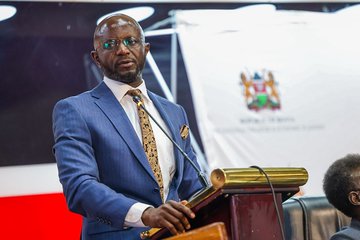
Atandi said Parliament is increasingly concerned about the widening revenue gaps, which continue to constrain government spending and increase reliance on borrowing.
National Assembly Budget and Appropriations Committee Chairperson Samuel Atandi has warned that Kenya must urgently confront shrinking fiscal space and persistent revenue gaps, calling on the Treasury to reform tax administration and scrap tax waivers that cost the country an estimated Sh600 billion annually.
Speaking during a public budget hearing for the 2026/27 financial year on Wednesday, Atandi said Parliament is increasingly concerned about the widening revenue gaps, which continue to constrain government spending and increase reliance on borrowing.
“Our economy is facing fundamental challenges, and one of them is consistent revenue shortfalls,” he said. “We believe our peers, such as South Africa, Egypt, and Nigeria, are raising more revenue relative to their GDP. South Africa is doing over 15 per cent; we are at about 14 per cent. We should be able to raise more.”
Atandi criticised the Kenya Revenue Authority (KRA) for aggressively pursuing small traders while allowing larger, well-connected taxpayers to evade their obligations.
“We have seen KRA going after small people. Some have even committed suicide in the process of being pursued for taxes,” he said. “There are many rich people who are supposed to pay tax but are not, because they are being given so many waivers.”
He noted that Parliament’s Budget Office estimates the government loses about Sh600 billion every year in tax expenditures.
“If this is corrected, then we should be able to raise more revenue,” he said, adding that the country could potentially collect Sh3.8 trillion, up from the projected Sh3.3 trillion, if tax leakages were addressed.
Atandi also highlighted growing pressure from Kenyans regarding teacher employment and urged the Treasury to allocate funds for confirming Junior Secondary School (JSS) teachers on permanent and pensionable terms.
“As we speak, I am receiving pressure from citizens who want JSS teachers confirmed. Please ensure resources are allocated,” he said.
Despite education receiving the largest share of the national budget about 27 per cent, Atandi noted persistent challenges, including funding gaps at universities and delays in implementing collective bargaining agreements.
“We know the value of education for our children and for the future of the economy. We have no option but to address these challenges,” he said.
Atandi also stressed the importance of adequately funding election preparations, warning that underfunding could jeopardise the 2027 polls. “Having a crisis after an election is more expensive for the economy than anything else,” he said.
He further called for investment in continuous police training, citing officers’ struggles to manage crowds professionally.
“The IG told me police officers in Kenya are never trained after leaving college. We need to invest resources in continuous training so they operate within constitutional limits,” he said.
Atandi urged the Treasury to prioritise completion of stalled infrastructure projects before initiating new ones, particularly as the country approaches the next election cycle.


Comments
Sign in with Google to comment, reply, and like comments.
Continue with Google