Saudi Arabia opens stock market to all foreign investors in 2026
Saudi Arabia has been pursuing broader economic reforms aimed at attracting foreign capital and reducing reliance on oil revenues, with capital market liberalisation seen as a key pillar of that strategy.
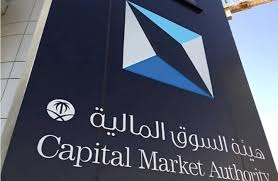
Saudi Arabia’s Capital Market Authority will open its capital market to all foreign investors from February 1, 2026, abolishing the Qualified Foreign Investor framework and scrapping entry thresholds such as the Sh64.5 billion minimum assets rule, to widen the investor base, attract inflows and deepen liquidity, while the 49 percent foreign ownership cap on listed firms remains in place.
In a formal announcement on Wednesday, the Capital Market Authority (CMA) said it was “opening of the capital market to all categories of foreign investors and enabling them to invest directly therein as of February 1, 2026” following approval by its board of a new regulatory framework.
The decision allows non-resident foreign investors to invest directly in the Main Market for the first time without meeting previous qualification requirements.
The CMA said that, as a result of the decision, “the capital market, across all its segments, will be accessible to various categories of investors from around the world for direct participation.”
The move removes the requirement that foreign investors manage a minimum of Sh64.5 billion in assets, a key condition under the earlier Qualified Foreign Investor system.
The authority said the objective of the approved amendments was to expand and diversify the base of investors permitted to invest in the Main Market, thereby supporting investment inflows and enhancing market liquidity.
Saudi Arabia has been pursuing broader economic reforms aimed at attracting foreign capital and reducing reliance on oil revenues, with capital market liberalisation seen as a key pillar of that strategy.
Among the approved changes, the CMA confirmed the elimination of the concept of a Qualified Foreign Investor in the Main Market, thereby allowing all categories of foreign investors to enter the market without the need to meet qualification requirements.
It also announced the removal of the regulatory framework governing swap agreements, which had previously been used to give non-resident investors only economic exposure to listed securities rather than direct ownership.
Under the new rules, foreign investors will be allowed direct investment in shares listed on the Main Market, a step that is expected to simplify market access and reduce administrative barriers.
However, some limits remain in place. Foreign ownership caps of 49 percent on listed companies will continue to apply for now, maintaining restrictions on control even as access widens.
The announcement comes against a backdrop of mixed market performance. The Tadawul All Share Index fell 12.8 percent in 2025 and is down a further 1.9 percent so far in 2026, highlighting the challenges facing the Kingdom’s equity market despite earlier reforms.
Analysts have pointed to global market volatility, oil price fluctuations and cautious investor sentiment as factors weighing on performance.
Despite recent declines, foreign participation in Saudi Arabia’s capital market has grown steadily in recent years.
According to CMA figures, international investors’ ownership stood at more than 590 billion by the end of the third quarter of 2025, reaffirming the scale of overseas interest even under tighter access rules.
By opening the market to all foreign investors, regulators appear to be betting that broader participation will help deepen liquidity, stabilise trading and improve price discovery.
The CMA has framed the changes as part of a longer-term effort to modernise the market’s regulatory environment and align it more closely with international standards.
The removal of swap agreements is also significant, as those instruments had been widely used by foreign investors to gain exposure without direct ownership.
By allowing direct investment instead, the CMA is signalling a shift toward greater transparency and simplicity in market participation.
While the reforms are likely to be welcomed by global investors seeking easier access to one of the Middle East’s largest stock markets, the continued ownership cap suggests a cautious approach.
Saudi authorities appear intent on balancing openness with control as they navigate the next phase of market liberalisation.
With the new framework set to take effect on February 1, 2026, attention will now turn to how quickly foreign investors respond and whether increased participation translates into sustained improvements in market performance and liquidity.



Comments
Sign in with Google to comment, reply, and like comments.
Continue with Google