DCI on Tuesday arrested two suspected traffickers in Mombasa following an intelligence-led raid that recovered 250 grammes of heroin and uncovered alleged links to child trafficking networks operating across the coast and Nairobi. The suspects remain in custody as investigations continue ahead of their arraignment.
According to the Directorate of Criminal Investigations, the arrests were made during a coordinated operation led by DCI Anti-Narcotics Unit (ANU) Mombasa, which culminated in the recovery of “250 grammes of heroin.”
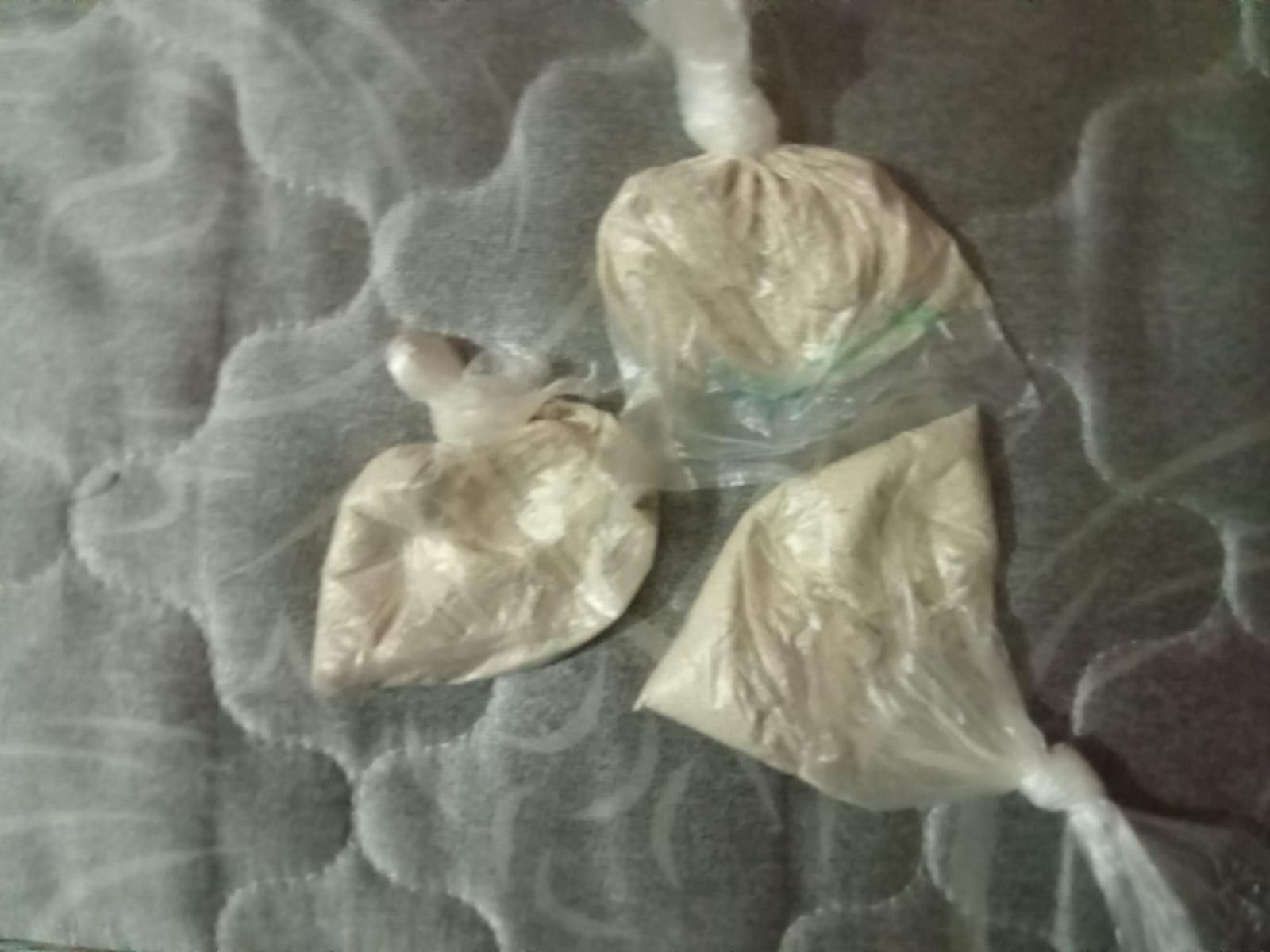 Three satchets of heroin recovered by the DCI in Nyali, Mombasa County on Tuesday, February 3, 2026.PHOTO/DCI
The agency said the operation was launched after receiving credible intelligence regarding individuals implicated in both drug and child trafficking.
The targeted raid took place at Maweni Estate in Nyali, a residential area of Mombasa, where detectives searched a house believed to be used to facilitate the illicit activity.
During the search, officers discovered “three sachets of heroin,” a find that led to the immediate arrest of the suspects.
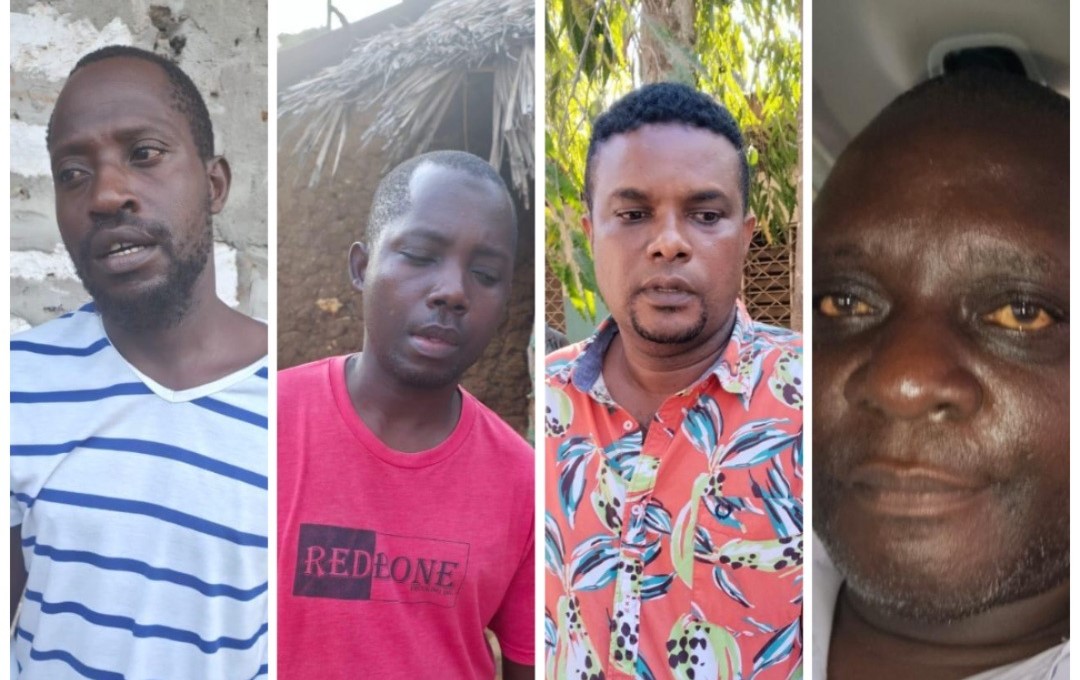
The DCI identified the two suspects as Amir Latf and Ruhman Abubakar, saying the discovery of the narcotics prompted their swift arrest.
Investigators believe the Nyali residence played a role in facilitating illegal activities linked to narcotics distribution.
Beyond the drugs recovered at the scene, the DCI said early findings suggest a broader criminal enterprise.
“Preliminary investigations reveal that these individuals are not only traffickers of narcotics but are also entangled in child trafficking activities across Mombasa, Malindi and Nairobi,” the agency stated.
The inclusion of child trafficking allegations has placed the case among the most serious categories of organised crime under investigation by Kenyan authorities.
Mombasa County and its surrounding areas, and parts of Nairobi and Malindi have long been identified as key nodes in both narcotics trafficking and child exploitation, according to recent data and security reports from the National Police Service.
Law enforcement agencies and organised crime indices confirm that Mombasa remains a primary entry point for hard drugs such as heroin, which is shipped mainly by sea from South–West Asia through maritime routes into the Indian Ocean before moving inland and overseas for distribution.
Reports show that multiple seizures of hundreds of kilograms of heroin near Mombasa highlight the city’s strategic role in the illicit trade, with detectives arresting suspects with over 1.3 kg of heroin valued at millions of shillings in early 2026.
Nationally, data released by the Office of the Director of Public Prosecutions indicate that more than 3.2 tonnes of narcotics were seized across Kenya between 2024 and 2025, with heroin seizures at airports rising by 27 percent during the same period, reaffirming the scale of the trafficking challenge.
Mombasa and its suburbs, including Nyali, have also seen localised trafficking and distribution networks.
Past police operations uncovered suspects using schoolgirls to peddle heroin and other drugs, illustrating how organised criminals may exploit vulnerable children in conjunction with their narcotics operations.
Beyond narcotics, Kenya continues to face a significant child trafficking crisis. According to international human trafficking assessments, the country serves as both a source and destination for trafficked persons.
Estimates suggest there are between 35,000 and 40,000 victims of sex trafficking in Kenya, including approximately 19,000 children, many of whom are exploited in sex trafficking, labour, and forced criminal activities.
Coastal counties such are frequently cited as hotspots for the trafficking and exploitation of minors, with NGOs reporting that traffickers use informal and private venues to avoid detection.
Data from child protection networks in Mombasa also point to rising child exploitation cases.
One county official reported that Mombasa alone recorded around 5,000 child exploitation-related cases in one year, driven in part by street homelessness, poverty, and organized rings seeking to profit from vulnerable youth.
The dual pressures of narcotics and child trafficking have compounded social harms, particularly among the youth in coastal and urban centres.
The DCI said the suspected activities span multiple locations, indicating it as an interconnected network rather than isolated incidents.
Following their arrest, the suspects were taken into custody, where they are undergoing processing pending arraignment.
The DCI did not give a timeline for when the suspects would be presented in court but confirmed that investigations are continuing.
In announcing the arrests, the DCI said the operation demonstrated its continued reliance on intelligence-led policing.
“This arrest and recovery reaffirm the DCI’s commitment to combating drug and child trafficking through intelligence-led operations,” the statement said.
The agency added that such efforts are aimed at ensuring the protection of vulnerable children and the dismantling of criminal networks involved in such serious crimes.
Authorities have in recent years increased operations targeting narcotics trafficking, particularly in coastal regions that have long been identified as transit points for drugs.
Child trafficking has also emerged as a growing concern, with law enforcement agencies linking it to organised criminal groups that exploit mobility between urban centres and tourist hubs.
The DCI has repeatedly said intelligence gathering and inter-agency cooperation are central to disrupting such networks.
As part of its announcement, the DCI renewed its appeal for public cooperation, urging citizens to report suspected criminal activity anonymously.
Under the campaign banner “#FichuaKwaDCI,” the agency provided a toll-free number and a WhatsApp contact, encouraging the public to come forward. “Usiogope!” the statement said.
The DCI said investigations are ongoing and that further action may follow as officers seek to establish the full extent of the suspected networks.
For now, the agency maintains that the arrests mark another step in its broader campaign against narcotics and child trafficking, crimes it says pose a serious threat to public safety and the welfare of vulnerable communities.