Kenya has moved swiftly to settle its debt to the United States, with repayments surging to Sh18.4 billion in the year ending June 2025 from just Sh357 million the previous year, following a change in Washington’s policy on direct lending to foreign governments.
The sharp 51.6-fold increase marks the highest repayment level to the US, underscoring Kenya’s effort to clear outstanding loans as Washington transitions from government-to-government lending to funding through its development agencies.
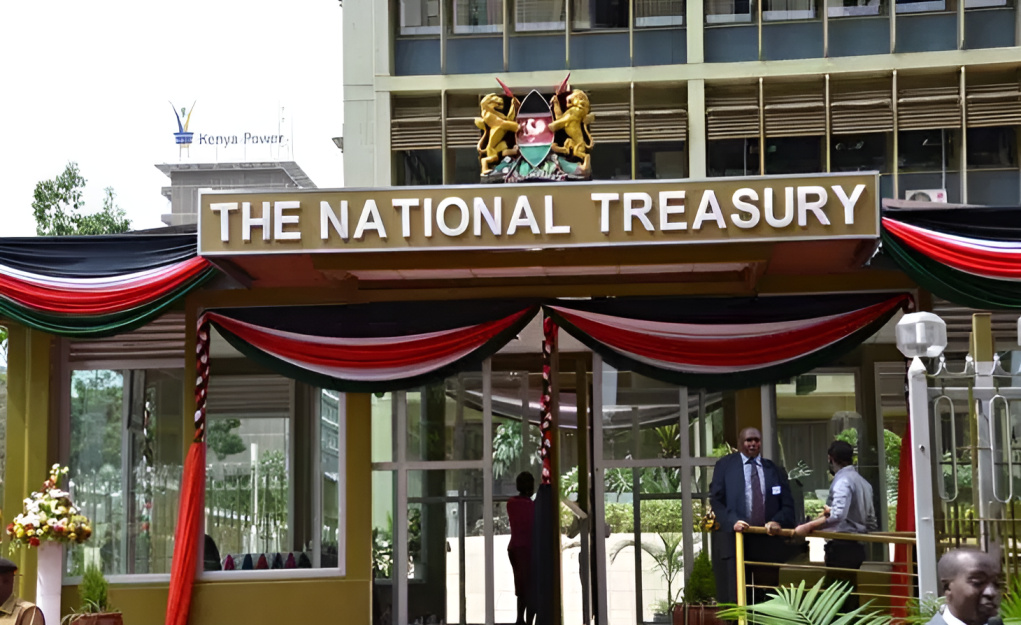
Treasury Cabinet Secretary John Mbadi said the move aims to conclude old loan repayments within a short period.
“We are clearing the loans to the US government in about two or three years,” said Mbadi during a press briefing on Tuesday, November 4, 2025. “These are loans that were taken previously that are now retiring. Some of them are from many years ago, and we are now completing their repayment. That is why there is that elevation in debt repayment.”
Treasury data shows that Kenya’s debt to the US dropped sharply to $185.47 million (Sh23.9 billion) by June, from $310.13 million (Sh40 billion) a year earlier.
This reduction now places the US behind Belgium and Italy among Kenya’s bilateral lenders, marking a significant shift in debt structure.
Under the new US policy, project financing will now be handled by institutions such as the US International Development Finance Corporation (DFC) and Prosper Africa, ending the traditional model of direct government loans.
The DFC, which was expanded under former President Donald Trump’s administration, saw its funding capacity increase from $60 billion (Sh7.8 trillion) to $250 billion (Sh32.3 trillion), and its mandate broadened to include lending and investment even in developed economies.
This model resembles that of the United Kingdom, which now finances projects abroad through the British International Investment (BII) and the UK Export Finance (UKEF) rather than issuing direct loans to foreign governments.
Such approaches allow developed nations to limit their exposure to the financial and political risks linked to debt distress in developing countries.
Over the past year, Kenya has also settled its obligations to Finland and significantly reduced its debts to Denmark, Austria, and China.
But as it cuts down on loans from the US and China, the country has increased borrowing from European partners such as Belgium, France, Germany, Italy, and Japan, which remain among its leading bilateral creditors.
Despite the changes, Kenya’s total bilateral debt declined by $377.16 million (Sh48.7 billion) to $8.6 billion (Sh1.1 trillion), even as external borrowing from multilateral and commercial lenders continued to grow.
Overall, the country’s external debt rose by $2.5 billion (Sh323 billion) to $42.4 billion (Sh5.5 trillion), mainly driven by new loans from the International Monetary Fund (IMF) and the African Development Bank (AfDB).































Comments
Sign in with Google to comment, reply, and like comments.
Continue with Google