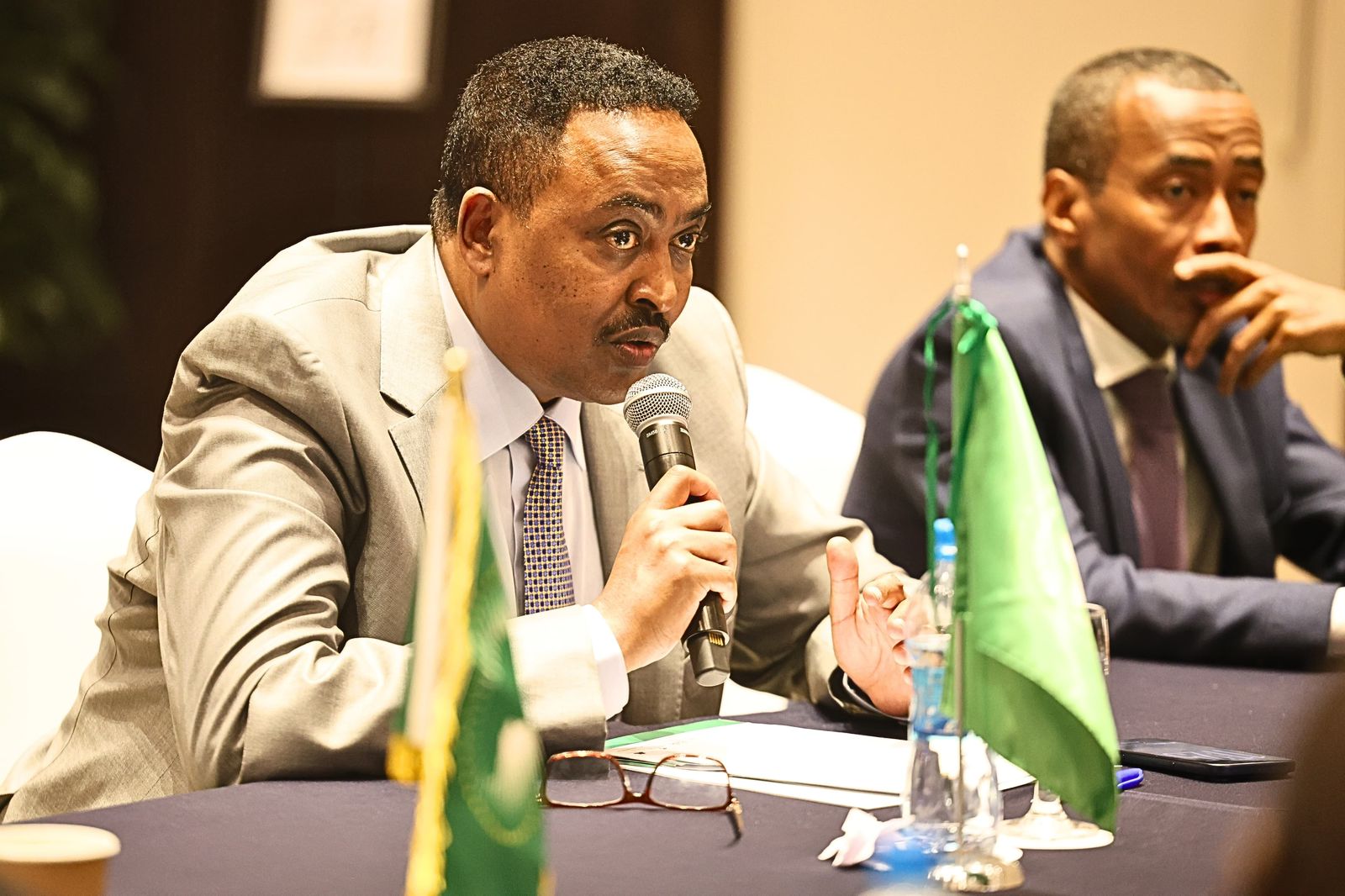
The Intergovernmental Authority on Development (IGAD) has renewed calls for urgent, unified international action to halt Sudan’s accelerating collapse, warning that the country is edging toward “de facto disintegration” without a coordinated peace effort.
The alarm was sounded during the 2nd Forum of Special Envoys and Representatives on the Sudan Peace Process, held on November 18, 2025 in Djibouti, followed by a Partners Meeting on Sudan later the same day.
IGAD Executive Secretary Workneh Gebeyehu delivered a sobering assessment of the crisis, saying the fall of al-Fasher in Darfur had “brutally reminded” the world of the scale of Sudan’s humanitarian and political catastrophe.
He said the violence that engulfed the city was neither unexpected nor inevitable, noting that regional bodies had repeatedly warned of the risks.
“We raised the alarm,” he said. “And yet, despite that knowledge, we were unable to prevent it.”
Workneh said Sudan’s three-year conflict is devastating communities, destroying public institutions and deepening civilian suffering.
He stressed that external actors continue to shape the direction of the war, often in ways that exacerbate the crisis.
Sudanese civilians, he said, are forced to pay with their lives as foreign interests fuel the fighting.
Despite the gravity of the conflict, he warned, “There is still no credible peace effort underway… not one commensurate with the scale of the crisis.”
The Executive Secretary criticised the fragmented approach taken by regional and global organisations, acknowledging that efforts by multilaterals, partners and IGAD itself have not matched the enormity of the conflict.
Without decisive action, he said, “Sudan is on a trajectory toward de facto disintegration.”
Despite his stark warning, Workneh pointed to a growing consensus among Sudanese political and civic formations, as well as among regional and international partners.
The shared understanding is anchored in several principles: that the war has no military solution, that Sudan’s unity is non-negotiable, and that an inclusive political process remains indispensable.
He also emphasised the urgent need for humanitarian access and the protection of civilians.
Workneh welcomed the direction provided by the Quad Statement issued in September, saying it offers a clear path toward a humanitarian truce.
He announced that IGAD and the African Union are preparing a consultation in Luanda aimed at aligning regional and international positions and kick-starting a Sudanese-owned political process.
Closing the day’s meetings, Workneh praised participants for their “seriousness, empathy, and clarity,” noting a renewed commitment to collaboration.
He said consensus had emerged around three priorities: humanitarian access, a credible cessation of hostilities and an inclusive political process.
IGAD, he affirmed, will work politically, diplomatically, operationally and morally with the AU, UN, EU, League of Arab States, the Quad and others.
“The magnitude of the Sudanese crisis demands that we remain fully seized, fully committed, and fully coordinated,” he said, urging partners to turn collective resolve into concrete action “without delay.”































Comments
Sign in with Google to comment, reply, and like comments.
Continue with Google