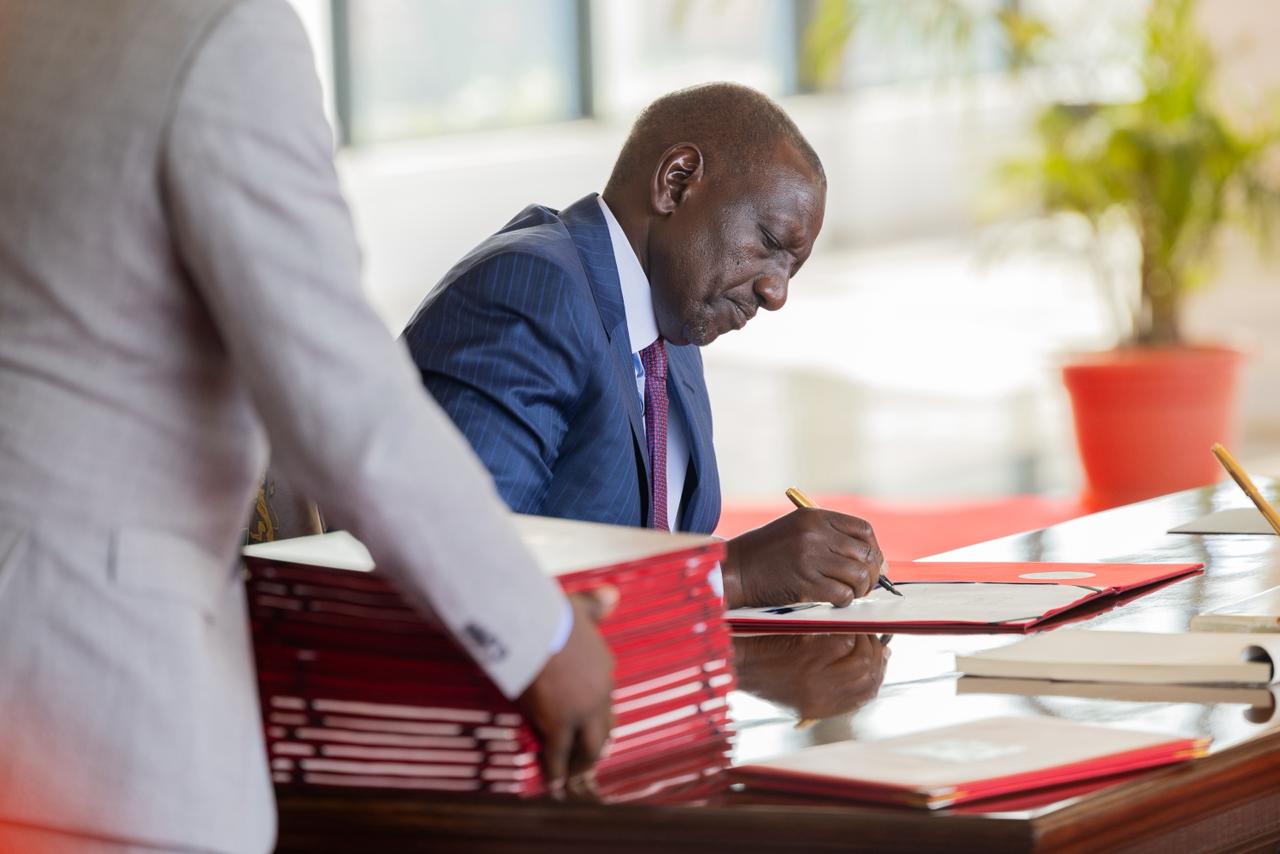
The High Court has stopped President William Ruto’s plan to use a special advisory team on victims’ compensation, ruling that the Constitution already gives this responsibility to the Kenya National Commission on Human Rights.
In its judgment, the court said the President had no power to create a separate body to manage or guide compensation for victims of past injustices because the law clearly outlines how the process should be handled.
The bench noted that the role of identifying victims, reviewing harm suffered, and proposing compensation is anchored in law and cannot be shifted to another body through a presidential action.
Petitioners had challenged the team, arguing that it lacked any legal foundation and risked clashing with work already being undertaken by recognised institutions.
The State defended the move as an administrative effort meant to quicken the process and offer needed expertise, but the judges dismissed that argument, saying good intentions cannot replace what the Constitution demands.
In its findings, the court stated that "KNCHR is the only body empowered to initiate, coordinate and oversee measures relating to the identification of victims, assessment of harm, and recommendation of appropriate compensation."
The judges added that having a second structure running alongside KNCHR would create confusion, interfere with independence, and expose a sensitive process to possible Executive pressure.
The court also ordered that the report produced by the presidential advisory team be handed over to KNCHR for review.
It further directed that "The commission has been instructed to review the document, evaluate its compliance with constitutional requirements, and make any changes necessary to align the process with its statutory mandate."
KNCHR now has 30 days to complete the task, failing which the challenged proclamations will automatically lapse, effectively bringing the advisory team to an end.
The ruling is set to influence how the State shapes future compensation programmes and approaches ongoing transitional justice efforts.































Comments
Sign in with Google to comment, reply, and like comments.
Continue with Google