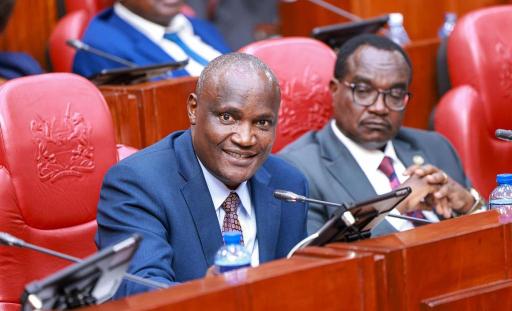
Treasury has unveiled plans to introduce a digital monitoring system to tighten control over billions of shillings loaned to state corporations that have failed to meet repayment obligations, with the water sector emerging as one of the biggest defaulters.
Treasury Cabinet Secretary John Mbadi told Parliament that the new Government Investment Management System (GIMS) will enable the government to monitor in real time how loans issued to parastatals are being used, including project progress, disbursement schedules, and repayment status.
“The system will enhance accessibility to real-time information on loan disbursements and repayments, ensuring transparency and accountability in the management of public funds,” Mbadi said when he appeared before the Committee on Public Debt and Privatisation.
The Treasury’s latest annual monetary report shows that the value of on-lent loans now stands at more than Sh1 trillion, made up of Sh874.91 billion in donor-funded financing and Sh322 billion from the national government.
Many of these loans, the report notes, have been poorly utilised, with some projects stalling or failing to start.
The problem is most pronounced in the water, transport, and energy sectors, where some state corporations are unable to service their debts due to financial strain or poor project implementation.
Several water agencies, including the National Water Harvesting and Storage Authority (NWHSA) and regional Water Works Development Agencies, have been hit hard, especially after devolution limited their ability to collect revenue directly from consumers.
Mbadi said the new digital monitoring platform is part of a broader plan to strengthen fiscal discipline within government entities and will work alongside the Fiscal Risk Committee, which will review future loan requests and only approve those deemed financially sustainable.
At the same time, the Treasury has submitted a Cabinet memorandum seeking approval to write off billions owed by water sector corporations that have no independent revenue sources.
“To resolve the issue, the outstanding loans are being considered for write-off through a Cabinet Memorandum that has been submitted to Cabinet for approval. Lack of last-mile connectivity under the Victoria South Water Works Development Agency,” he told lawmakers.
The Auditor-General has previously flagged several parastatal projects that have stalled or ended up in court, including the Mandera Water Supply Project and the Changamwe Seawater Project, both tied to external loans.
“A contractual dispute has stalled the Changamwe seawater project. After delays, the agency moved to terminate the contract, but a court order and ongoing arbitration have frozen progress, locking the site and funds until a resolution is reached,” said Mbadi.
Parliamentarians also demanded clear regulations on how the Treasury extends loans to parastatals. Lamu West MP Stanley Muthama raised concern over the Kenya Electricity Transmission Company (Ketraco), which he said is struggling with penalties of up to Sh180 billion after failing to meet repayment timelines.
The Treasury’s actions signal renewed efforts to restore financial discipline and ensure greater accountability in state borrowing, as Kenya continues to face rising debt pressures and scrutiny over management of public funds.




























Comments
Sign in with Google to comment, reply, and like comments.
Continue with Google