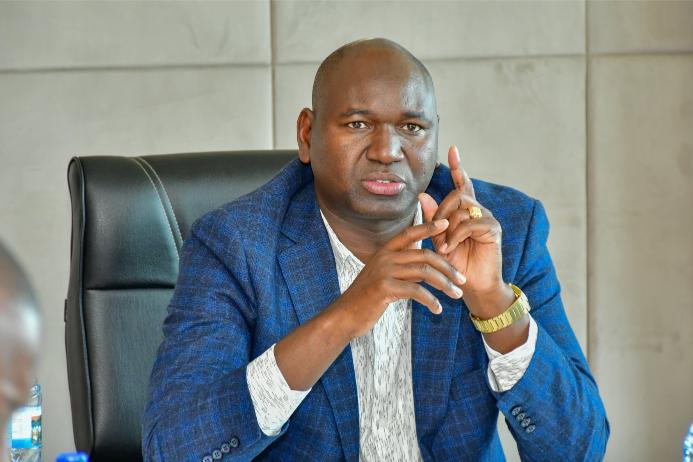
Swahilipot Hub Foundation Founder and Chief Mentor, Mahmood Noor, has called for the development of sustainable and inclusive youth empowerment models that address the real challenges facing unemployed youth in Kenya.
Speaking on Monday during an interview on Radio Generation, Noor said many young people who attend training sessions or mentorship programs often struggle with basic needs such as food and transport, which in turn affects their participation and consistency.
“You find that this person is actually quite broke. Chances are they haven’t had a meal or two in the last couple of days, and even that bus fare to come to where the training or meeting is happening is a challenge,” Noor explained.
He said that while youth empowerment foundations often focus on skills and mentorship, there is a deeper economic reality that cannot be ignored.
Noor recounted personal experiences of being unable to attend opportunities due to lack of fare or food, highlighting the need for understanding and empathy in program planning.
“I’m not excusing the foundation, but sometimes there’s a reason why they might ask for financial assistance. I’ve been there myself, told to meet some people who could help me, but I was broke and wondering how to get there,” he said.
To bridge this gap, Noor said Swahili Pot Hub Foundation has created Youth Hub Networks, an initiative aimed at taking services closer to communities.
“We are trying to take these services as close to the youth as possible, so that they don’t have to travel all the way to town. You just walk like 50 or 100 meters to reach the hub,” he said, adding that facilitators are also encouraged to be flexible in accommodating young people’s circumstances, such as those working as boda boda operators.
Noor, however, raised concerns over the sustainability of mentorship programs, especially after grant funding ends.
He emphasized the need to inspire mentors who are genuinely passionate about youth development rather than driven by financial gain.
“This program should proceed even after grants end. We want to inspire mentors in the grassroots who love the community. I give them between 15,000 and 25,000 shillings, not much, but it makes their work easier,” he said.
Noor further stressed the importance of balancing financial support with ethical considerations to avoid coercion, drawing parallels with biomedical research practices that also involve economically disadvantaged participants.
“There’s always a debate on at what point money becomes compensatory for time and when it turns into coercion. Given the poverty levels, even 100 shillings can mean a meal for a day, yet such incentives must be handled sensitively,” Noor stated.
He also highlighted the transformative role of peer mentorship, noting that young people respond best to those they can relate to.
“The power of example among peers is profound. This is someone they know, relate to, and have grown up with. Such peer mentorship can make a huge impact over time,” he said.
Noor reiterated that true empowerment must go beyond short-term funding cycles and should be rooted in love for the community, flexibility, and sustainability.
“We must find ways to support those genuinely doing something in the community. Sustainable change happens when we empower mentors and youth to continue even after the projects stop,” he concluded.