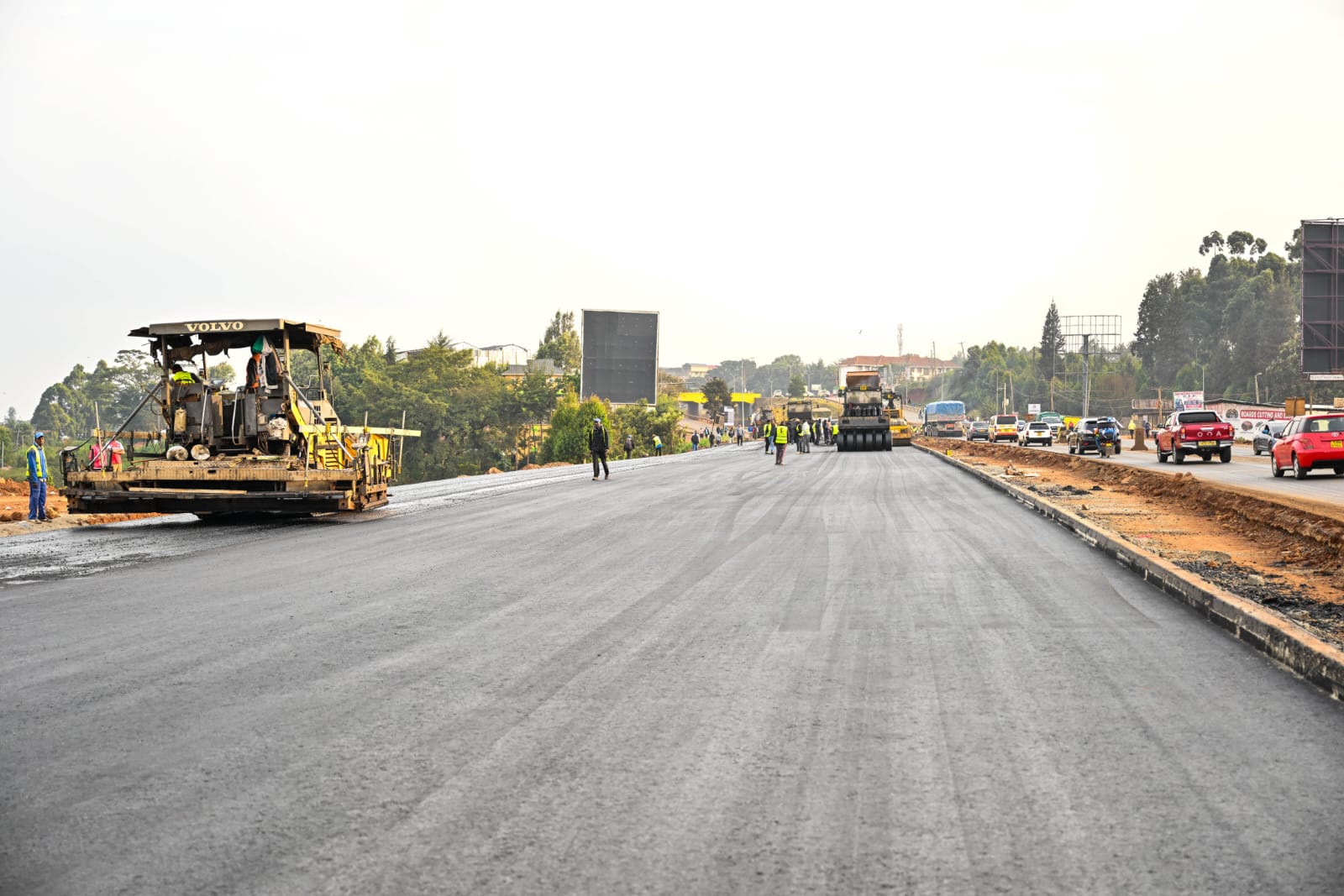
The Directorate of Public Private Partnerships (PPP), under the National Treasury, on Sunday defended the Rironi–Nakuru–Mau Summit Highway project, assuring Kenyans that the Public Private Partnership model shields taxpayers from debt exposure while promoting regional equity, sustainable financing, and modern road infrastructure under Kenya’s evolving tolling framework.
In a statement released on October 26, 2025, the Directorate of Public Private Partnerships (PPP) under the National Treasury and State Department for Public Investments & Assets Management said the model represents a strategic shift in national infrastructure financing, stressing that the project remains fully State-owned.
“This highway is a strategic national asset and remains under the full ownership and jurisdiction of the Government of Kenya,” PPP Director-General Eng. Kefa Seda stated.
“What we are implementing is a globally recognized model where the private sector finances and maintains infrastructure for a defined period, but ultimate control, regulation, and policy direction remain firmly with the State.”
According to the Treasury, Kenya’s fiscal space for new borrowing has narrowed despite strong economic management and debt consolidation efforts.
The public debt ratio, which had peaked at 78 percent of GDP, has since declined to about 64 percent, thanks to prudent fiscal reforms.
However, funding constraints remain acute in the road sector, with annual maintenance needs standing at Sh253 billion, compared to only Sh100 billion raised through the Road Maintenance Levy Fund.
The PPP framework, anchored in the Public Private Partnerships Act, 2021, enables Kenya to attract private capital to develop and maintain large-scale infrastructure while retaining full ownership and regulatory control.
“This arrangement protects taxpayers from long-term repayment obligations,” the statement said, adding that the private investor bears the financial and operational risks through a user-pay toll model.
Under the arrangement, the private partner will design, finance, construct, operate, and maintain the 233-kilometer highway for a concession period of 30 years.
After this period, all operational responsibilities will revert to the Government. The model—known as Design-Build-Finance-Operate-Transfer (DBFOT), is widely recognized and has been successfully implemented in countries such as South Africa, Morocco, Senegal, Zambia, and Egypt.
The Treasury emphasized that the Rironi–Nakuru–Mau Summit Highway remains a public asset, vested in the Government of Kenya throughout the concession period.
Oversight is shared among the National Treasury, the State Department for Roads, and the Kenya National Highways Authority (KeNHA).
The project is also part of a broader vision of regional balance and development equity, managed under a diverse PPP portfolio covering all regions, Coast, Central, Eastern, Rift Valley, and Western.
Similar initiatives are under feasibility review, including the Great North Corridor (Namanga–Isiolo), Mombasa Port Area Development (MPARD), and Mau Summit–Eldoret–Malaba corridor, ensuring no region is left behind.
On cost and economic logic, the Treasury explained that earlier models tied the Government to repay investors regardless of traffic performance.
The new PPP structure is performance-based, meaning revenue depends on road usage through tolls.
It also includes an expanded scope, dualling the Rironi–Mai Mahiu section, to accommodate future traffic growth.