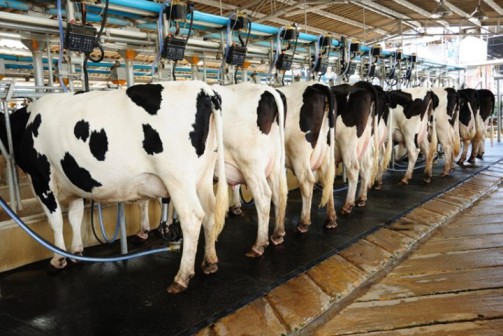
Kenya’s formal dairy sector recorded a surge in milk deliveries, reaching 690 million litres in the eight months to August, a historic peak driven by stable and appealing prices for farmers.
Increased participation from smallholder producers and the entry of new processors have contributed to the growth, boosting the supply to licensed dairy channels.
According to the Kenya National Bureau of Statistics, milk supplied to registered processors rose by 17.2 per cent compared to the same period last year, when 588.9 million litres were delivered.
Monthly milk deliveries have consistently hit record levels in 2025.
May posted the highest volume at 94.6 million litres, followed closely by January with 90.4 million litres and June with 90.2 million litres.
The lowest month was February, with 77.9 million litres, which still exceeded any monthly delivery from 2023 and most of 2024.
Despite growth in the formal market, the majority of Kenya’s milk is still traded informally.
Most households purchase raw milk directly from farmers and local vendors, bypassing licensed processors.
Retail checks in Nairobi show that packaged milk prices vary widely: a 500ml packet ranges from Sh50 to Sh60.
At Naivas, prices vary between Sh38 and Sh55 depending on the brand, while Carrefour sells milk for Sh47 to Sh66 per 500ml packet, influenced by brand and packaging.
Kenya has an estimated 1.8 million smallholder farmers who produce roughly 80 per cent of the nation’s milk, most of which enters informal markets.
Kenya Dairy Board estimates total annual milk production, including formal and informal sources, at about 5.2 billion litres.
Its 2024-2027 strategic plan targets annual output of 11 billion litres and aims to raise exports to one billion litres.
The dairy industry is East Africa’s largest, contributing about four per cent of national GDP and 14 per cent of agricultural GDP.
It provides livelihoods for approximately 1.8 million households and employs over 700,000 people.