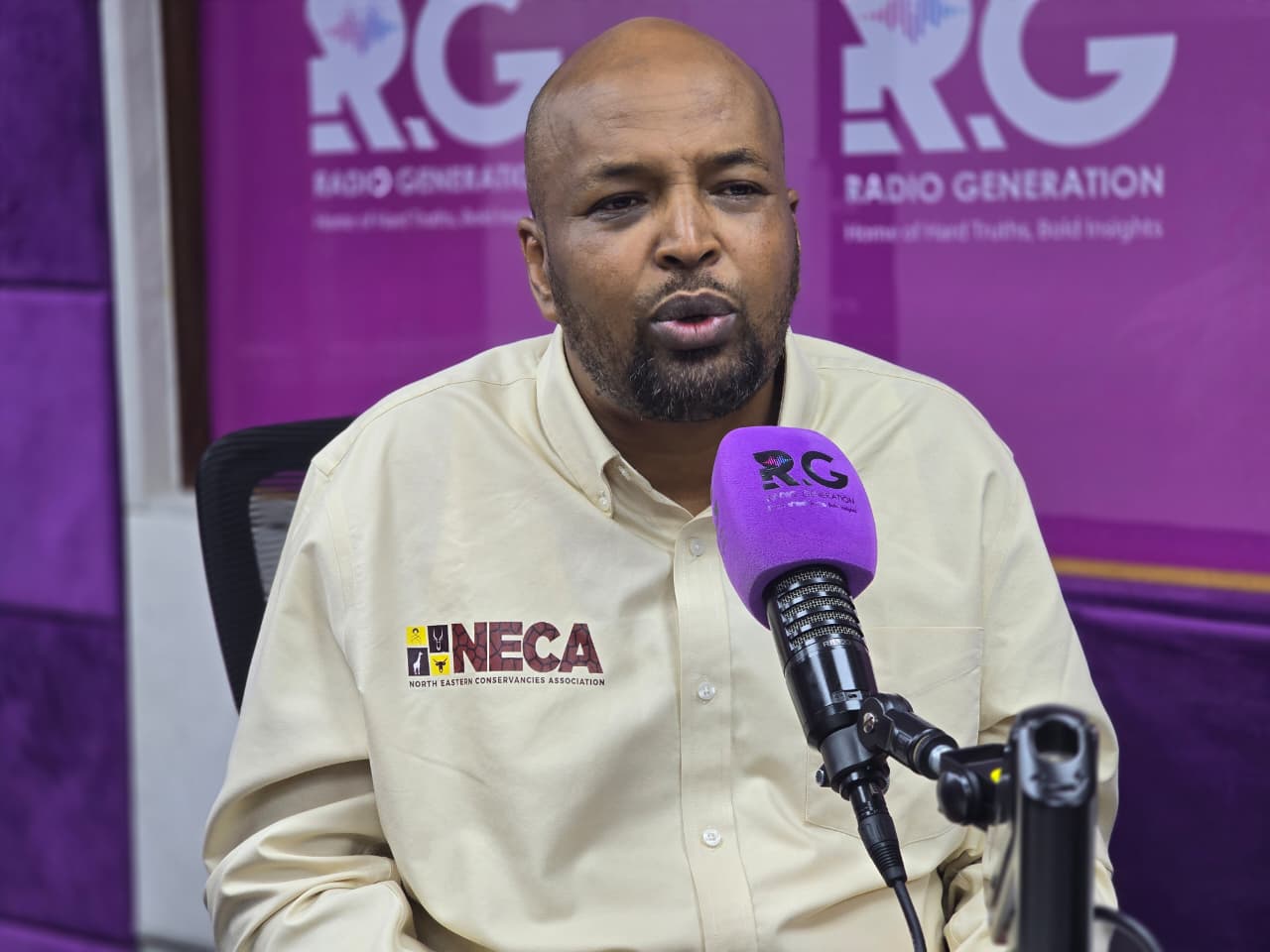
Wildlife conservation efforts in northern Kenya face serious neglect despite the region hosting vast natural habitats and diverse species, according to North Eastern Wildlife Conservancies Association (NECA) CEO Sharmake Mohamed Sheikh.
Speaking during an interview at Radio Generation, Mohamed said the region has suffered decades of underinvestment and limited government attention, leaving once-promising reserves dormant.
He said the northeastern region has wildlife such as buffalo, giraffes, and lions, though most live outside the protected parks.
“Most of the wildlife in Kenya live in community areas, not even in the national parks. The communities bear the brunt of hosting and coexisting with this wildlife,” Mohamed said on Thursday.
Mohamed explained that wildlife management in Kenya operates under two systems — national parks managed by the government and national reserves managed by counties or former county councils.
However, he noted that this structure has resulted in unequal resource distribution and development.
“The parks are managed by the government, and depending on where the park is, they invest. If it is under the county government or the former county councils, it’s called a national reserve,” he said.
“Unfortunately, how we started as a country, tourism became the main driver of conservation. So people were conserving for the tourists,” Mohamed added.
The NECA CEO said that communities in areas that attracted tourists, such as Amboseli and Maasai Mara, benefited from better facilities, infrastructure, and government investment.
But reserves in northern Kenya, especially in Garissa, Wajir, and Mandera, missed out because they received little to no tourist traffic.
“The communities that were not hosting or not getting tourism were left out in terms of resource allocation, and that includes reserves in northern Kenya, especially Garissa and Malka Mari National Park in Mandera. No tourist was visiting, so the government did not invest in those reserves or parks,” he said.
Mohamed described this neglect as historical and deeply rooted in Kenya’s tourism-focused conservation model, which prioritizes visitor numbers over ecological value or community effort.
He added that while residents of northern Kenya have continued to coexist with wildlife, they have had to do so without support or recognition.
“Wildlife is equal. The communities have coexisted. They bore the burden of coexisting with wildlife because there is a cost to it,” he said, citing livestock losses and competition for resources.
Mohamed further noted that only one government-managed park exists in the region: Mari National Park in Mandera, while the rest are county-managed reserves.
Garissa, for instance, has three key reserves: Arawale, Boni, and Rahole. However, he said these exist “only on paper” because no conservation activity or investment takes place there.
“At some stage in Garissa, we have Arawale, we have Boni Reserve, and we have Rahole National Reserve. They are the only three reserves, but right now they are also paper reserves. Nothing is happening,” he said.
In addition, Mohamed called for renewed government attention and investment to ensure that wildlife conservation in northern Kenya benefits both the ecosystems and the communities that sustain them.