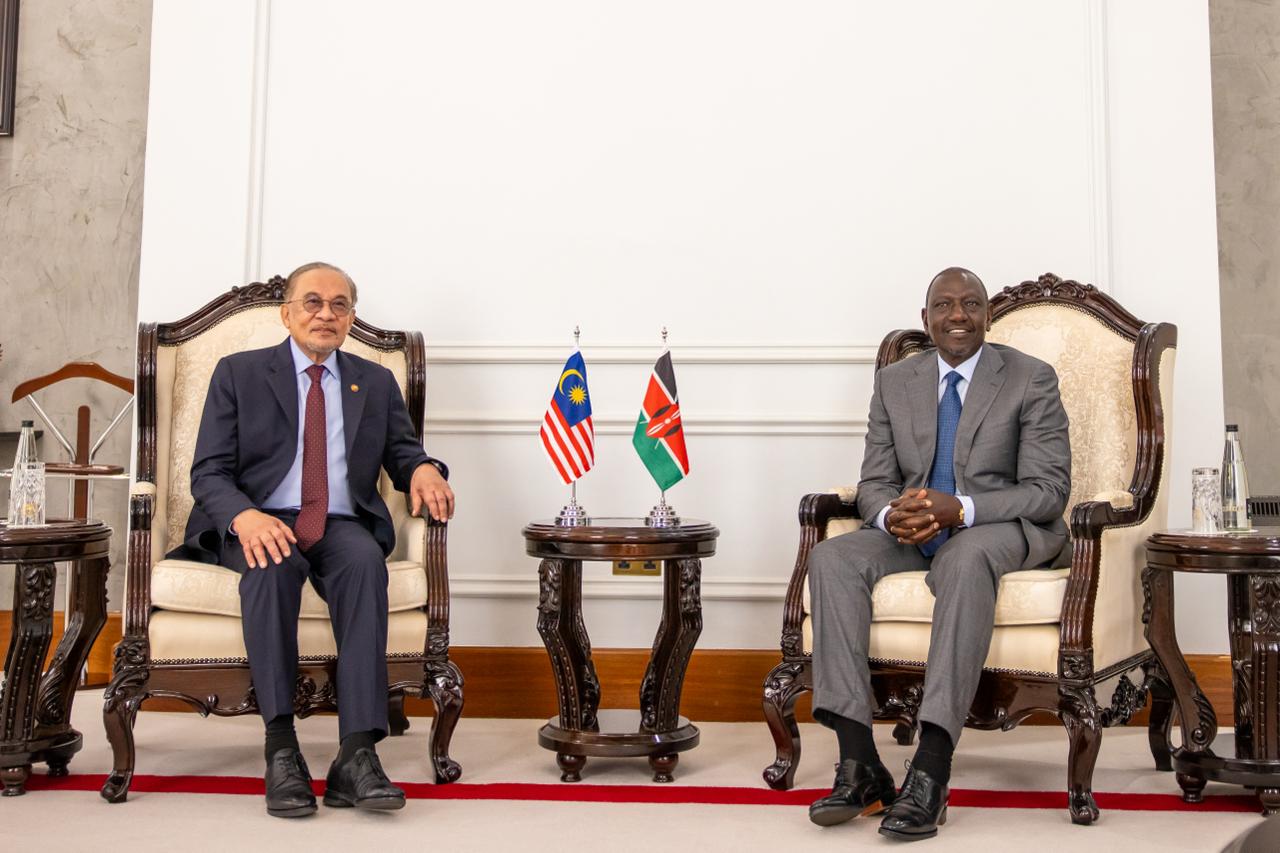
Kenya and Malaysia have taken their diplomatic relationship to a new level, upgrading to a strategic bilateral partnership during the historic visit of Malaysian Prime Minister Anwar Ibrahim, the first by a Malaysian leader in nearly 20 years.
The visit coincides with the celebration of 60 years of diplomatic relations between the two countries.
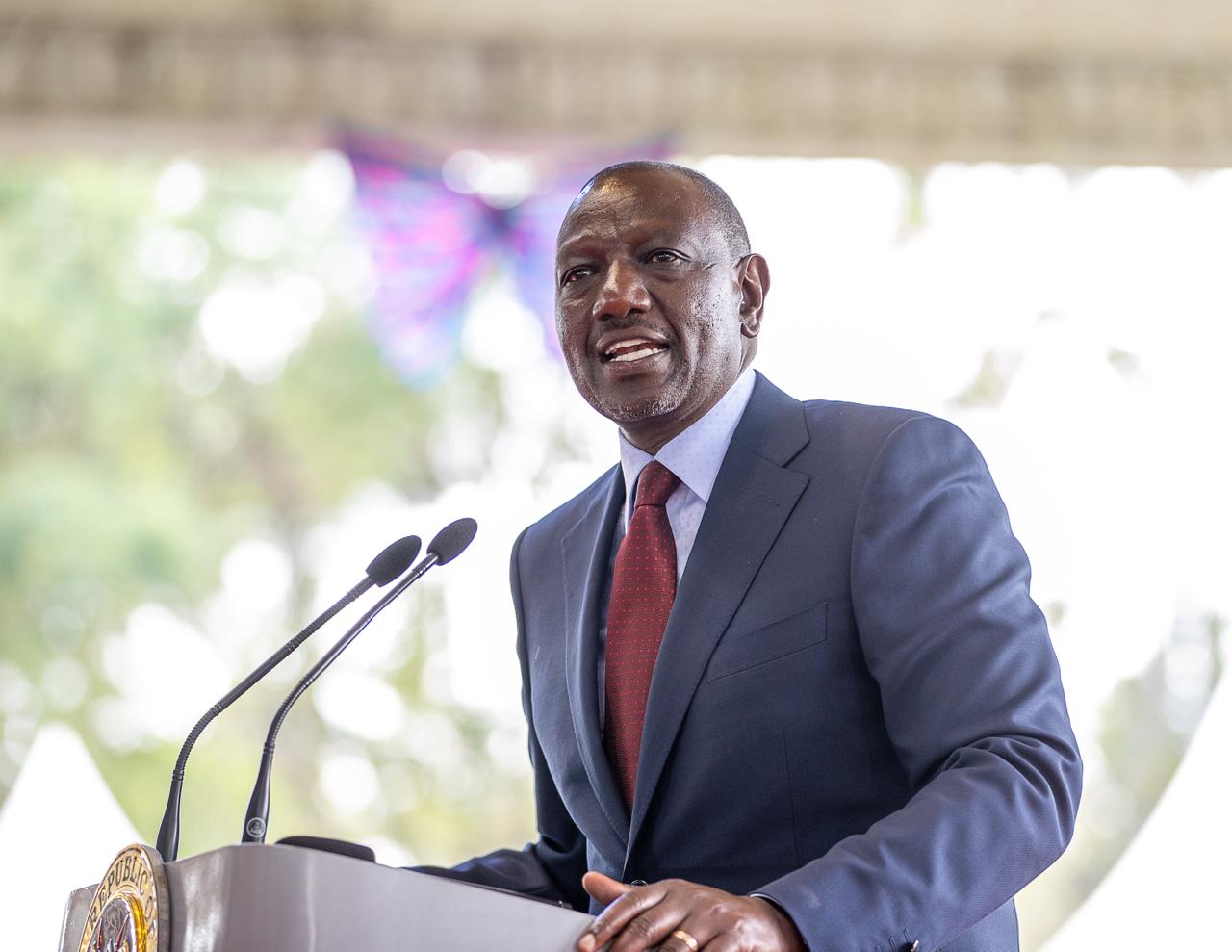
“Today’s discussions reinforced a long-standing friendship while charting an ambitious future together. We agreed to elevate our bilateral architecture by upgrading to a strategic bilateral partnership, ensuring that our cooperation advances with purpose and structure,” President William Ruto said at State House.
A key outcome of the talks was Malaysia’s agreement to remove tariffs on Kenyan agricultural produce and beef, a move President Ruto described as a major boost for local farmers.
“The removal of these tariffs is especially significant given the structure of our current trade, where Kenya's main exports to Malaysia include tea, coffee, flowers, avocados, titanium, ores, and beef, while imports from Malaysia consist primarily of edible oils, chemical products, electronic agricultural chemicals, and rubber,” he said.
The two nations also signed several agreements aimed at deepening cooperation in trade, tourism, and urban development.
These include a bilateral air service agreement to improve connectivity, an MOU on tourism cooperation, a letter of intent for city-level collaboration between Nairobi and Kuala Lumpur in urban planning and service delivery, and an MOU between their respective chambers of commerce to enhance private sector partnerships.
President Ruto highlighted Malaysia’s economic transformation as a model for Kenya’s own development ambitions.
“Your country was an agricultural country like Kenya, but today you stand out because you have diversified your economy and export manufactured goods globally. We hope to catch up with you soon,” he said.
The discussions also explored investments in education, research, semiconductors, and high-tech manufacturing. Ruto invited Malaysian firms to participate in Kenya’s infrastructure projects, including an expansion of the road network by 2,500 kilometers, plus an additional 28,000 kilometers of roads across the country.
“The agreements we have signed today mark the beginning of a broader and deeper strategic partnership for mutual benefit,” President Ruto said, noting that the collaboration is expected to accelerate industrialization, trade, and human capital development in Kenya.