Tributes to women’s rights and calls for justice were at the forefront Tuesday as women parliamentarians pushed for the abolition of the death penalty for female offenders, citing deep-rooted gender inequities.
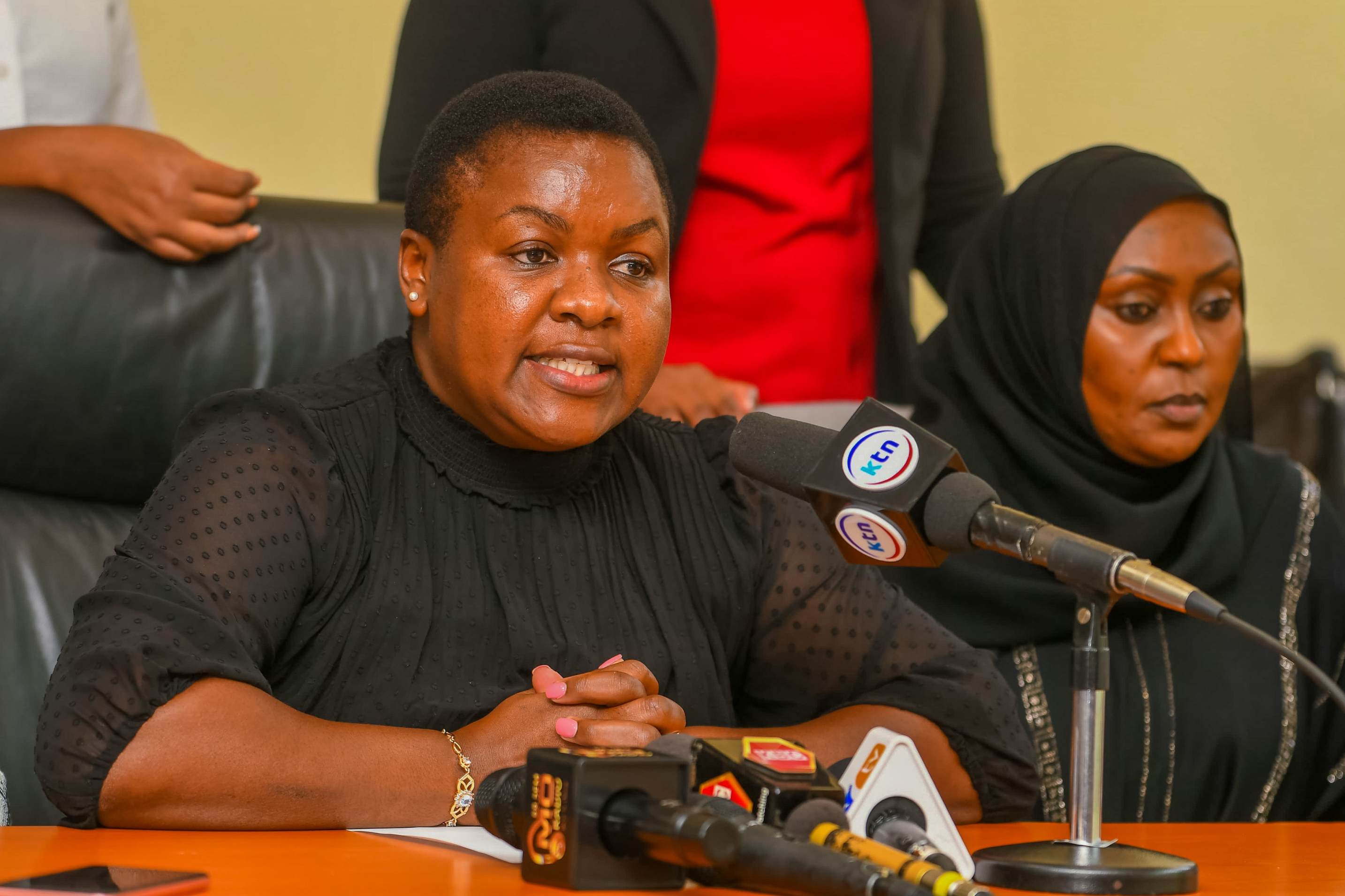
Speaking at a roundtable breakfast with the International Commission of Jurists (ICJ) on Tuesday, Kenya, the Kenya Women Parliamentary Association (KEWOPA) argued that women on death row often face circumstances the legal system fails to acknowledge, including histories of abuse and social exclusion.
The discussion comes ahead of the 16 Days of Activism against Gender-Based Violence, a period during which KEWOPA is advocating for the country to implement the African Union’s draft Protocol aimed at eliminating the death penalty.
The MPs stressed the need for laws that not only punish crime but also consider the social and gendered realities of offenders.
Nominated Senator Beth Syengo, speaking for the KEWOPA chairperson, said the MPs are committed to ensuring legal processes protect rather than further harm women.
“We stand ready to work with ICJ Kenya, the World Coalition Against the Death Penalty, development partners, and fellow parliamentarians to ensure that no woman is further victimised by a system meant to protect her,” Syengo said.
She explained that women often endure compounded consequences when convicted. “When a woman is sentenced to death, she is not only punished for a crime, she is often punished again for her gender, for systemic inequities, and for the failures in structures meant to protect her,” she said, highlighting the multiple layers of injustice women face.
Christine Alai, ICJ Kenya chairperson, noted that capital punishment persists even after legal reforms such as the 2017 abolition of mandatory death sentences for murder and occasional mass commutations of death sentences.
“While the application of capital punishment has been restricted by the abolition of the mandatory death sentence for murder in 2017 and by occasional mass commutations of death sentences to reduce numbers on death row, Courts continue to sentence defendants to death for murder, robbery with violence, attempted robbery with violence, and treason,” Alai said.
Alai urged women MPs to factor in the unique paths that lead women to prison, pointing out that criminal systems were historically created “by men for men” and rarely address gender-specific vulnerabilities.
KEWOPA members emphasized the importance of engaging women prisoners to understand their experiences, many of whom are survivors of domestic violence. They encouraged judges to take such personal histories into account during sentencing.
The MPs concluded that debates on the death penalty in Kenya must integrate gender perspectives. They argued that justice cannot be considered complete if it ignores the social and systemic challenges faced by women, urging a more compassionate and equitable legal approach.