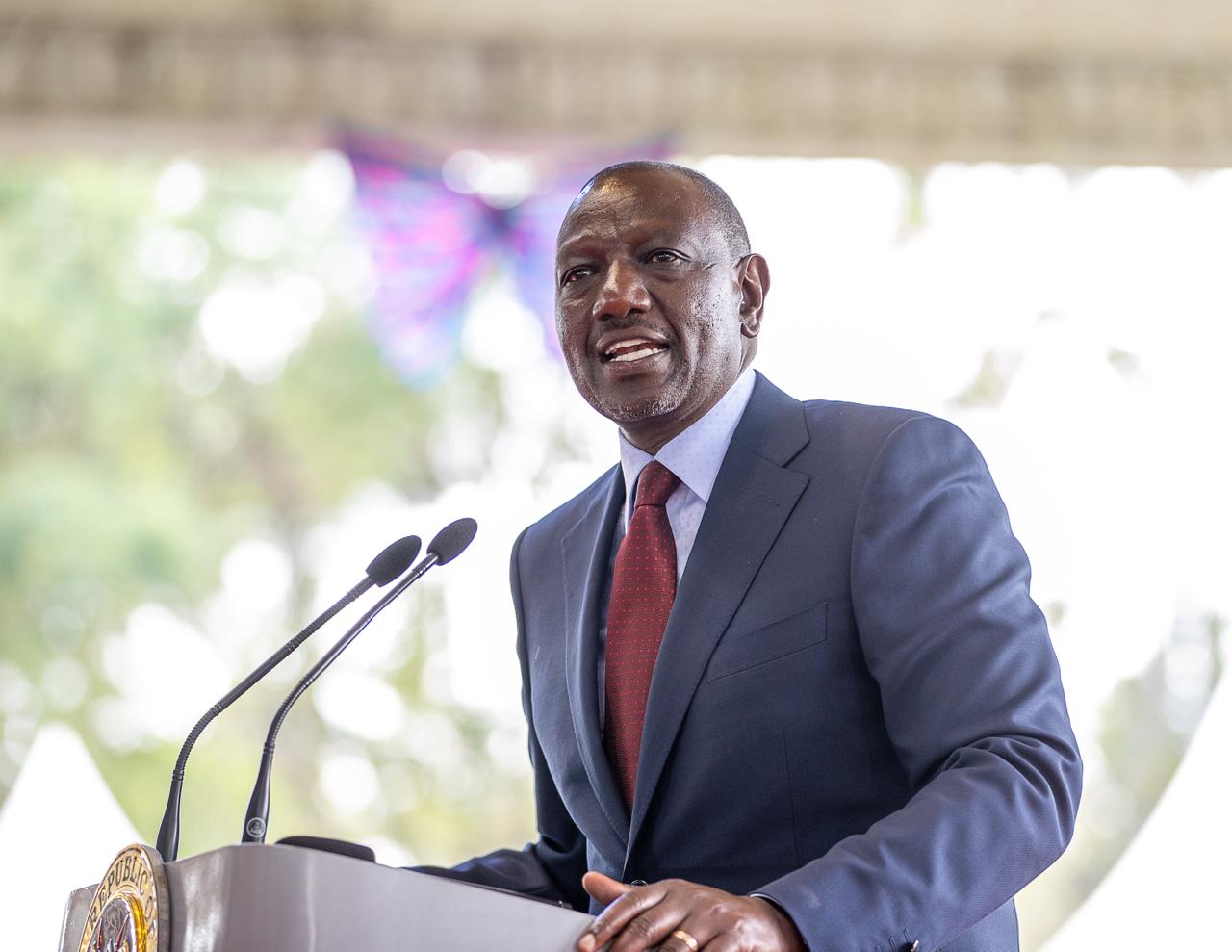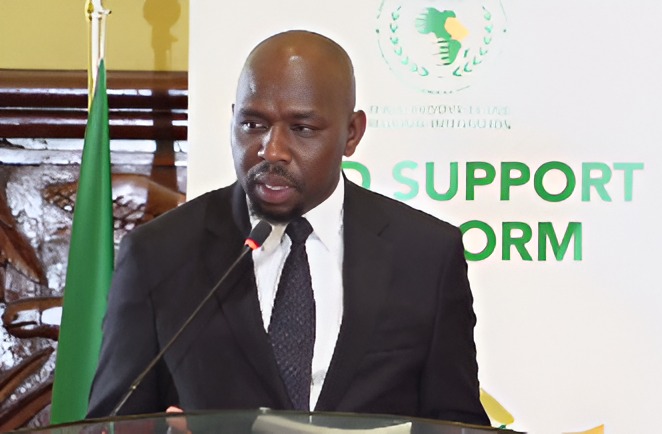
Interior Cabinet Secretary Kipchumba Murkomen has urged regional governments and international partners to do more to support refugees, stressing that host countries are bearing an increasing and unsustainable burden. He said the traditional humanitarian approach is no longer sufficient given the rising scale of displacement worldwide.
Speaking on Thursday during the Regional Ministerial Stock-take of the IGAD Support Platform in Nairobi, Murkomen highlighted that forced displacement now affects over 112 million people globally, with around 6 million in the IGAD region alone.
“The speed and scale of forced displacement are outpacing the solutions available,” he said. “Many are left in a prolonged state of limbo with limited opportunities to rebuild their lives.”
Kenya, currently home to more than 860,000 refugees, has felt these pressures sharply, with local infrastructure, environmental resources, and services stretched in areas hosting refugees for decades. Murkomen emphasized that these challenges impact both refugees and local populations.
“The debate we face here in Kenya is whether it is the refugees or the local community feeling the impact,” he said. “Population pressure, environmental degradation, access to services, climate change, these conditions make life difficult for both.”
The CS also expressed concern over declining international support, noting that traditional donor countries are increasingly focused on their domestic priorities.
“The inward-looking nature of countries that ordinarily support refugees has made many of them focus on their local priorities… leaving us vulnerable,” he said.
Murkomen called for actions that address the root causes of displacement and create conditions for refugees to return home voluntarily and with dignity. He pointed to Kenya’s upcoming Shirika Plan, set to launch in March 2025, as a framework for enabling refugees to be more self-reliant and integrated into local economies.
“This plan reflects Kenya’s belief that refugees should not merely be recipients of assistance, but contributors to national and regional development,” he said.
The CS questioned why skilled and educated refugees remain confined to camps, asking, “Why should Kenya lock refugees in a camp who are educated, skilled, and have the capacity to contribute to growth?”
He concluded by urging governments and partners to strengthen national systems and commit to predictable funding. “We call upon our partners to reciprocate through genuine burden sharing, not burden shifting,” he said. “As we take stock of our progress, let us renew our collective commitment to protecting refugees and supporting host communities.”