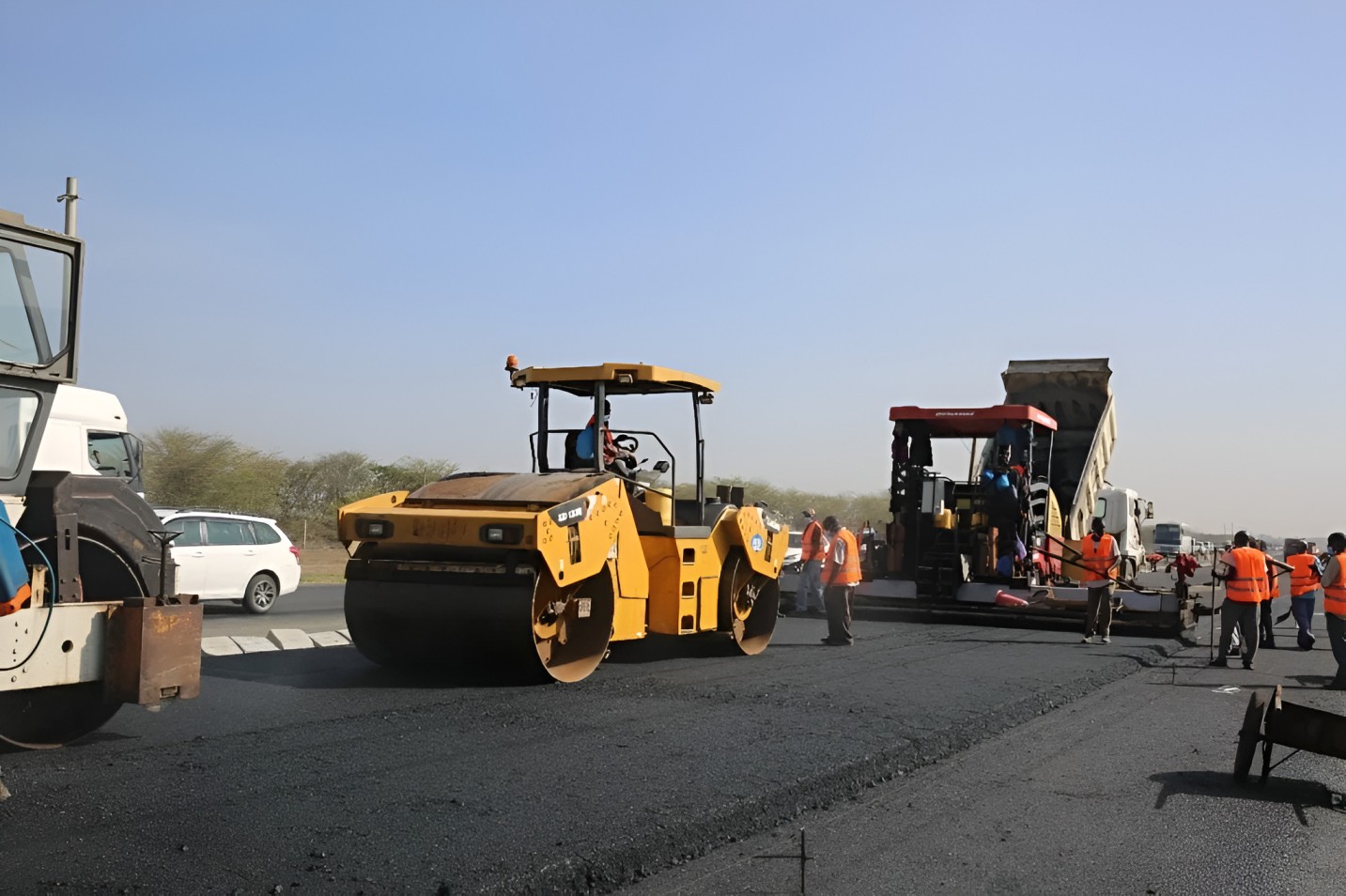
Kenya’s road maintenance has fallen to a level not seen in six years, with authorities reporting a sharp decline in repairs and rehabilitation works during the year ending June 2025.
The drop comes amid deep budget cuts that affected road construction and upkeep across the country, raising concerns about the state of the nation’s transport infrastructure.
In total, the government repaired 35,965 kilometres of roads, a 28 percent fall from the previous year and the first time in nearly a decade that road agencies failed to meet their annual targets.
The shortfall of 5,148 kilometres is equivalent to a journey around Kenya’s borders. The Department for Roads cited reductions in the Road Maintenance Levy Fund (RMLF) as the main reason for missing the target.
“Target [was] not achieved due to reduction in RMLF budget during implementation,” the Department stated in its annual assessment. By comparison, the previous year saw 50,094 kilometres repaired, surpassing the target of 43,532 kilometres.
The Kenya Roads Board (KRB), which oversees the levy, reported cuts to allocations for the main road agencies: KeNHA, KURA, and KeRRA after part of the fund was redirected.
KeNHA, responsible for highways and major roads, suffered the largest reduction, dropping from Sh20.6 billion to Sh16.8 billion, despite having to maintain nearly the same road network.
KeRRA received Sh18.1 billion, down by Sh1 billion, while KURA’s funding was reduced by Sh2.4 billion to Sh6.6 billion. Roads in national parks, maintained by Kenya Wildlife Service, also saw a decline of Sh60.8 million to Sh639 million.
The reductions occurred even as fuel consumption grew, which would normally increase RMLF collections. EPRA data shows diesel usage rose from 2.1 million tonnes to 2.3 million tonnes, and super petrol from 1.4 million tonnes to 1.6 million tonnes, suggesting higher levy potential.
County governments were excluded from RMLF funding in 2023 due to increased revenue allocations, but the courts later reinstated them. Despite this, only Sh3.7 billion of the expected Sh10 billion was released in the year to June 2025.
Meanwhile, the Roads Ministry proposed amendments to the Kenya Roads Act to allow 1.5 percent of RMLF collections for administration and 10 percent for “critical interventions,” a move still under consideration.
Although the fuel levy was increased from Sh18 to Sh25 per litre, the extra Sh7 was used by KRB to securitise loans of Sh175 billion to clear pending contractor payments. Rehabilitation projects also suffered, with only 72 kilometres completed against a target of 199 kilometres, citing delayed contractor payments.
Rehabilitation, which involves full road reconstruction, is costlier than routine maintenance, yet both rely on RMLF collections.
Overall, total funding for road development, maintenance, and rehabilitation fell to Sh193.2 billion from Sh244.9 billion in the previous financial year, reflecting broader reductions in government development spending.