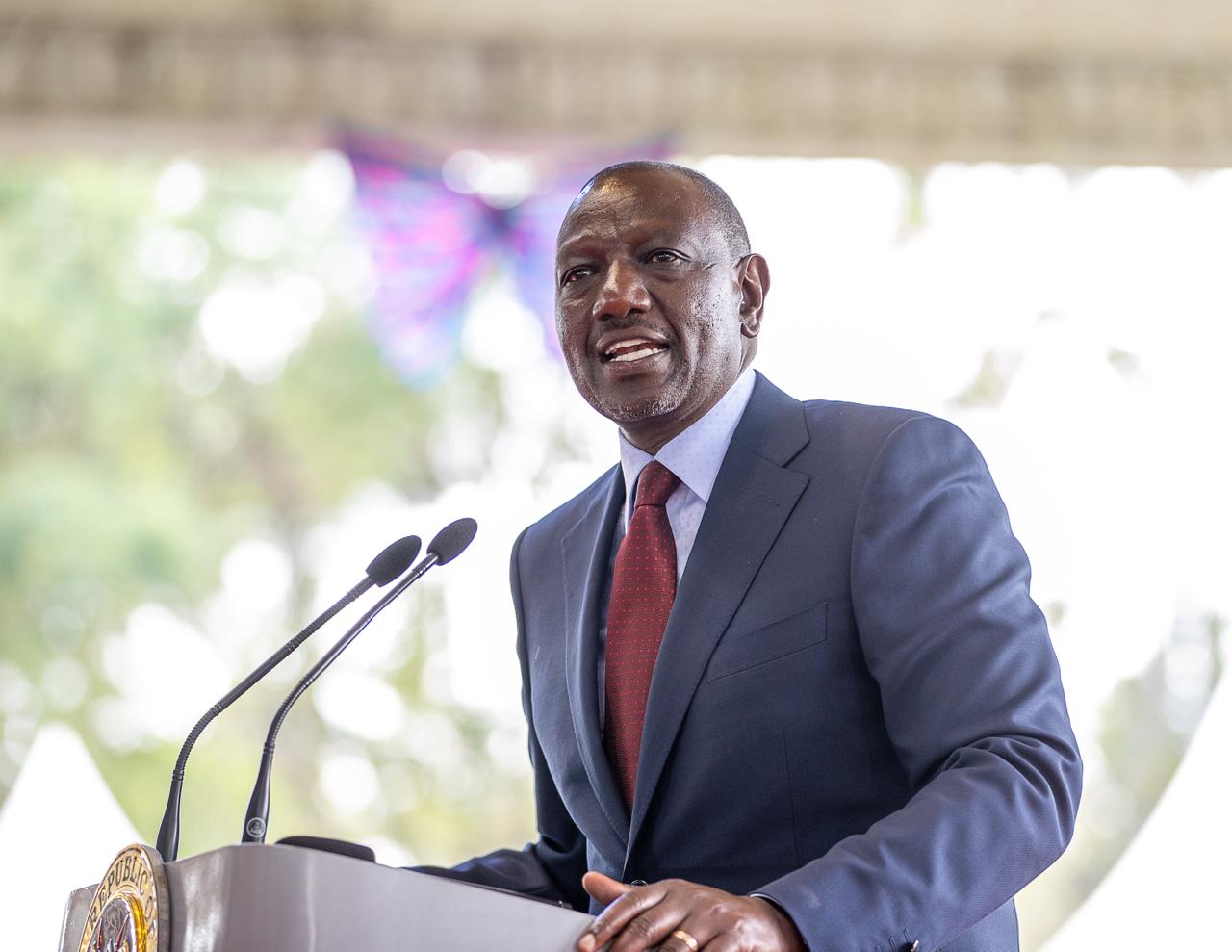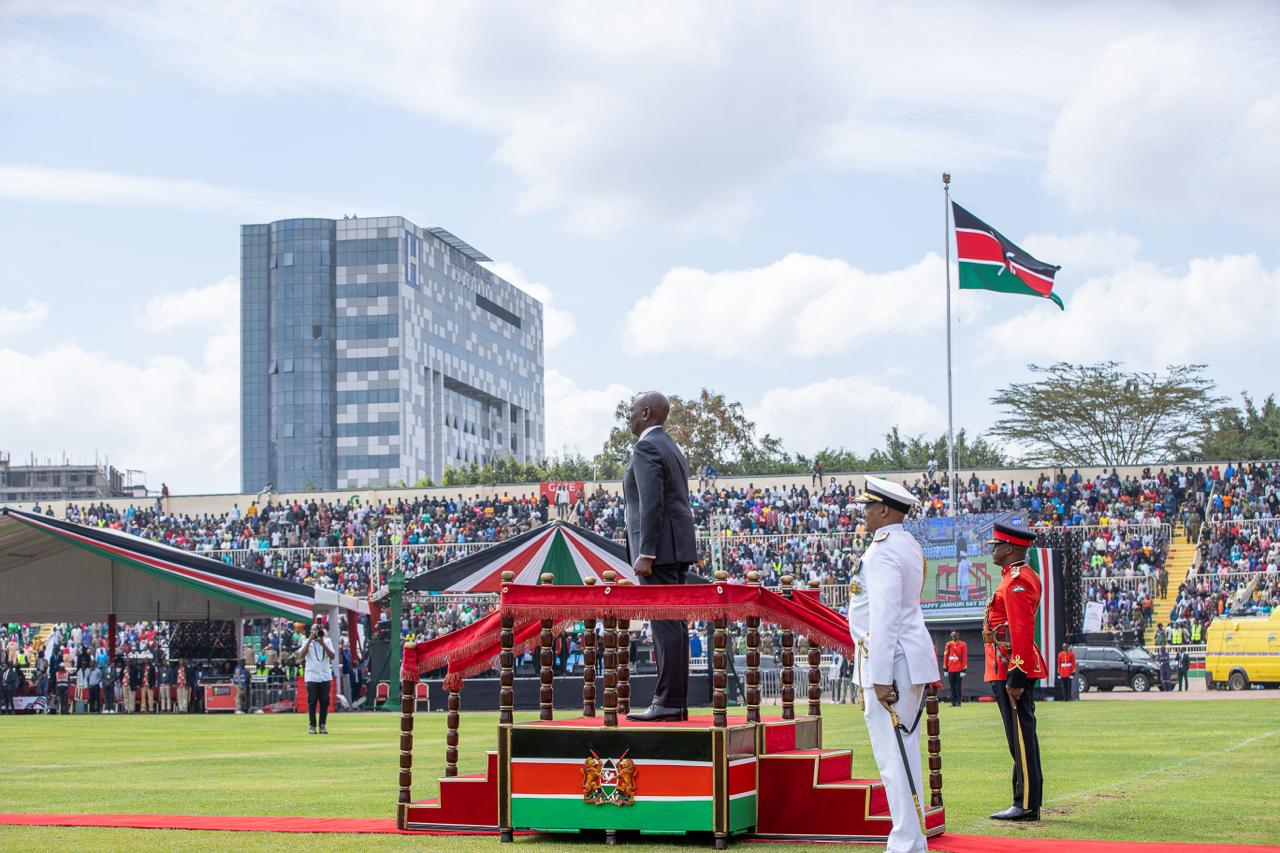
President William Ruto has revealed that next week, the Cabinet will review and approve the structure of the National Infrastructure Fund, a cornerstone of Kenya's Sh5 trillion national economic freedom initiative.
This bold plan, announced during the Jamhuri Day celebrations at Nyayo Stadium, is aimed at attracting private sector investment to fund large-scale infrastructure projects across the country.
In his address, the President emphasized that relying solely on the national budget for such transformative projects would be insufficient and unsustainable.
"If we depend on the national budget, we would leave ourselves waiting forever," he said, noting that borrowing would only worsen the national debt and burden future generations. The alternative of increasing taxes, Ruto warned, would put an unbearable strain on households.
The National Infrastructure Fund, he explained, is designed to raise private capital to supplement government spending, bringing in resources from sources like pension funds, private equity, and development finance institutions.
Ruto went on to clarify that the fund will be fueled by proceeds from the privatization of state-owned enterprises such as Kenya Airways, KenGen, Kenya Re, and Safaricom. These funds will be strictly invested in public infrastructure projects that offer long-term value to the nation.
"This principle is already being actualized," he added, confirming that proceeds from ongoing privatization efforts will be directly channeled into the fund.
The fund will be managed professionally to ensure that every investment generates lasting public benefits.
The goal is ambitious; for every shilling invested, the government expects to attract ten additional shillings from long-term investors.
These funds will support road dualing, the construction of dams, and energy infrastructure, among other large-scale development projects. Ruto highlighted that such initiatives will reduce Kenya’s dependence on foreign debt and improve economic resilience.
The National Infrastructure Fund comes on the heels of another significant reform: the recently signed Government-Owned Enterprises Bill.
This new law, Ruto noted, represents the most far-reaching reform of government corporations since independence.
The law mandates merit-based appointments to the boards of state-owned enterprises, moving away from cronyism and patronage. Under this new framework, individuals who have held public or political office in the past five years are now ineligible for board appointments, ensuring that leadership will be tied to performance and accountability.
Beyond the infrastructure fund, Ruto revealed that the Cabinet will also discuss a Sovereign Wealth Fund policy, designed to safeguard the nation’s future. The Sovereign Wealth Fund will be capitalized by natural resource royalties, dividends from public investments, and a portion of the proceeds from privatization.
The primary focus of this fund will be to save for future generations, provide stabilization against global economic shocks, and make strategic investments in national priorities.
The National Infrastructure Fund (NIF), as envisioned by Ruto, will act as a catalyst for large-scale development projects, leveraging private sector capital alongside domestic resources.
Its core objectives include financing projects that improve roads, build energy infrastructure, and enhance water systems. Managed by a professional entity, the NIF will ensure that projects are not only commercially viable but also generate sustainable economic and social returns.
With the creation of these funds, Ruto aims to provide Kenya with a pathway toward a more resilient economy, reduce reliance on external loans, and pave the way for more inclusive development.
The President’s vision is to transform Kenya’s infrastructure landscape, turning the nation into an economic powerhouse within the region, fueled by both public and private investment.