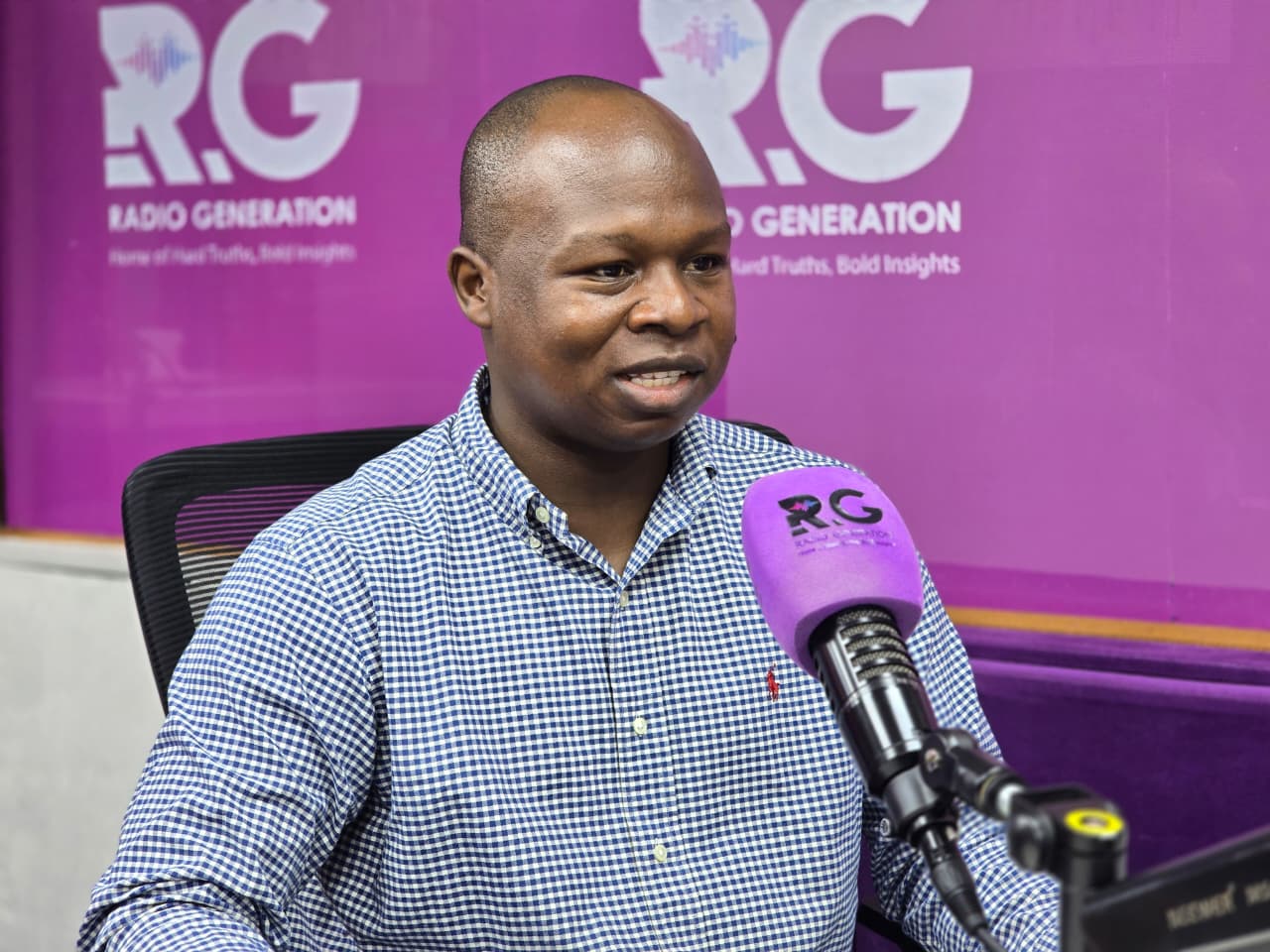
Systemic discrimination, under-resourcing and outdated vetting practices continue to deny thousands of Kenyans access to national identity documents, according to a senior officer at Namati Kenya and Human Rights Advocate Moses Gowi.
Speaking during a Radio Generation interview on Monday, he said marginalised communities across the country face persistent and unjust barriers when applying for birth certificates and national identity cards, despite meeting all legal requirements for citizenship.
Namati Kenya works with community paralegals in counties including Garissa, Isiolo, Kwale, Nairobi and parts of the Coast, supporting clients who struggle to access nationality documentation.
According to Gowi, these challenges are not isolated to remote regions but are systemic, affecting both rural and urban populations.
“Community paralegals work with people who are denied documents or face unreasonable delays,” he said. “They educate communities on the law, guide them through the process and support them until they eventually receive their documents.”
Gowi noted that access to registration centres remains severely limited in many counties. Kwale County, for example, has only two registration centres for a geographically vast population, forcing residents to travel long distances at significant cost.
Similar challenges exist in other counties, where poor infrastructure, low internet penetration and poverty further compound the problem.
While Kenya has digitised many services through the eCitizen platform, the advocate warned that online-only systems risk excluding those without smartphones, stable internet access or the ability to pay mandatory fees.
Applying for a birth certificate currently attracts a fee of about Sh250, in addition to a Sh50 convenience charge, costs that many low-income families cannot afford.
Initially, the birth certificate fee was Sh50 until recently in January 2024, when the government raised it to Sh250 effective January 1, 2024, alongside higher fees for late registration and replacements.
“These processes assume a level of access and privilege that many Kenyans simply do not have,” the advocate said.
Gowi also highlighted the plight of children born at home, who often miss out on birth notifications issued by hospitals.
Although chiefs are legally mandated to assist in such cases, this support is inconsistent, leaving many children unregistered and effectively invisible to the state.
However, the most contentious issue raised was the vetting process imposed on certain communities, including Nubians, Somalis and residents of northern Kenya.
Under this system, applicants are subjected to additional scrutiny based on ethnicity, name or region of origin.
For these applicants, securing an ID requires appearing before multi-agency vetting committees comprising local administrators, security agencies and registration officials.
He said the process shifts the burden of proof from the state to the individual, even when applicants present valid government-issued documents.
“Instead of vetting documents, they vet the person,” he said. “You are asked to prove you are Kenyan, despite holding a birth certificate and your parents’ ID cards.”
He described vetting questions as arbitrary and humiliating, citing examples where applicants are asked whether they have eaten food associated with neighbouring countries, made phone calls abroad, or even questioned about physical features such as hair texture or vaccination scars.
“These questions have no legal basis and are designed to intimidate,” Gowi said. “Answering honestly can be used against you.”
The consequences, he warned, are severe. Without identification documents, individuals are locked out of education, employment, healthcare, banking and political participation.
Entire communities, some of which have lived in Kenya for over a century, remain trapped in cycles of exclusion.
Gowi questioned why, more than six decades after independence, the state still struggles to register its citizens.
He pointed to past examples where mobile registration units successfully reached schools and communities, arguing that the problem lies not in capacity but in political will.
“If voter registration kits can be taken to remote schools, the same can be done for birth and ID registration,” he said.
He called for increased funding, public education, the abolition of discriminatory vetting practices and the expansion of mobile registration services to bring documentation closer to the people.
“Citizenship should not be something you have to fight for,” Gowi said. “It is a right, not a privilege.”