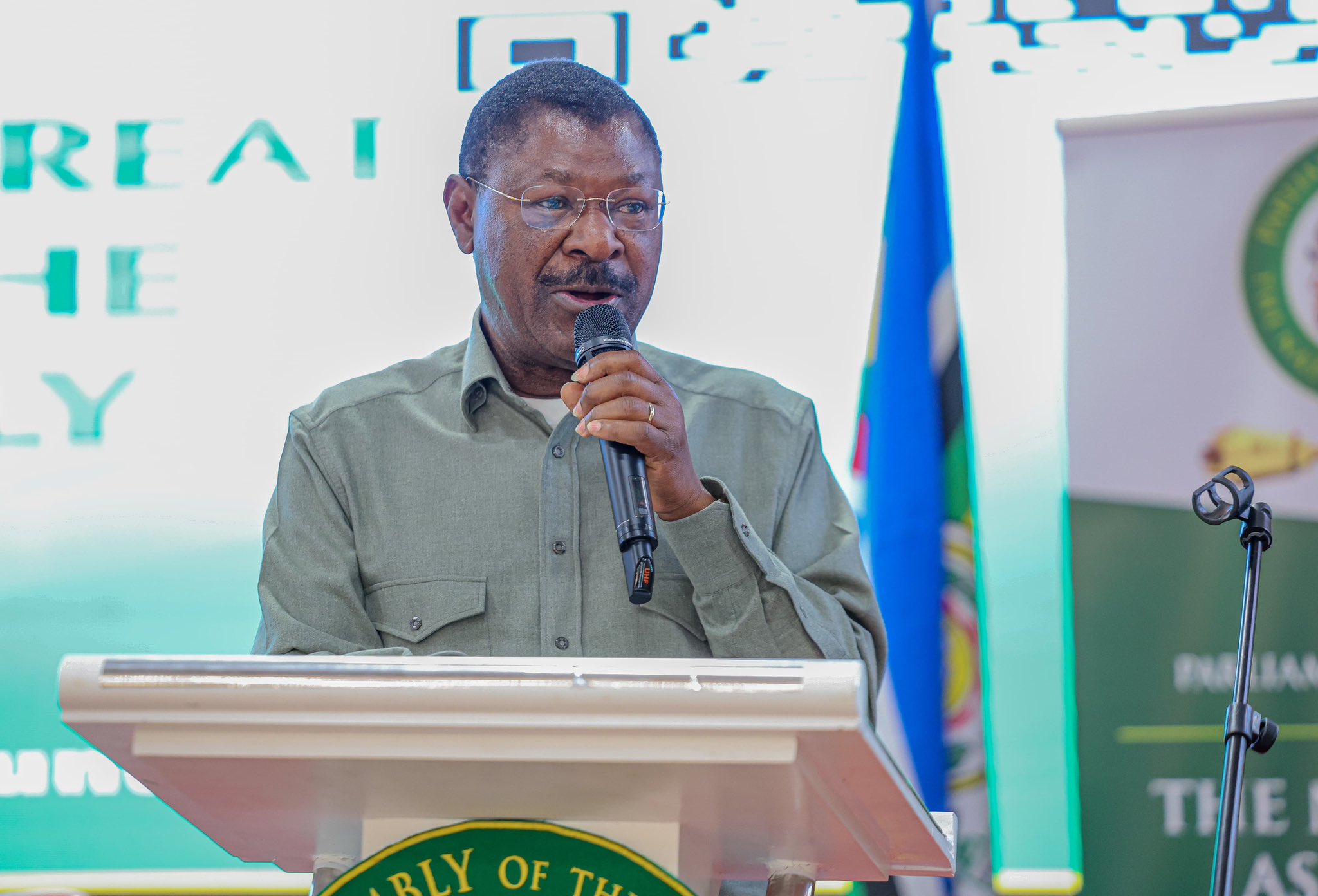
National Assembly Speaker Moses Wetang'ula has criticized parliamentary committees for disproportionately focusing on auditing small village secondary schools with modest budgets, saying the practice wastes public resources when no significant audit issues exist.
Speaking at the 2026 Legislative Retreat in Naivasha, Wetang'ula urged lawmakers to concentrate on systemic and material audit matters rather than minor, explainable discrepancies.
Addressing Members of Parliament, the Speaker emphasized that oversight remains a core pillar of Parliament’s work, particularly on economic governance, budgetary processes and reforms.
However, he cautioned that the constitutional duty of oversight must be exercised responsibly to avoid creating perceptions of intimidation or causing administrative paralysis.
“We must not, for instance, insist on examining the accounts of every village secondary school in the country when the record is clear that there is no audit issue raised in respect of these institutions,” Wetangula said. “Some of these institutions have very modest budgets, yet we deploy highly disproportionate resources to the examination of their audit reports.”
He noted that Parliament had received complaints from public institutions whose heads are summoned simultaneously by multiple committees over the same issue, especially during recruitment processes.
According to Wetang'ula, such practices undermine efficiency and tarnish the image of the House.
“I get complaints where a minister is simultaneously invited to three committees of this House at the same time. That is not right. It doesn’t give us a very good name,” he said, adding that he had directed the Deputy Speaker to harmonize committee invitations to the Executive.
The Speaker also expressed concern over what he termed as bullying of state officials appearing before committees, revealing that some institutions had escalated complaints to his office over harassment linked to minor audit queries.
He cited one case involving an audit issue of about Sh400,000 that was easily explainable but was blown out of proportion. “The story around that was not a very good one for Parliament,” he said.
On audit timelines, Wetangula reminded committees that Article 229(8) of the Constitution requires Parliament to consider and act on the Auditor-General’s reports within three months of tabling.
He urged audit committees to “work judiciously and expeditiously,” explore written submissions, adopt subcommittee models and avoid summoning agencies with clean audit reports.
Wetangula further challenged committees to fully actualize their mandates, warning against narrow interpretations that reduce their impact.
He also called on MPs to look beyond budget figures and focus on underlying policy issues, saying this would strengthen Parliament’s interventions and service to citizens.