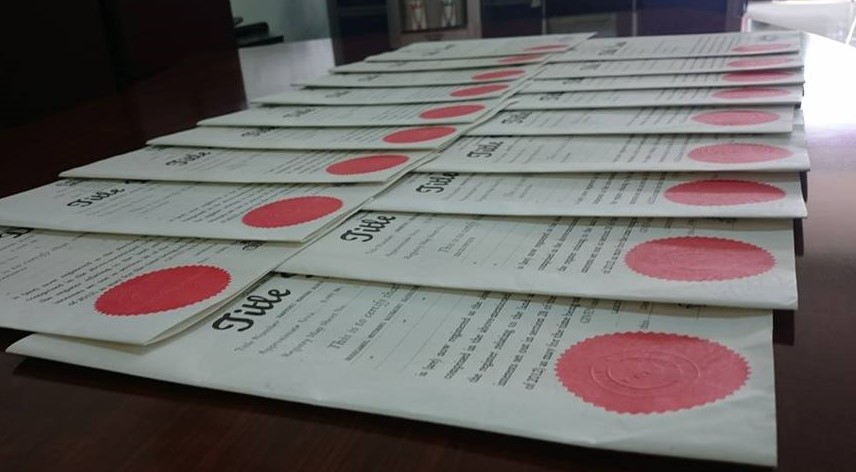
Authorities have cautioned Kenyans to promptly update land ownership records when a joint proprietor dies, emphasizing that delays can create legal confusion and block property transactions.
The Commission on Administrative Justice said registering the change is critical to ensure the surviving owner’s rights are officially recognized and the land register reflects the current ownership.
In a statement released on Wednesday, the Commission explained that while the Doctrine of Survivorship allows a deceased co-owner’s interest to automatically pass to the surviving proprietor, formal registration is necessary to give the transfer legal standing.
The Commission noted that it has received a growing number of questions and complaints from the public regarding the process of updating ownership following the death of a joint owner.
“A significant number of these complaints arise from misunderstandings of the Doctrine of Survivorship, delays in updating land registers, and disputes occasioned by the erroneous treatment of jointly owned land as part of a deceased person’s estate,” the Commission said.
According to Kenyan law, land owned jointly by two or more people automatically vests in the surviving owner(s) after one dies.
“A joint tenant cannot dispose of their interest by will, nor can such interest be subjected to succession proceedings,” the Commission said.
“The provisions of the Law of Succession Act are therefore inapplicable to land held under joint tenancy, as the deceased’s interest is extinguished at death and accrues to the surviving proprietor(s).”
The Doctrine of Survivorship, also known as jus accrescendi, is outlined in Section 91(4) of the Land Registration Act, No. 3 of 2012. The law confirms that a deceased co-owner’s share transfers automatically to the surviving tenant(s) without the need for probate or grant confirmation.
The Commission stressed that although ownership transfers automatically, the land register does not update by itself.
“The land register constitutes the authoritative record of ownership. Until it is updated, the register will continue to reflect the deceased as a co-owner, undermining the certainty of title and exposing the surviving owner to avoidable administrative and legal challenges,” the statement warned.
To formalize ownership, the surviving joint proprietors must apply to the relevant Land Registrar, presenting the original title deed or certificate of lease, a certified copy of the deceased’s death certificate, and the completed forms under the Land Registration Act. Any additional documents requested by the Land Registrar to confirm vesting by survivorship must also be provided.
The Commission warned that neglecting to update the register can result in administrative barriers, including being unable to sell, lease, subdivide, or transact with the land. It may also lead to disputes with the deceased’s dependents or beneficiaries, increasing costs and delays in property dealings.
The Commission clarified that the Doctrine of Survivorship does not cover land held under a tenancy in common, where each owner holds a distinct portion of the property.