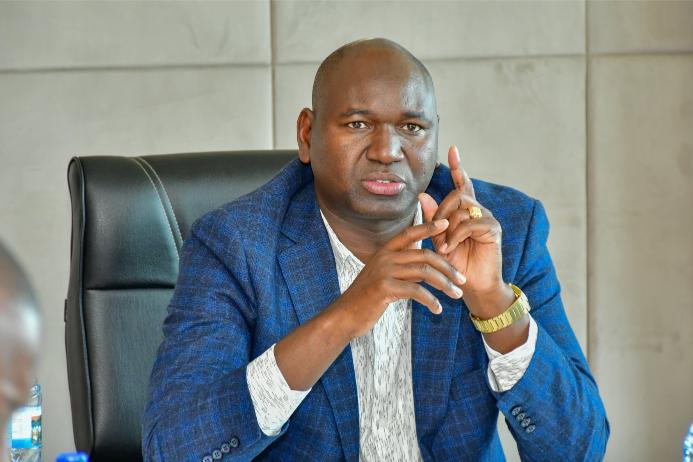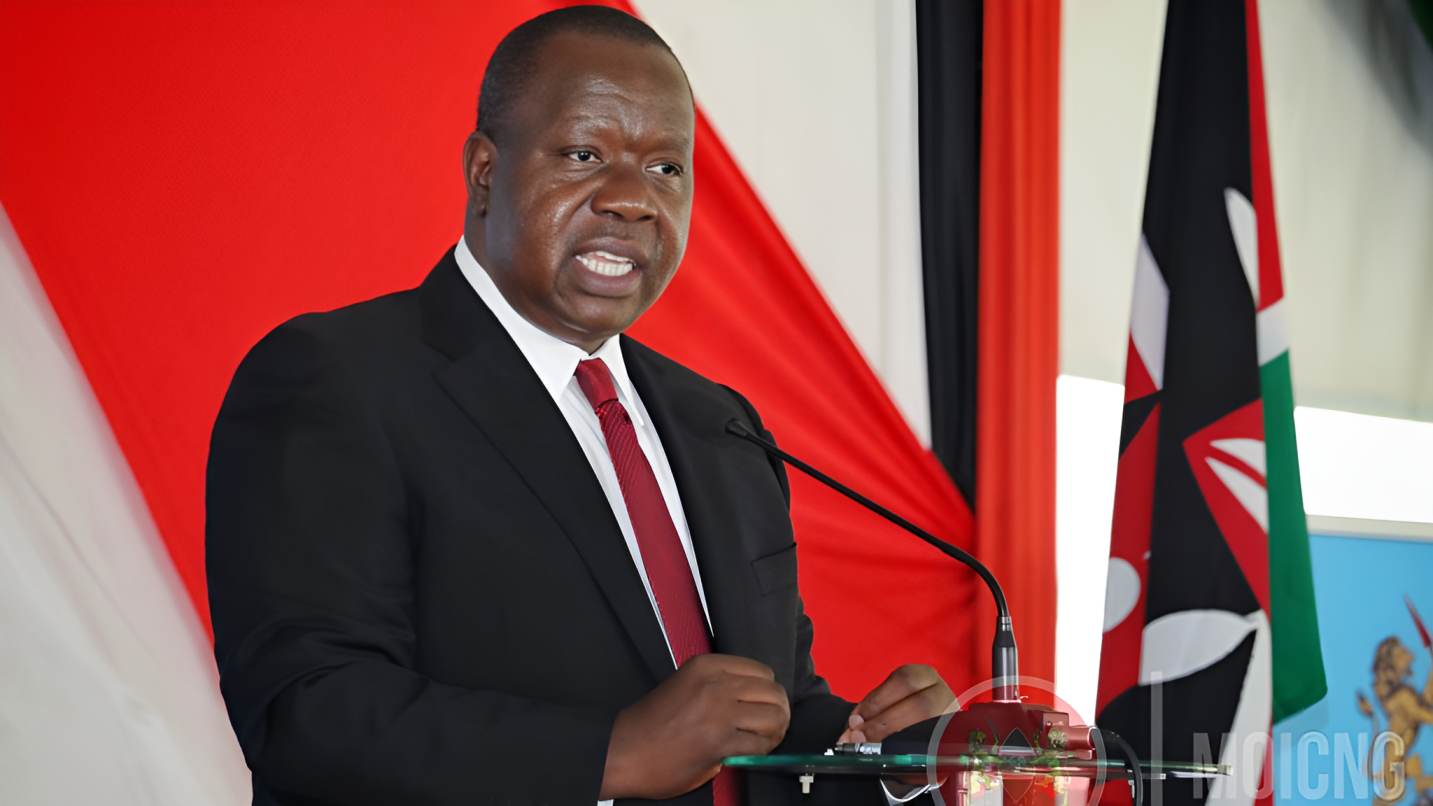
Former Interior Cabinet Secretary Fred Matiang’i has pushed back against claims that Kenya’s Competency Based Curriculum is his failed legacy, blaming the current administration for what he described as poor leadership and disorder in the education sector, while promising reforms if there is a change in leadership in 2027.
In a statement shared on X on Friday, following an interview aired on Wednesday night, Matiang’i dismissed remarks by Defence Cabinet Secretary Aden Duale that placed responsibility for the CBC challenges on him. He said the claims were misguided and ignored the real cause of the crisis facing education today.
According to Matiang’i, the difficulties being experienced are not rooted in the curriculum itself, but in how it has been handled by those currently in charge.
“The real mess we are witnessing today is not the curriculum itself, but the gross incompetence with which the administration he serves has managed the education sector,” Matiang’i said.
He cited the handling of the 100 percent transition policy as a clear example of leadership failure. The policy, which sought to ensure that all learners move from one level of education to the next, was introduced as a key reform under previous governments.
“Even the flagship 100 percent transition, a major milestone achieved through deliberate planning and system reforms has been badly mishandled and effectively undermined under their watch,” he said.
Matiang’i rejected arguments that the current problems would not exist if another education system had been retained. He maintained that any curriculum inherited by the current leadership would have suffered the same fate.
“And let us be frank. Whether they inherited CBC, 8-4-4, or 7-6-3, the outcome would have been the same,” he said. “Incompetence is the only thing they execute with consistency.”
His comments come as public debate continues over the CBC rollout, which replaced the 8-4-4 system. The curriculum has faced criticism from parents, teachers, and political leaders over lack of resources, assessment methods, and readiness. Supporters, however, argue that the idea behind CBC is sound but has been weakened by poor execution.
Matiang’i noted that criticism of the education sector is not coming only from outside government, pointing out that lawmakers allied to the administration have also raised alarm.
“In fact, Members of Parliament aligned to government have recently publicly decried the spectacular incompetence of senior officials at the Ministry of Education who are more preoccupied with self-aggrandisement than with the serious business of running the Ministry,” he said.
He insisted that CBC itself remains a strong policy and that the real issue lies in weak leadership and confusion within the sector.
“There is nothing wrong with the CBC, the present challenge is in the incompetent and chaotic management of the education sector,” Matiang’i said, describing the situation as poor implementation of the curriculum.
Kenya introduced the CBC as a major shift in education, moving learning away from memorisation toward skills, values, and learner abilities. The curriculum was officially rolled out in January 2017, starting with pre-primary and lower primary levels, following years of research and pilot programmes by the Kenya Institute of Curriculum Development.
The system replaced the 8-4-4 structure, which had long been criticised for focusing too heavily on exams and failing to support individual talents. Education planners argued that the old system placed too much pressure on national tests while limiting creativity and critical thinking.
Under CBC, learners are assessed continuously, with greater focus on practical work, teacher observation, and learner records rather than one final exam. The reform was also intended to prepare learners for a skills-based economy and align education with global trends.
Matiang’i, who has been increasingly mentioned in political discussions ahead of the 2027 general election, ended his statement on a hopeful note, linking education reform to wider political change.
“But there is hope! We are ready to fix this again,” he said.
He urged Kenyans to use the ballot to address what he described as leadership failure.
“When Kenyans rescue the country from incompetence and poor leadership in 2027, we will restore order, professionalism and results driven leadership in the education sector, and government as a whole,” he said.
The remarks are expected to sharpen political debate around education, an issue that touches millions of households and remains a key measure of government performance. As discussions continue, the CBC debate has grown into a broader conversation about leadership, accountability, and the ability of institutions to manage large national reforms.