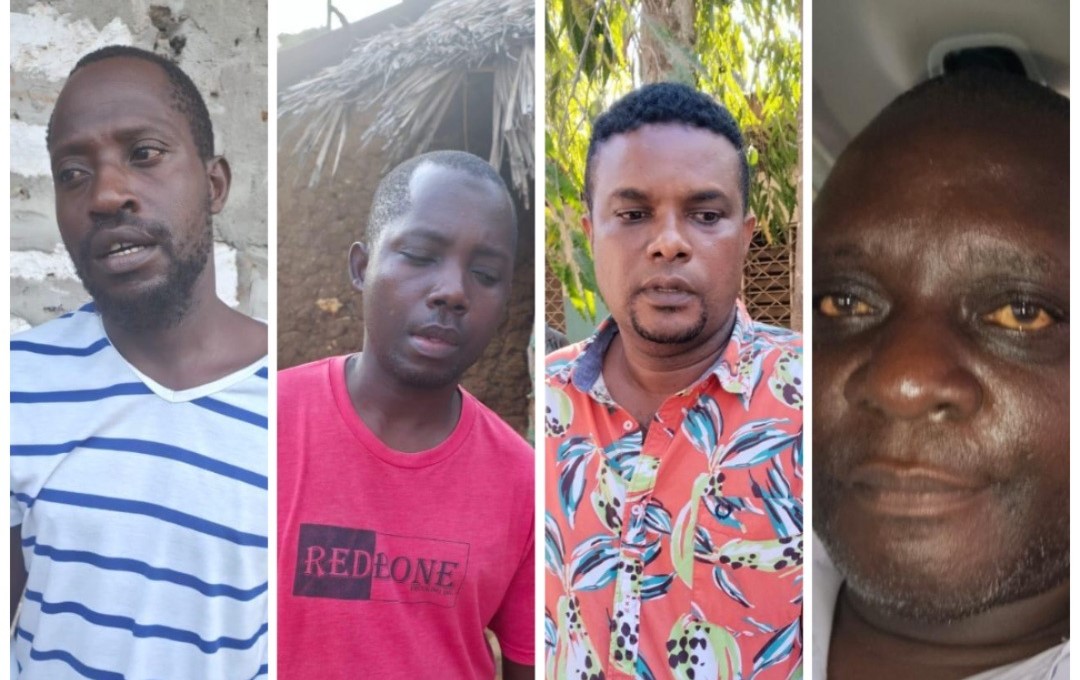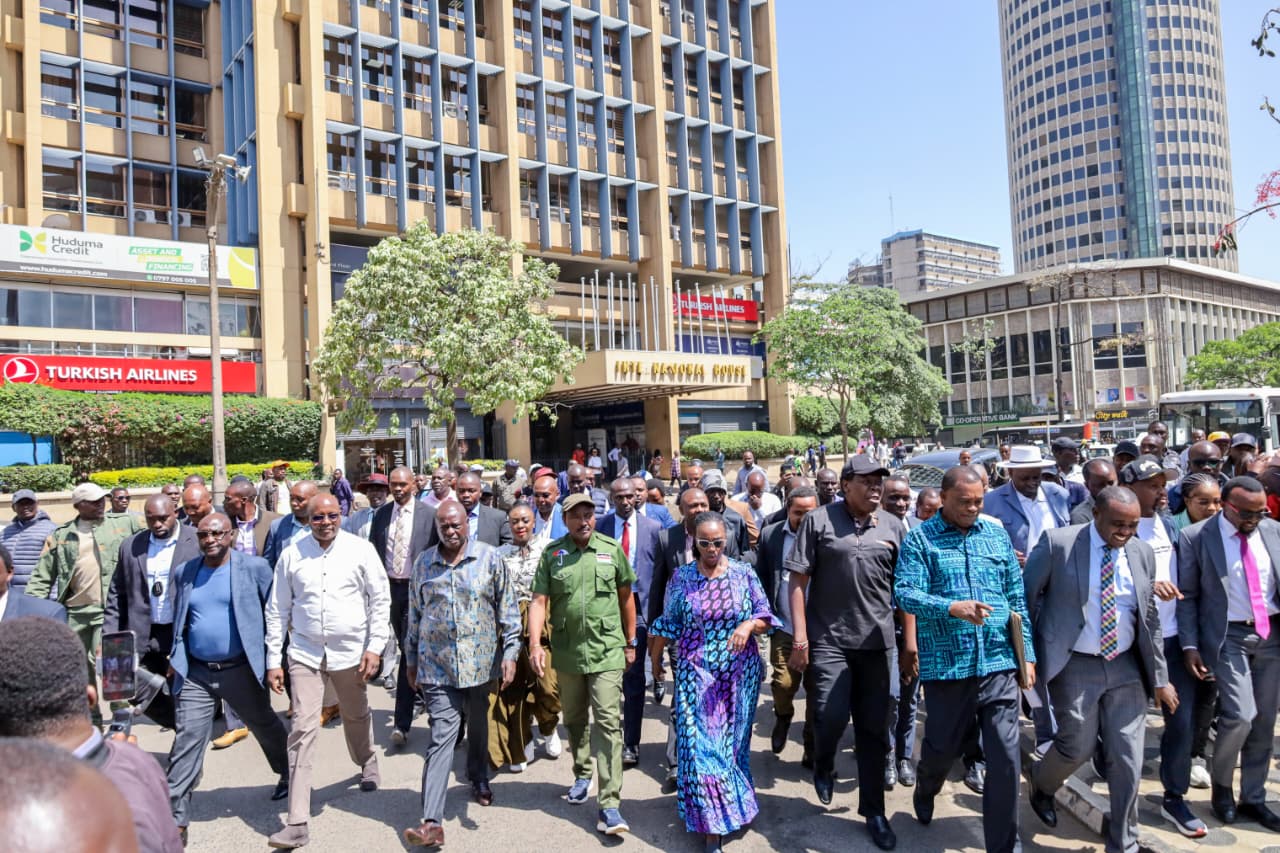
Opposition leaders have given the Inspector General of Police (IG) a two-week ultimatum to arrest and hold accountable those responsible for a series of violent attacks on opposition leaders and supporters across Kenya.
The leaders warned they would escalate the matter to the international community if no action is taken.
On his X(former Twitter) account, Former Deputy President, Rigathi Gachagua on Friday said, “This afternoon, with my Colleagues Stephen Kalonzo Musyoka, Eugene Wamalwa, Justin Muturi, Martha Karua, Cleophas Malala and many elected leaders, we faced the IG of police over his continued misadventure of police brutality and goonism in the country.”
“We cannot live in a Nation of impunity in a nation our forefathers founded,” he added, condemning the ongoing culture of violence. “The culture of impunity and goonism has no place in a civilized society.”
Since November 2024, Kenya has witnessed over twenty-three violent incidents targeting opposition figures.
These attacks have disrupted funerals, prayer gatherings, church services, political convoys, party events, and by-elections.
According to the opposition, goons, often accompanied by heavy police escorts, have deployed teargas, fired live ammunition, torched vehicles, ambushed motorcades, and desecrated sacred spaces.
Despite numerous reports, no meaningful investigations have been conducted, and no arrests have been made, prompting the opposition to take action.
The most egregious of these incidents occurred on January 26, 2026, at Witima ACK Church in Othaya, Nyeri County.
Police officers and hired thugs teargassed a house of worship, set ablaze vehicles belonging to opposition leaders, and injured innocent worshippers including children, women, and clergy.
Their target was none other than the Second Deputy President himself. “This was not law enforcement. It was state-sanctioned criminality and a blatant violation of every Kenyan’s constitutional rights to safety, assembly, and worship,” the leaders stated.
The opposition leadership gave the Inspector General of Police until February 16, 2026, to ensure those responsible are arrested and held accountable.
“We cannot and will not accept a police service weaponised to intimidate, attack, or worse, attempt to assassinate elected leaders. Kenyans must not live in fear of the very officers sworn to protect them,” warned Gachagua.
In a joint statement, Kalonzo Musyoka, alongside other opposition principals, stressed the gravity of the situation.
“Should the Inspector General fail to act, we will escalate this matter to the international community and our development partners. The world must know that Kenya is being run by goons masquerading as law enforcement.”
This morning, the United Opposition principals, including Martha Karua, Eugene Wamalwa, Justin Muturi, and others such as Senators Dan Maanzo and Seki Lenku, Cleophas Malala and Gloria Orwoba marched to Jogoo House, the seat of the police headquarters, to present their formal complaints.
“We stand firm. Justice must prevail. The people of Kenya will accept nothing less,” Musyoka affirmed, reaffirming the unified resolve of opposition leaders to demand an end to police impunity.
Gachagua emphasized that several Kenyans have lost their lives to goons and police and no action seems to be taken despite the criminals being known.
He called on all Kenyans to stand united against the culture of violence. “Kenya is bigger than anyone of us, whether in authority or otherwise. We shall be back in Othaya Town this weekend and we shall not bow to anyone as a people united to liberate our Nation.”
The opposition’s challenge comes amid growing national unease over the role of the police in political violence and human rights violations.
Their public confrontation with the Inspector General represents an unprecedented show of force and determination to seek redress and accountability.
As the February 16 deadline approaches, Kenya watches closely to see if the police leadership will heed the call for justice or if the political crisis will deepen further, with potential implications for national stability and Kenya’s international reputation.