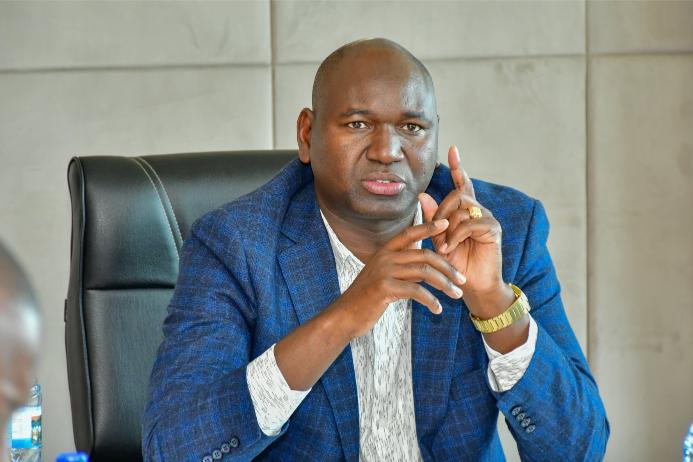
Kenya’s Media Council CEO David Omwoyo has raised alarm over the growing threat of technology-driven disinformation, warning that tools such as cloned voices and manipulated content are weakening public trust in journalism.
Speaking on NTV, he highlighted that the rapid spread of unverified information online poses one of the most serious challenges to ethical media practice.
Omwoyo urged journalists to remain steadfast in upholding professional standards, emphasizing the need to verify facts, protect children, and be sensitive to ethnic and community dynamics.
“Media is within the community… it does not live beside the community,” he said on Friday, stressing that reporting should mirror the shared values of society.
He underlined the core responsibility of journalism: “In a very broad sense, we say journalism is seek the truth and report it… do no harm.” According to him, this principle requires that reporters carefully confirm information before publishing and avoid content that could inflame tensions.
“Journalists do not put information out there before verification… do not incite people against each other. Do not speak falsehoods. Do not be vulgar, or put content that hurts other people,” Omwoyo added, urging the media to maintain integrity even in fast-moving digital spaces.
He warned that technological advances have made it easier for misleading information to spread before its origin can be traced. “The biggest challenge we see is technology facilitated disinformation,” he said. “I clone your voice, I pretend to be you, and then I put that info so people know. But because we know people will trust you, therefore we come and clone your voice.”
Exploiting the credibility of trusted individuals, he said, undermines both journalism and public confidence. “Don’t pretend to be me,” he cautioned, highlighting cases where actors use sensational or explicit material to attract online attention at the expense of privacy. “Now that’s private in the public space. We have rules and regulations for public space.”
Omwoyo also called on audiences to improve their media literacy, saying consumers play a key role in supporting credible journalism. “Because you are the consumer, please… verify. Is this a trusted source?” he said, noting that the council conducts annual trust surveys around World Press Freedom Day to identify the most trusted media outlets.
His remarks coincided with Kenya’s commemoration of World Radio Day, themed “Radio and Artificial Intelligence: AI is a tool, not a voice.” First declared by UNESCO in 2011 and recognized by the UN General Assembly in 2012, February 13 marks the founding of United Nations Radio in 1946.
Omwoyo said the theme reinforces the principle that while AI can support journalism, human ethical responsibility must always guide reporting.