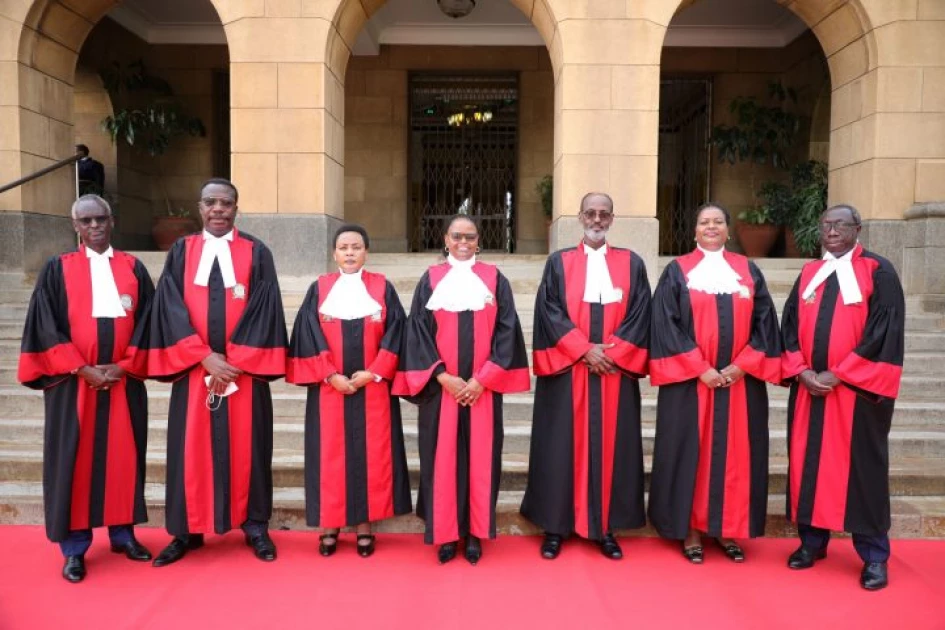
A fresh bid to offer judges enhanced retirement packages has sparked a major standoff in government, with the Salaries and Remuneration Commission warning that the plan goes against the country’s pay laws and would impose a heavy cost on citizens.
The commission has told lawmakers that the Judges Retirement Benefits Bill, 2025, would require the exchequer to spend at least Sh15 billion each year, at a time the government is battling budget pressure and scaling down spending in key sectors.
The proposal seeks to improve pension terms for serving judges, those who will join the bench after the law starts, and judges who retired after the 2010 Constitution came into force.
It includes guaranteed pensions as well as medical and transport benefits to be paid by the government. The draft also carries a clause stating that if it clashes with any other law, its provisions will take priority.
This has raised concerns that Parliament may be aiming to elevate the Bill above the SRC Act when it comes to handling judges’ pay and benefits.
Under the plan, judges would not contribute to their retirement fund, meaning the government would shoulder the entire cost. This is against the commission’s recommendation to place all state officers under a defined contribution scheme, which aligns with national policy and the Pensions Increase Act, 2005.
In a memorandum dated November 4, 2025 addressed to the National Assembly’s Justice and Legal Affairs Committee, acting SRC chief executive Margaret Njoka urged MPs to adjust the proposal.
“The commission recommends that for purposes and equity and harmony in the definition of pensionable emoluments, the clause be amended to provide that ‘pensionable emoluments’ means the basic salary payable to a judge as set by the SRC,” she says.
The Bill gives the Judicial Service Commission full powers to advise on judges’ retirement benefits. Njoka argues that doing so strips SRC of its constitutional authority over state officers’ pay.
She cites Article 230 (4) (a), which places the role of setting and reviewing state officers’ salaries and benefits under SRC, a position that the High Court confirmed in 2015.
She further notes that the first-year cost for medical and transport benefits alone stands at Sh1.74 billion, yet these perks have not gone through SRC review.
“The proposed review of retirement benefits for judges of superior courts constitutes a direct usurpation of SRC’s constitutional mandate to set and regularly review the remuneration and benefits of state officers, including retirement benefits,” she says.
The concerns come as the government faces a tight fiscal outlook. National Treasury Cabinet Secretary John Mbadi recently cut the capitation for secondary school students from Sh22,244 to Sh16,900 each as the state struggles with debt and lower-than-expected revenue.
Despite this environment, the Bill defines pensionable earnings as a combination of basic pay and house allowance, contradicting a directive SRC issued to the JSC on October 13, 2023 stating that pensionable pay should be based only on basic salary.
Njoka notes that the draft law tries to place the JSC’s powers above SRC’s role even though the Constitution limits JSC’s function to recommending pay for judges. She also stresses that the Bill fails to meet the test of fiscal responsibility required under the Constitution and the SRC Act.
The commission has underscored that its position is not targeted at the Judiciary but aims to protect fairness and consistency across state officers. Judges fall in the same category as top government officials, including national leaders, county bosses, magistrates and senior security heads, meaning that awarding them special benefits could open the door for similar demands.
Njoka warns that such ripple effects would deepen pressure on the already strained public payroll.
The memorandum explains that the retirement benefits plan has been in discussion since the late 1990s and is intended to support judicial independence and proper welfare after service.
However, it insists that any improvement to benefits must be carefully reviewed to avoid upsetting the wider public pay system.
“Such uncoordinated enhancement of benefits for one category of state officers without comprehensive analysis of its implications for the entire public sector compensation framework contravenes the holistic approach that SRC’s constitutional mandate is designed to ensure,” Njoka notes.
She also highlights that the wage bill has fallen from 51 per cent to 43 per cent of revenue over the past five years due to SRC measures, saving the government around Sh70 billion annually.
The Public Finance Management Act requires that the wage bill stay below 35 per cent of revenue. “The SRC neither initiated the review nor set the retirement benefits proposed in the Bill,” the commission says in the memo.































Comments
Sign in with Google to comment, reply, and like comments.
Continue with Google