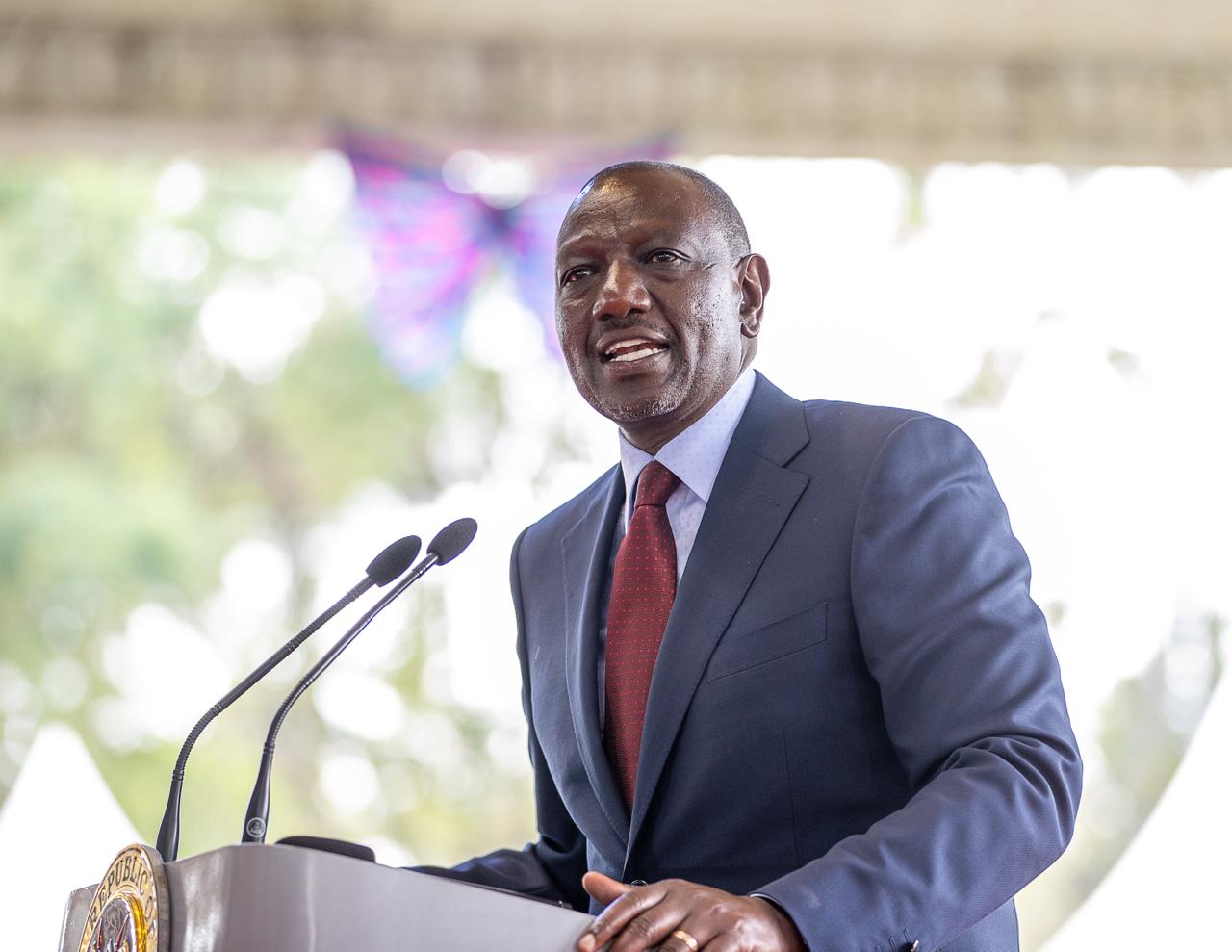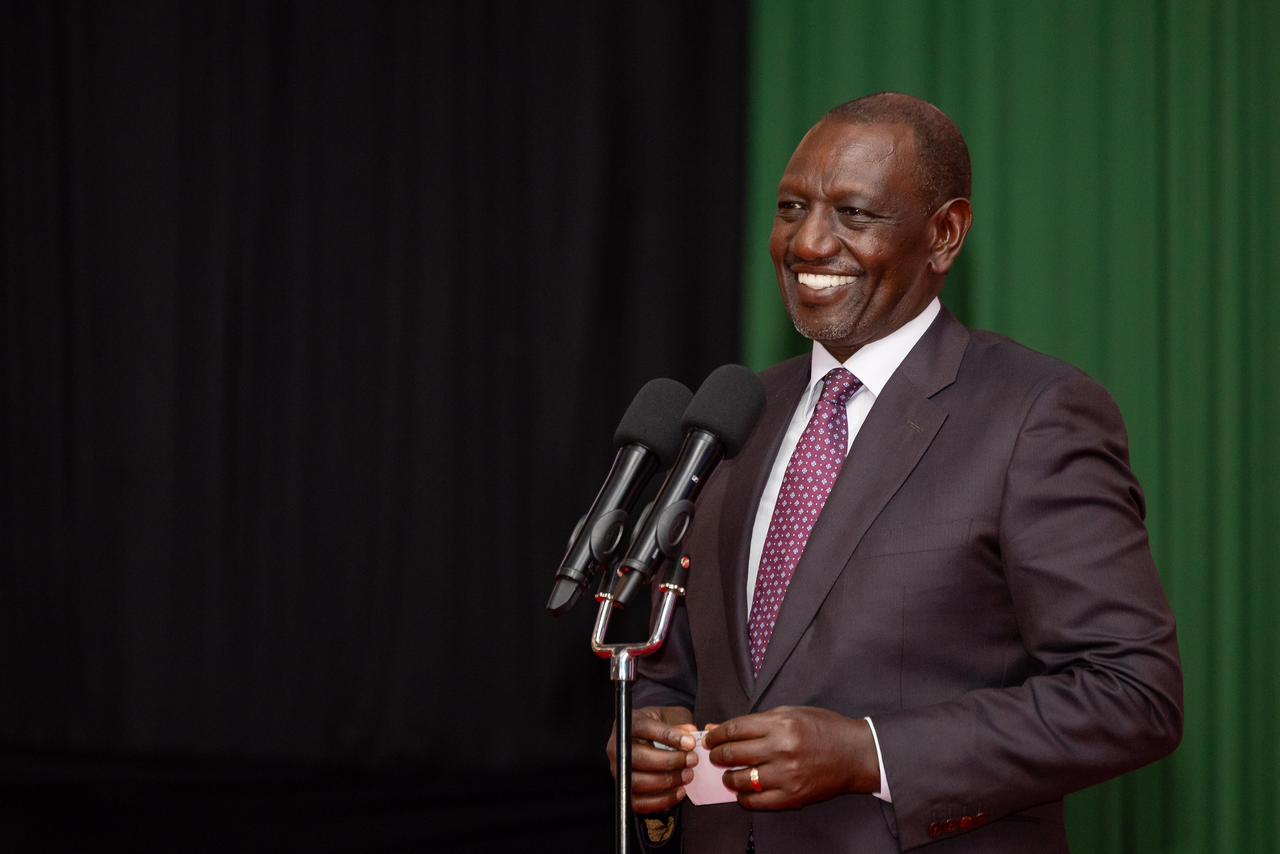
President William Ruto has declared that police will no longer play a role in administering national examinations, emphasizing that tests should not be treated as matters of life and death.
He noted that exams are an essential part of learning but should not be managed as security operations.
“Exams are part of learning. They must not be a life-and-death issue,” Ruto said.
The President highlighted that the country has successfully guided learners through critical transitions under the new education system, including moving from primary to junior secondary, and now from junior to senior secondary schools.
Ruto explained that the Competency-Based Education reforms are designed to reduce pressure on students by shifting the focus from high-stakes exams to continuous assessment and holistic growth.
Removing police from exam oversight, he said, is in line with the government’s broader reform agenda.
He also defended the government’s Sh44 billion allocation to education, pointing out that funds for teaching and learning materials have been disbursed and that schools are equipped with necessary facilities.
“With these resources available, there is no justification for children being locked out of school,” Ruto said.
“If we have provided money for teaching, paid teachers and built classrooms, there is no reason anyone should keep our children out of school.”
The President reiterated his call for every school-going child to attend classes, stressing that education is a constitutional right. He cautioned against administrative or financial barriers that prevent learners from accessing school.
He expressed concern over rising corruption linked to school uniforms, noting that in some schools costs have reportedly reached Sh38,000.
“We will look into the uniform issue. Uniforms are beginning to become another source of corruption,” he said.
Ruto directed that no student should be denied entry to school due to uniform issues and introduced flexibility for learners transitioning between levels.
“I have directed that no child will be kept out of class because of uniform. Even if they have a junior school uniform, they can report to secondary school with it as they wait for parents to organise themselves,” he said.
He assured that the government will work closely with education partners to remove unnecessary obstacles and warned against extra requirements that make schooling costly or inaccessible.