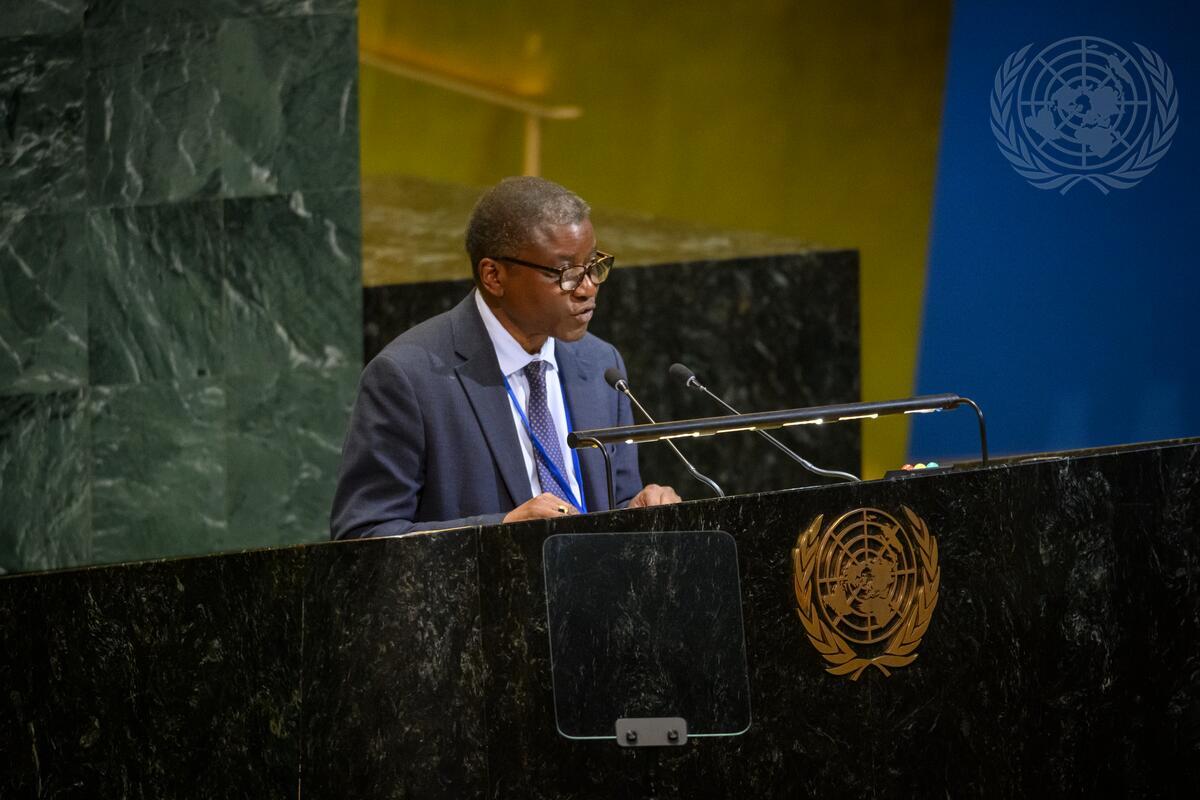
The United Nations Special Adviser on the Prevention of Genocide, Chaloka Beyani, has raised alarm over the escalating conflict in Sudan, warning that parts of the country face a serious risk of genocide amid widespread and systematic attacks on civilians.
Addressing a press conference in Nairobi on December 18, 2025, Beyani said his visit to Kenya from December 15 was prompted by reports of systematic and targeted attacks against protected civilian populations across Sudan, which he said are protected under both the Genocide Convention and the Geneva Conventions.
“I have listened to the stories of those who suffered and escaped the violence,” Beyani said. “Their testimonies shake our conscience.”
He stated that both the Sudan Armed Forces (SAF) and the Rapid Support Forces (RSF), together with allied militias, have committed grave violations of international humanitarian and human rights law.
“Verified information indicates that both SAF and the RSF have deliberately targeted civilians,” he said, citing summary executions, torture, arbitrary detention and inhuman treatment, including the denial of essential needs.
Beyani expressed particular concern over atrocities allegedly committed by the RSF in El Fasher and other areas of Darfur.
These include murder, rape, sexual slavery, torture, and forced displacement, as well as ethnic persecution of non-Arab communities and the use of starvation as a method of warfare.
“Humanitarian relief is being weaponized, access to aid is denied and humanitarian workers are deliberately targeted,” he warned.
According to the UN adviser, systematic attacks in North Darfur against the Zaghawa, Masalit and Fur communities could point to genocidal intent.
“Such acts may fall within the categorization of the crime of genocide under the 1948 Genocide Convention,” he said, noting that the determination would ultimately rest with judicial bodies.
Beyani echoed earlier warnings by UN Secretary-General António Guterres and cautioned that the siege of cities in the Kordofan region could result in further mass atrocities.
“We must not allow Kordofan to become another El Fasher,” he said, quoting UN High Commissioner for Human Rights Volker Türk.
To prevent further suffering, Beyani called for an immediate ceasefire.
“I call for a ceasefire to prevent further atrocity crimes,” he said, urging parties controlling territory to protect civilians and guarantee unhindered humanitarian access.
He also called for the demilitarisation of cities, stronger monitoring mechanisms and a single, inclusive peace process.
“Multiple peace processes may only lead to parties playing one against the other,” Beyani said, adding that the African Union could play a central role, with support from the United Nations.
On accountability, he stressed the need to end impunity.
“The victims demand accountability and the end of impunity,” Beyani said.
“They know, and we know, that impunity leads to further violence. This cycle must be stopped.”































Comments
Sign in with Google to comment, reply, and like comments.
Continue with Google