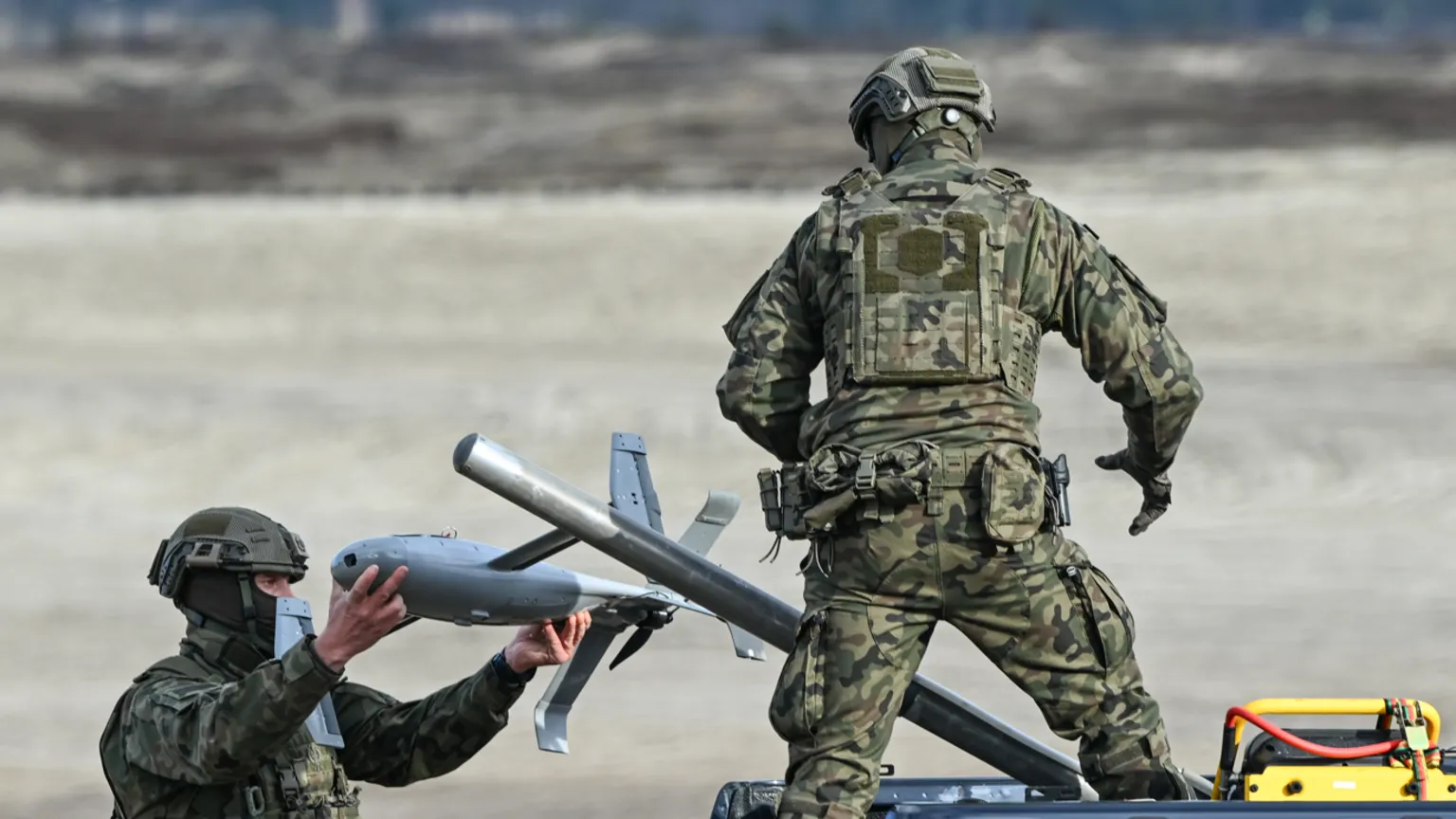
The United Kingdom has joined forces with Germany, France, Italy and Poland to create a collaborative air defence programme aimed at developing affordable drones and missile systems.
The initiative is designed to strengthen European security cooperation while providing a faster and cost-effective response to emerging aerial threats. Officials say the first weapons from this partnership are expected to be ready within the next year.
The programme will open the door for defence manufacturers from all five countries to propose designs for low-cost surface-to-air missiles and autonomous drones. It draws inspiration from Ukraine’s rapid deployment of domestic drone technology, which has played a key role in countering Russian attacks.
The UK Ministry of Defence describes the initiative as focusing on “lightweight, affordable” weapons capable of tackling modern, large-scale threats without relying on expensive traditional missile systems.
The agreement was unveiled during a meeting of defence ministers in Krakow, Poland, marking a renewed effort to deepen UK ties with Europe after the breakdown of last year’s talks on the EU’s 150 billion euro defence fund.
Britain had withdrawn from the fund negotiations after rejecting a multibillion euro entry fee demanded by the bloc, leaving joint funding of projects in question.
Although an official budget for the new programme has not been disclosed, Defence Minister Luke Pollard confirmed that each country is committing “multimillion pound, multimillion euro” contributions to drive the project forward.
The E5 alliance, as the five countries are known, plans to roll out a series of initiatives aimed at making air defence more efficient and cost-effective, particularly against cheap, mass-produced drones.
Ukraine’s experience with drones is central to the programme’s planning. Since Russia launched a full-scale invasion four years ago, Kyiv has developed a thriving drone industry, using large numbers of low-cost unmanned aerial vehicles to offset the limits of conventional missile defences.
Pollard noted that the programme aims to ensure the cost of defence matches the cost of modern threats: “To be effective at shooting down relatively low-cost missiles, drones and other threats facing us, we need to make sure that we're matching the cost of the threat with the cost of defence.”
The Ministry of Defence has not yet provided a full timeline for rapid drone production, but it plans to expand cooperation with smaller tech firms and reduce operational barriers for participation.
Pressure is mounting on European nations to increase military spending as the Ukraine conflict continues and questions arise over the reliability of the United States as a NATO partner.
The E5 group, created in autumn 2024 after Donald Trump’s re-election, has convened seven times and is now seen as a central platform for European defence collaboration outside of broader EU mechanisms.
A key focus of the partnership is the development of autonomous drones that can identify targets using artificial intelligence. This approach aligns with a UK military review released last summer, which endorsed “more permissive” regulations for autonomous systems, signaling a potential move away from the principle that weapons should always require “context-appropriate human involvement.”