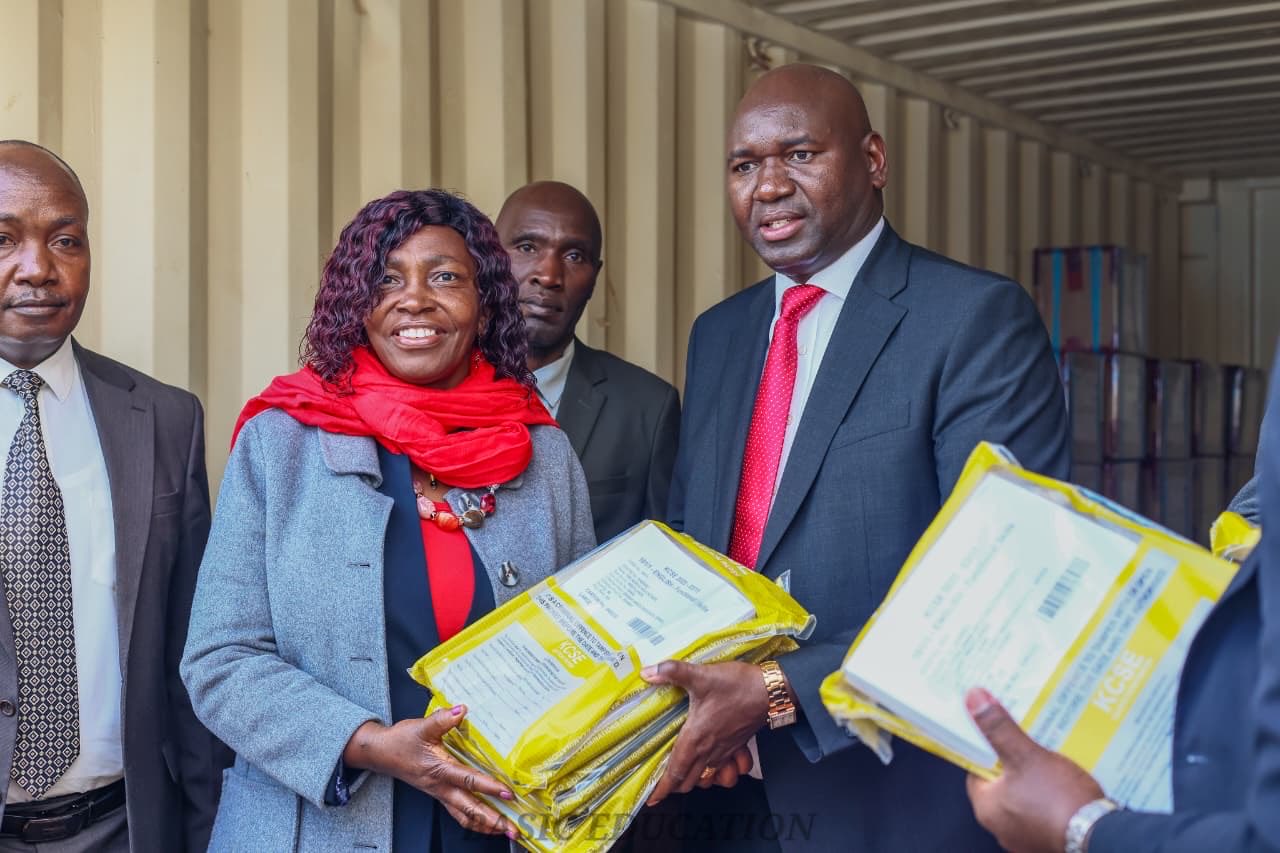
The Kenya National Examinations Council (Knec) is preparing to take control of printing national examinations within Kenya, ending decades of outsourcing the task to foreign firms in the United Kingdom.
The shift aims to reduce costs, improve logistics, and ensure the timely delivery of exam materials for candidates across the country.
Basic Education Principal Secretary Julius Bitok told the National Assembly’s Education Committee on Wednesday that Sh147 million has been earmarked in the proposed 2026/27 budget to purchase a machine for printing optical mark recognition forms locally. He said this investment is a key step in modernizing the country’s exam administration system.
The move comes after repeated criticism over the high expenses and operational challenges linked to printing papers abroad. In May 2025, thousands of candidates faced uncertainty after the National Treasury temporarily removed the entire budget for exam registration and supervision, sparking questions from lawmakers about government priorities.
Committee chairperson Julius Melly voiced concern at the time, asking: “There are certain activities that you tend to think may be done or may not be done, but putting zero budget for exams, are we serious?”
Treasury Cabinet Secretary John Mbadi clarified that the Sh11 billion annual allocation for the Kenya Certificate of Secondary Education (KCSE) had been paused to allow investigations into alleged mismanagement of funds.
“We have not removed the money so that parents can pay. No parent will pay the examination fees. We are trying to assess various things, including why the government should pay a student’s examination fees,” he said.
Mbadi further questioned the necessity of outsourcing exam printing to London, arguing that it was an unnecessary burden on taxpayers.
“Why must our examinations be printed in London, England just a mere examination,” he asked.
According to budget estimates, administering school exams and supervising candidates will require Sh14.7 billion in the 2026/27 financial year. However, only Sh9.9 billion has been proposed, leaving a gap of Sh4.82 billion.
Prof Bitok explained that the funds are needed for the Kenya Junior School Education Assessment (KJSEA) and other national exams.
“The target is to administer KJSEA (Kenya Junior School Education Assessment) and other exams and assessments. Resource requirement for KJSEA is Sh3,920 million and Shh10,800 million for administration of KCSE (Sh9.5 billion), KPSEA [Kenya Primary School Education Assessment (Sh1.2 billion), and school-based assessments (Sh144.7 million),” he said.
The School Feeding Programme managed by the National Council for Nomadic Education in Kenya requires Sh3.85 billion but has only been allocated Sh3 billion, leaving a shortfall of Sh849.48 million. The programme supports 2.8 million learners in arid and semi-arid regions and informal urban settlements.
The Low-Cost Boarding School Programme, which assists 158,286 learners in arid and semi-arid areas, also faces a funding deficit of Sh120.34 million. While breakfast and supper are provided, lunch depends on the underfunded school feeding programme.
Prof Bitok highlighted that the Basic Education sector is facing an overall funding gap of Sh111.07 billion for the 2026/27 financial year. The department needs Sh245.85 billion to fully implement programmes across primary, junior, and secondary schools.
“Under recurrent expenditure, the department has a proposed allocation of Sh118,680.47 million against a requirement of Sh216.5 billion. Similarly, under development, the proposed allocation for FY 2026/27 is Sh16 billion against a requirement of Sh29.4 billion. This represents an underfunding of 45 per cent for both recurrent and development budgets,” Prof Bitok told the committee.