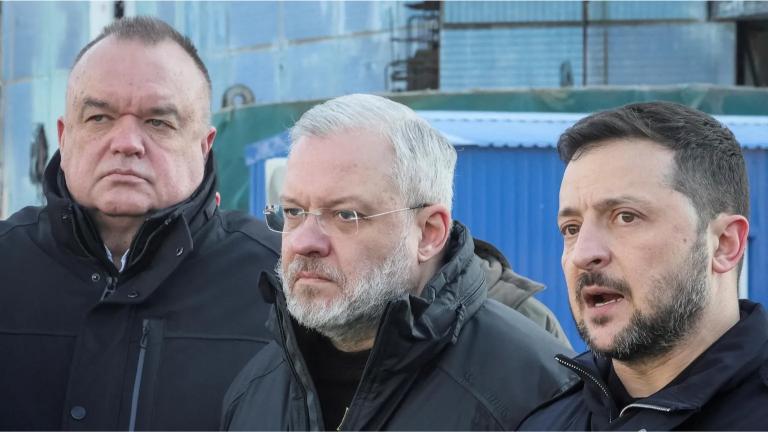
Ukraine’s political landscape has been shaken after the resignations of two key ministers, following allegations of a massive corruption scheme that has implicated several high-ranking officials and business figures close to President Volodymyr Zelensky.
Energy Minister Svitlana Grynchuk and Justice Minister Herman Halushchenko stepped down on Wednesday after Ukraine’s anti-corruption authorities accused them of being involved in a $100 million embezzlement operation connected to state-run nuclear energy projects.
The National Anti-Corruption Bureau of Ukraine (Nabu) and the Specialized Anti-Corruption Prosecutor’s Office (Sap) revealed that the investigation, which spanned 15 months and relied on over 1,000 hours of intercepted audio, uncovered systematic collection of kickbacks from Enerhoatom contractors.
According to the authorities, officials took between 10 and 15 percent of contract values, which were later laundered and sent abroad, including to Russia.
Among those implicated are former Deputy Prime Minister Oleksiy Chernyshov and businessman Timur Mindich, a former co-owner of Zelensky’s TV company, Kvartal95, who is reported to have fled the country.
Prosecutors also linked part of the laundered funds to an office in Kyiv connected to the family of former lawmaker and current Russian senator Andriy Derkach.
Halushchenko promised to fight the allegations, while Grynchuk defended her record on social media, stating, “Within the scope of my professional activities there were no violations of the law.”
Nabu has continued releasing excerpts from its investigation, including wiretap recordings and images of cash seized during the inquiry.
The timing of the scandal is particularly sensitive, coming as Russia escalates attacks on Ukraine’s energy infrastructure, including substations that feed power to nuclear facilities.
The revelations threaten to cast doubt on Ukraine’s progress in fighting corruption, an issue that has remained deeply entrenched despite the work of Nabu and Sap over the past decade.
Earlier this year, nationwide protests erupted after legislative changes were seen to restrict the independence of Ukraine’s anti-corruption agencies. The public outcry drew sharp criticism from European partners and G7 nations, who warned that EU candidate status could be jeopardized if reforms were undermined. Zelensky later reversed the restrictions, restoring the autonomy of the agencies.
With public trust and international credibility at stake, the latest scandal poses a severe challenge to Zelensky’s leadership and threatens to deepen questions about the administration’s commitment to transparency and anti-graft measures.