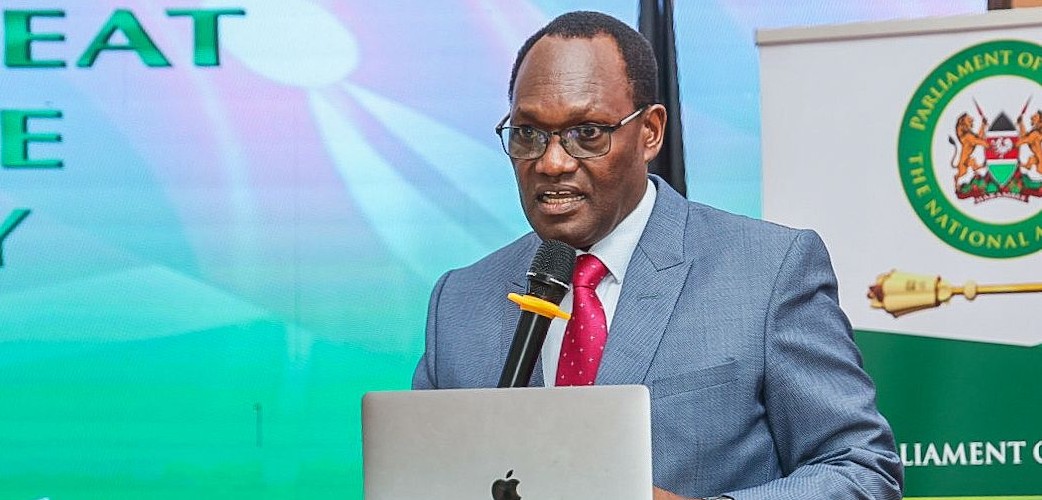
Lawmakers on Thursday pressed the National Treasury on the proposed sale of a 15 per cent stake in Safaricom to Vodacom, raising doubts about the valuation, legal safeguards, and transparency of the transaction.
The deal, expected to generate Sh204 billion, sparked a heated session at the Naivasha retreat, with MPs seeking assurances that public resources would not be compromised.
Treasury Principal Secretary Chris Kiptoo, speaking on behalf of Finance Cabinet Secretary John Mbadi, defended the plan, insisting that the sale was conducted in the best interest of taxpayers. Some legislators, however, argued that selling to an existing shareholder limited opportunities for broader public participation.
Suba South MP Caroli Omondi noted, “We have a block sale to an existing shareholder. We should have diversified.” Mumias East MP Peter Salasya added, “Members, please reject this thing called stripping of government investments.”
Kiptoo explained that selling the shares publicly could have led to a discount, while the negotiated deal with Vodacom offered a premium.
“If we offered the sale to the public, we would have sold the shares at a discount, not a premium. We have negotiated for the best offer. We are getting Sh11 billion more,” he said.
The valuation of the shares also drew questions from MPs. Kimani Kuria, Chair of the Finance Committee, pressed for clarity on how the share price was determined.
“We want them to tell us which model they arrived at to get the shares at 70 to 80,” he said. Machakos Woman Representative Joyce Kamene and Caroli Omondi requested details on the methodology and independent assessments.
Majority Leader Kimani Ichung’wah asked critics to submit alternative proposals if they believed higher returns were possible.
“If there’s anybody who has other avenues to get more value for our shares, are you willing to accept it?” he asked. Kiptoo replied, “As the National Treasury, we welcome any option that will give Kenyans better value. We are willing to accept anything better.”
MPs also questioned how the proceeds would be used, warning that without a proper legal framework, the money could end up funding recurrent expenses instead of infrastructure.
Finance Committee Chair Kimani Kuria said, “The biggest concern on the partial divestiture is how Parliament will guarantee that the money will go towards funding infrastructure projects in the absence of a legal framework.”
Teso South MP Mary Emmase added, “If the money went to the Consolidated Fund as required by the Constitution, as Article 206, are we as Parliament able to trace this expenditure?”
Kitui South MP Rachael Nyamai noted competing fiscal demands. “We have the debt and pending bills, which take priority in spending. This money could be diverted to pay this pressing need, including salaries and debt,” she said.
PS Kiptoo assured MPs that the Infrastructure Fund had been set up as a limited liability company to hold the proceeds.
“We thought we could use the Companies Act to set up the Infrastructure Fund quickly as a limited liability company and have Parliament approve the instrument. We are amenable to any proposals that you may have because we know that there is an ongoing public participation on the partial divestiture of government shares in Safaricom,” he said.
CS Mbadi confirmed that the funds would be directed only to commercially viable infrastructure projects.
“The proceeds of the sale of Safaricom shares will be exclusively used to de-risk and lower the cost of infrastructure projects. I have already established the National Infrastructure Fund Limited, where I am the sole shareholder,” he said.
“This money is not going to fund our budget, it is not going to be used to fill our fiscal deficit, nor to pay pending bills, nor capitation. This money is going to be used exclusively on commercially viable projects.” He added that the funds will also support energy projects, including generation and transmission of power.
The Sessional Paper 3 outlines plans to sell six million Safaricom shares to Vodacom at Sh34 per share, representing a 23.6 per cent premium over the six-month average price ending December 2, 2025. Following the sale, the government’s stake will reduce from 35 per cent while Vodacom’s holding rises from 40 per cent to 55 per cent.
Parliament has 28 days from December 2025 to approve, reject, or amend the plan, which will take effect on March 26, 2026.