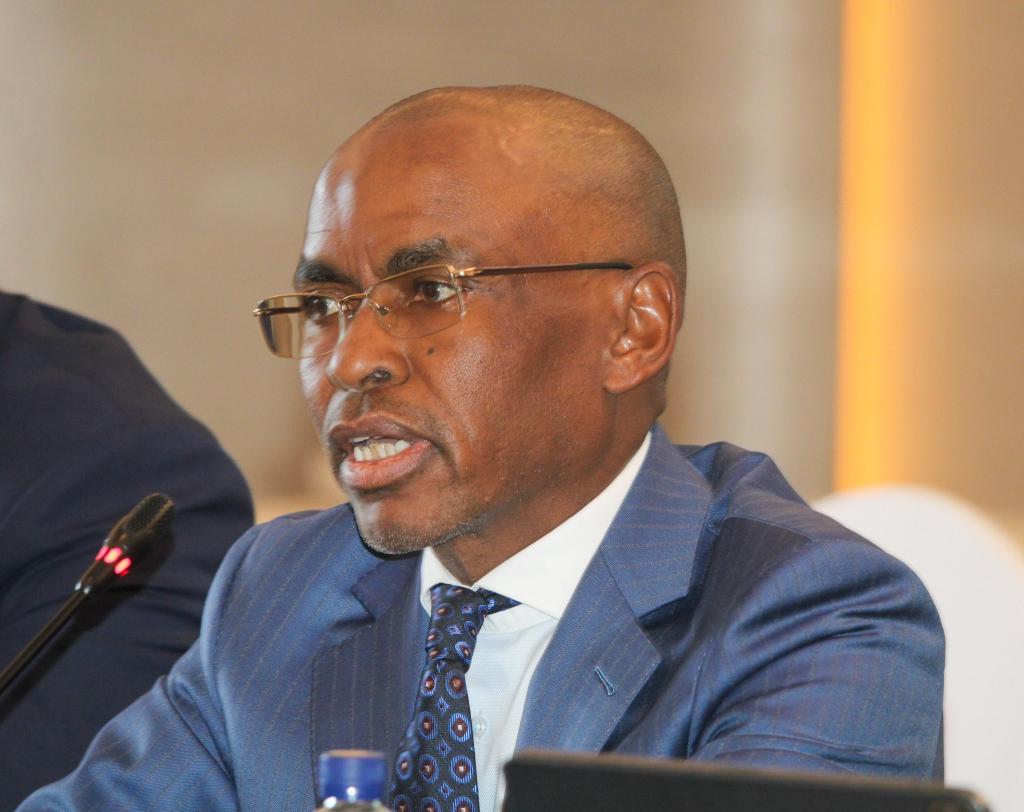
Safaricom CEO Peter Ndegwa told lawmakers that the company stood aside as the government decided the price for its planned sale of shares to Vodacom, insisting Safaricom had no influence over the valuation.
Appearing before a joint sitting of the Finance and National Planning, and Public Debt and Privatisation committees on Monday, Ndegwa said Treasury handled the pricing because the telco is the subject of the transaction.
The government plans to sell 15 per cent of its 35 per cent stake to Vodacom at Sh34 per share, a move that would raise Vodacom’s ownership to 55 per cent.
“We were not involved in determining or seeking to see what the right share price is because as Safaricom, we are the subject of the sale,” Ndegwa said. “The price offered to the government is higher than the average price, a clear price premium.”
He told MPs that Treasury would need to explain how the final figure was reached, adding that his understanding was that the valuation relied on Safaricom’s average trading price over the past six months, which he said best reflects the value of a listed company.
While acknowledging that share prices change over time, Ndegwa said valuation can be arrived at using several methods. MPs, however, questioned whether the government was getting fair value and raised broader concerns about what majority ownership by a foreign company could mean for Kenya.
Molo MP Kuria Kimani asked whether Safaricom’s local programmes and innovations would remain a priority once Vodacom takes control.
“With Vodacom taking over majority control of the company, how will you ensure that Safaricom maintains the Kenya-centric innovations and programmes rather than group-wide Vodacom priorities?” Kimani asked. He also expressed concern over the future pricing of M-Pesa, data, and voice services, saying Kenyans fear profit considerations could override local needs.
Kesses MP Julius Rutto warned that control of the board gives Vodacom decisive power over company direction. “The company law states that whoever is in control determines the operations of the business because he controls the board and when there is a vote to be taken, the majority carries the day,” he said. MPs questioned whether jobs held by Kenyans, including senior positions, and long-term investments would be protected under such control.
According to the sessional paper on the proposed divestiture adopted by Parliament, Vodacom has committed to several safeguards. These include no acquisition-related redundancies for three years, retaining a Kenyan chairperson and independent directors, and continuing to support the Safaricom Foundation.
After the three-year period, the board would be free to make independent decisions, including appointing a CEO and staff of its choice and making decisions on dealers.
Homa Bay Town MP Peter Kaluma asked whether Safaricom’s dealers had been informed about the transaction, warning they could be affected in the future. “What will tie them to Kenya when the regulatory framework becomes too hard and unconducive to their business? What will stop them from leaving this space?” he asked.
The discussion exposed deep concern among lawmakers over how the proposed sale balances government revenue needs against the protection of national interests, with MPs seeking assurances that Safaricom’s local focus will not be weakened once control shifts.