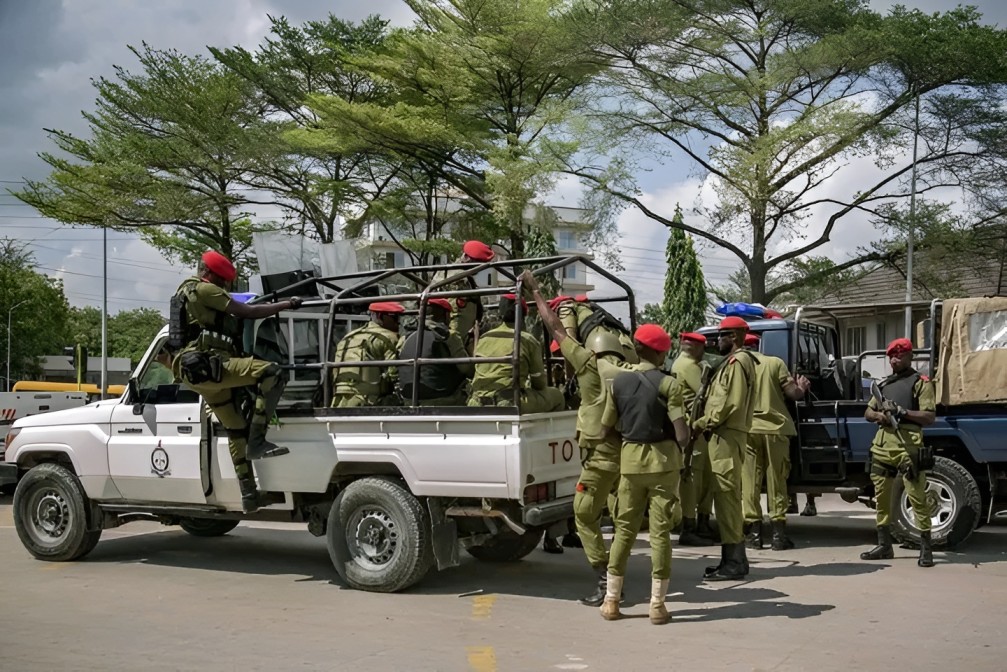
A Tanzanian civic movement has rejected a Commonwealth-led mediation process, insisting that no political dialogue should begin until a fully independent investigation is conducted into the alleged mass killings around the 2025 election.
In a letter dated November 18, 2025, addressed to Commonwealth Secretary-General Shirley Botchwey, Sauti Ya Watanzania opposed Dr Lazarus Chakwera’s involvement as mediator. The group raised concerns over Chakwera’s past, citing corruption cases during his tenure as Malawi’s President, and questioned his ability to lead a fair process at this stage.
The civic group said the period surrounding the October 29 election witnessed “the largest killings in Tanzania’s history,” with more than 10,000 citizens allegedly killed by state security forces. It stressed that the victims were not part of politically organised protests but were ordinary citizens who independently challenged perceived electoral fraud and injustice.
Sauti Ya Watanzania accused the government of failing to acknowledge the deaths or take meaningful action. “The state has not recognised the deaths, accepted responsibility, initiated an independent inquiry, allowed families to identify bodies, or released accurate figures,” the letter states.
President Samia Suluhu has ordered a national probe into the killings and disappearances of post-election protesters. In her first parliamentary address since winning nearly 98% of the vote, she called for a moment of silence, extending condolences to affected families. “The government has taken the step of establishing an inquiry commission to investigate what happened, so that we may know the root cause of the problem,” she said, without attributing blame for the violence.
Despite this, the civic group criticised government statements that minimized the scale of the killings. Officials reportedly claimed that most victims “were not Tanzanians” and only a few deaths occurred, contradicting hospital records that show far higher casualties from just two facilities.
The letter also challenges the purpose of mediation itself. Sauti Ya Watanzania argues that framing the crisis as a political dispute implies the existence of opposing factions, when in fact the conflict was between ordinary citizens and a government accused of orchestrating violence. “Who exactly do you intend to reconcile, and against whom?” the group asked the Commonwealth.
Instead of mediation, the movement calls for an International Independent Commission of Inquiry composed of United Nations human rights investigators, African Union and SADC observers, forensic specialists, and representatives of victims’ families. The inquiry, it says, must examine killings, alleged mass graves, abductions, torture, possible involvement of foreign mercenaries, and the chain of command responsible for the violence.
The civic group emphasised that reconciliation cannot take place without truth and accountability, warning that mediation at this stage would “erase the suffering of the people and legitimise impunity.” It also raised doubts about Chakwera’s suitability to mediate, citing his “leadership in Malawi was marked by corruption scandals and heavy criticism,” and claimed that Tanzanians do not trust his impartiality or integrity.
Furthermore, the group criticised the Commonwealth delegation’s limited engagement, alleging it had only met government officials and had not visited victims’ families, civil society organizations, or directly affected citizens, undermining the mission’s credibility.
The letter concludes by urging the Commonwealth to prioritise truth, justice, and accountability, stressing that reconciliation is impossible without uncovering the facts. Sauti Ya Watanzania called on the international community to support the victims and uphold human dignity in addressing Tanzania’s crisis.































Comments
Sign in with Google to comment, reply, and like comments.
Continue with Google