Venezuela is taking a major step to open up its oil industry, allowing private and foreign companies more freedom to run projects and earn from sales.
Lawmakers in the National Assembly approved reforms to the hydrocarbons law, which are now awaiting the interim president’s signature.
The changes aim to attract investors who have stayed away due to strict state control and political uncertainty.
For years, the state-owned company PDVSA had full control over most oil operations, discouraging foreign firms from working in the country. Many companies left after the sector was nationalized, and some are still seeking compensation for changes made to their contracts.
Despite having the largest proven oil reserves in the world, Venezuela’s oil industry has suffered from mismanagement, lack of investment, and heavy international sanctions, including from the United States.
The new law allows private firms to manage oil fields with approved agreements and gives joint venture partners with PDVSA more authority over operations and access to revenues.
Companies such as Chevron, which have continued operating under a US licence despite sanctions, had called for such reforms to improve the business climate.
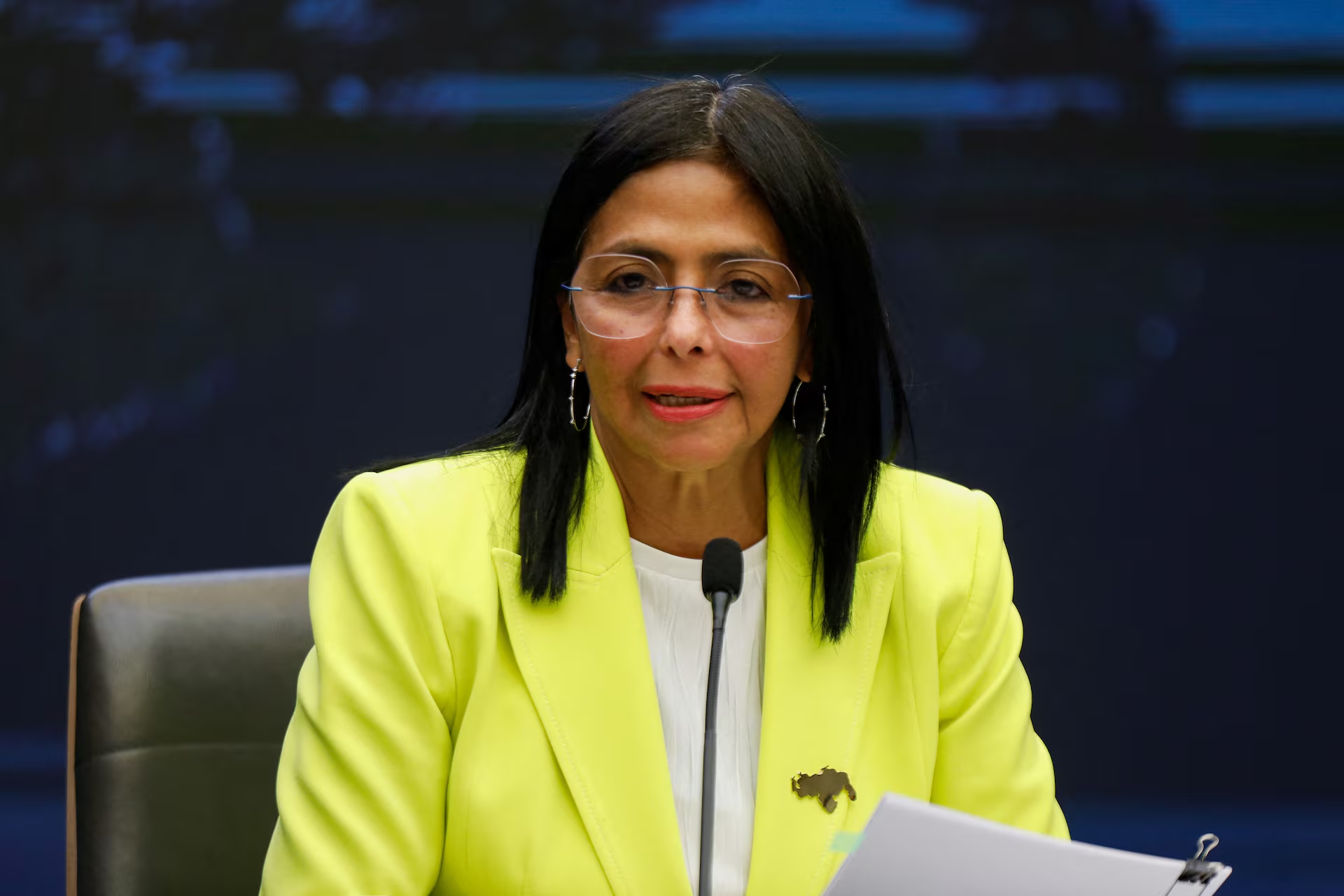
The National Assembly, largely controlled by allies of former president Nicolás Maduro, passed the bill with support from interim President Delcy Rodríguez, who took office after Maduro was captured in a US operation earlier this month.
Assembly speaker Jorge Rodríguez, Delcy Rodríguez’s brother, encouraged lawmakers to approve the law to boost foreign investment.
The reform represents a major departure from the 2006 hydrocarbons law under Hugo Chávez, which tightened government control over oil production. Analysts say this shift could encourage international oil companies to return to Venezuela after years of withdrawal.
The decision comes as the United States and Venezuela negotiate the sale of sanctioned oil, with Washington permitting the export of millions of barrels. US Secretary of State Marco Rubio explained that proceeds would be deposited in an account in Qatar, with Venezuela submitting monthly budgets to the White House.
Funds would then be released under US sanctions to pay for essential services, including policing, sanitation, and medicines.































Comments
Sign in with Google to comment, reply, and like comments.
Continue with Google