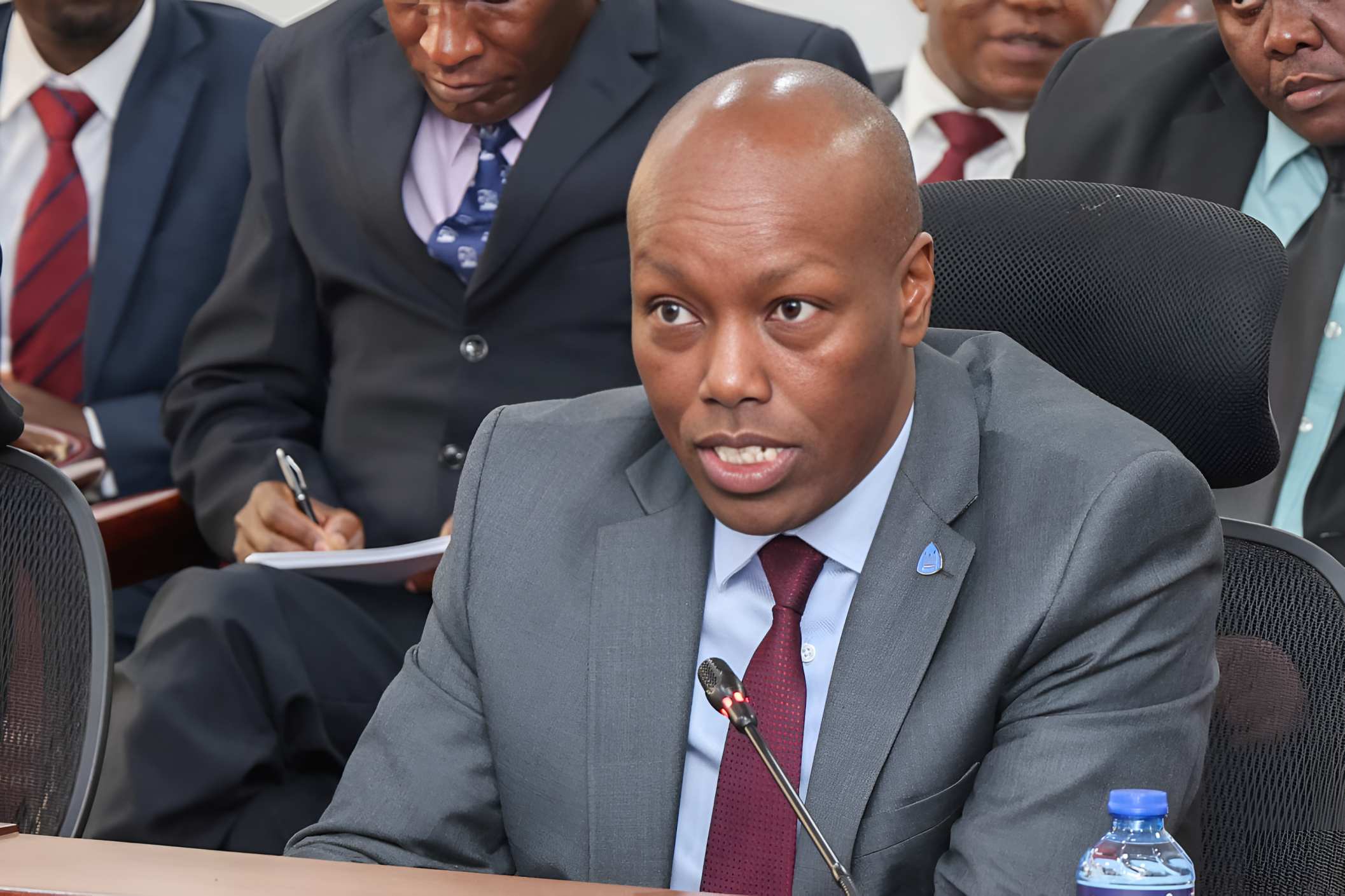
Kenya has welcomed the United States House of Representatives’ decision to extend the African Growth and Opportunity Act (AGOA) for a further three years, a move hailed as a significant milestone in U.S.-Africa trade relations.
According to the Investments, Trade and Industry Cabinet Secretary Lee Kinyanjui, the extension is expected to provide a boost to Kenya’s textile and apparel industries, which operate within the country’s Export Processing Zones (EPZs) and employ over 80,000 people directly, with an additional 250,000 supported indirectly.
“The uncertainty that had previously engulfed the sector will now give way to renewed confidence and expansion,” he said.
CS Kinyanjui noted that the extension offers opportunities for Kenya to diversify its exports beyond textiles, ensuring the country fully leverages the AGOA framework to create jobs and generate wealth.
“As a Ministry, we aim to grow exports of additional products under the AGOA framework beyond textiles,” he said.
The Cabinet Secretary also highlighted ongoing discussions on a bilateral trade agreement that will cover other key sectors, further strengthening Kenya’s long-standing partnership with the United States.
During President William Ruto’s recent visit to Washington, D.C., Kenya’s request for enhanced market access was discussed, with major exports to the U.S. including textiles and apparel, coffee, tea, horticultural products, and tourism services.
“Expanding our export basket remains a key priority and aligns with our broader strategic economic agenda,” Kinyanjui said.
The U.S. House of Representatives on Tuesday passed H.R. 6500, the African Growth and Opportunity Act (AGOA) Extension Act, in a decisive 340-54 vote.
Sponsored by Representative Jason Smith and reviewed by the House Ways and Means Committee, the legislation extends the African Growth and Opportunity Act, a trade program first enacted in 2000 that grants eligible sub-Saharan African countries duty-free access to the U.S. market for thousands of products.
The extension could face policy tensions with President Donald Trump’s administration, which has favored country-by-country trade deals since Washington imposed tariffs on other countries and territories in April 2025, when President Trump imposed a flat 10% tariff on Kenyan goods in response to trade barriers cited by American firms trading with Kenya and tariffs imposed on goods from USA.
“AGOA has been Kenya’s competitive edge. Without it, we risk losing a critical driver of growth, and Kenya’s seat at the global manufacturing table could disappear, erasing 25 years of progress. Securing its extension is an urgent national priority to protect jobs, factories, and livelihoods,” Pankaj Bedi, Chair of the Export Processing Zone (EPZ) sector at the Kenya Association of Manufacturers.
Over the years, AGOA has been credited with boosting African exports, creating jobs, and encouraging economic reforms.
In Kenya, the act has been a cornerstone of the apparel industry, supporting over 66,000 direct jobs and hundreds of thousands of livelihoods indirectly.
“Investors set up in Kenya to access the US duty-free. Competing against Bangladesh, Vietnam, or Egypt without it is untenable. AGOA has been our competitive edge. Without it, we risk losing a critical driver of growth, and Kenya’s seat at the global manufacturing table could disappear, erasing 25 years of progress," Bedi added.
With House approval, H.R. 6500 now moves to the Senate for consideration. Stakeholders in Kenya hope for swift ratification to safeguard the apparel sector, a key pillar of the nation’s industrial growth and employment.