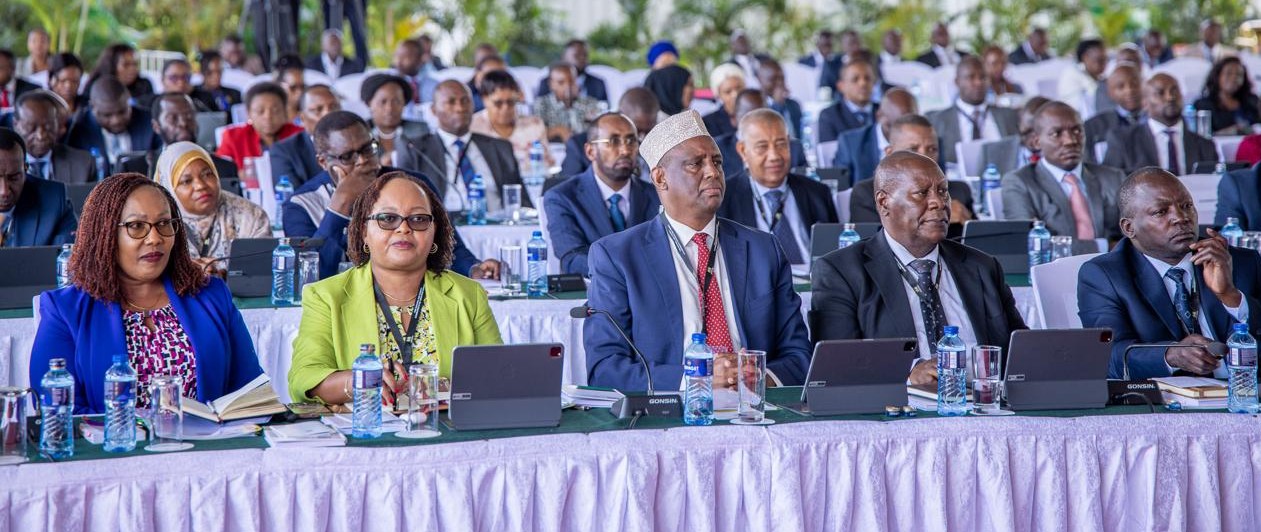
The government has set a strict 14-day deadline for the Intergovernmental Relations Technical Committee to clear all outstanding agreements on county bursary programmes, in a renewed push to end long-running delays that have left many students waiting for support.
The decision was reached during the 12th National and County Governments Coordinating Summit on Wednesday, which focused on improving coordination between the two levels of government.
During the session, leaders reviewed the progress made since the 11th Summit held in December 2024 and gave new directions aimed at strengthening the devolved system.
A major concern raised was the slow processing of bursary agreements, prompting the 14-day order to ensure students receive funds on time and county teams work smoothly with national offices.
The Summit also addressed disputes over functions that are yet to be fully transferred to counties. IGRTC was instructed to speed up the unbundling and clear outlining of these responsibilities so that counties can take charge without conflict.
The Commission on Revenue Allocation and the National Treasury will now verify the funding attached to these functions, which will guide the Division of Revenue Act for the 2026/27 financial year.
Counties were further directed to work with IGRTC and other state bodies to secure legal ownership of fixed and movable assets already handed to them. At the same time, leaders agreed to amend the Intergovernmental Relations Sector Forums Regulations so that both levels of government can co-chair the forums.
All pending forums are expected to be active by the end of January 2026.
The National Treasury was also directed to release pending funds for County Aggregation and Industrial Parks and ongoing social infrastructure projects to avoid further delays.
The CAIP programme, rolled out under the Bottom-Up Economic Transformation Agenda, has been hit by funding gaps that threaten to slow down implementation.
CAIPs were launched in July 2023 with the goal of boosting agro-industrial growth, promoting local manufacturing and improving earnings for farmers. Each county is meant to contribute Sh250 million, with the national government matching the amount for a total of Sh500 million per park.
However, only Sh3.3 billion of the Sh9 billion pledged by the national government has been released, limiting the first phase to 19 counties.
The first phase has a budget of Sh4.7 billion, which includes Sh4.5 billion for construction and Sh200 million for coordination and monitoring. The slow release of funds has raised concerns about whether the initiative will keep pace with its planned rollout.
Deputy President Kithure Kindiki, who recently received an update on the programme, admitted that finances remain a major hurdle but maintained confidence in its long-term value. “Once complete, the CAIPs will enhance the competitiveness of Kenya’s agriculture sector and sustainably grow our manufacturing base,” he said.
The parks are expected to serve as processing and value-addition hubs, open up markets, improve foreign exchange earnings and support job creation in rural areas. They are also part of the government’s plan to raise manufacturing’s share of GDP from seven per cent to 15 per cent by 2027 and 20 per cent by 2030.
The Ministry of Investment, Trade and Industry, together with county governments and partners such as UNIDO, said they remain focused on delivering the programme in three phases. But the Summit noted that without adequate and steady funding, the CAIP rollout could stall and slow down progress towards Vision 2030 goals.































Comments
Sign in with Google to comment, reply, and like comments.
Continue with Google