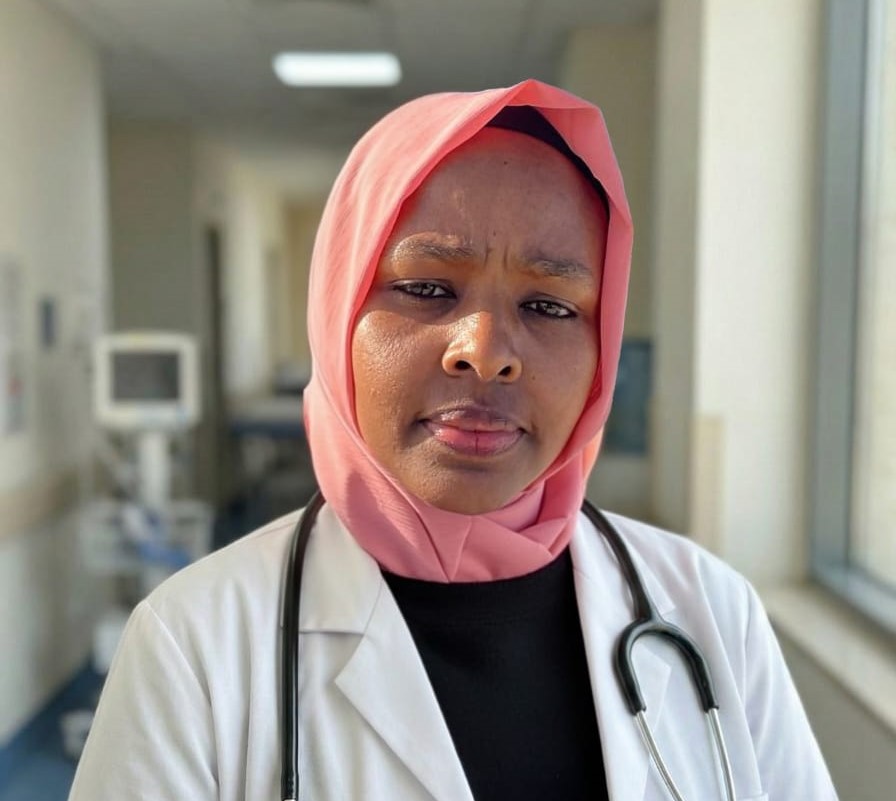
At dawn, before the hospital corridors fill and the queues begin to swell, Dr Amina Rashid walks into the Cancer Centre of Garissa County Teaching and Referral Hospital with the quiet precision of someone who has long learned to work against time.
She is one of the region's only female gynaecological oncologists and for many women across North Eastern Kenya, the difference between survival and loss.
In Garissa, cancers of the cervix, ovaries and uterus rarely arrive early. They come masked by silence, stigma and distance. Most women,
Dr Amina says they walk through her door only when their pain becomes unbearable, when bleeding won’t stop, or when the cancer has already spread.
“Women come too late,” she says, her tone firm but weary. “Not because they don’t care, but because so many barriers stand in their way — fear, misinformation, long travel distances, cost. Geography should not determine who lives.”
A crisis hidden behind stigma
Cervical cancer, one of the most preventable cancers globally, is the leading reproductive cancer in Garissa. Yet screening rates remain low. Cultural norms discourage open conversations about reproductive health, and myths surrounding screening circulate widely — that it is painful, invasive, or a sign of infidelity.
“Some women feel ashamed even to describe their symptoms,” Dr Amina says. “Others have never heard of screening. And when disease carries a stigma, silence wins.”
The impact is undeniable: late-stage diagnoses dominate her caseload. Survivability depends not just on treatment but on timing — a luxury many women do not have.
A workload that never stops
On any given day, Dr Amina’s schedule spans surgeries, oncology clinics, biopsy reviews and counselling sessions.
Between appointments, she trains junior doctors who rotate through the department, hoping to glean experience in a specialty with far too few practitioners nationwide.
Her work stretches far beyond the hospital. She joins screening outreaches in remote villages, partnering with community health volunteers who rally women who might otherwise never see a specialist.
One of her most memorable patients is a young mother of three who ignored symptoms for nearly a year.
“She was terrified of what it would mean for her children if she was diagnosed with cancer,” Dr Amina recalls.
“She came in very late, but with treatment she recovered. Watching her walk out of the hospital with her children was a reminder of what early intervention can save.”
A system under pressure
Garissa’s main referral hospital — the largest in North Eastern Kenya — is doing what it can with limited resources.
Despite the constraints, small shifts are emerging. Expanded screening, more outreach visits, and better referral pathways are beginning to draw more women into preventive care.
Hope; slowly, steadily
For Dr Amina, the work is emotionally heavy but anchored in purpose. She speaks softly about patients she has lost, but with conviction about those she has saved.
“Every woman who comes early is a victory,” she says. “Every woman who understands her risk, who encourages her friend or sister — that’s how change begins.”
Her vision is simple but ambitious: a North Eastern region where no woman dies from preventable cancer, where screening is routine, and where stigma no longer shadows illness.
As she finishes her late-afternoon rounds, checking charts and offering quiet reassurance at bedsides, the sun dips behind Garissa’s skyline.
The work will continue tomorrow: the surgeries, the screening campaigns, the conversations that challenge silence.
For thousands of women across the region, Dr Amina is more than a specialist. She is the beginning of a system slowly finding its footing — and a reminder that even in under-resourced places, care delivered with urgency and compassion can shift the odds.































Comments
Sign in with Google to comment, reply, and like comments.
Continue with Google