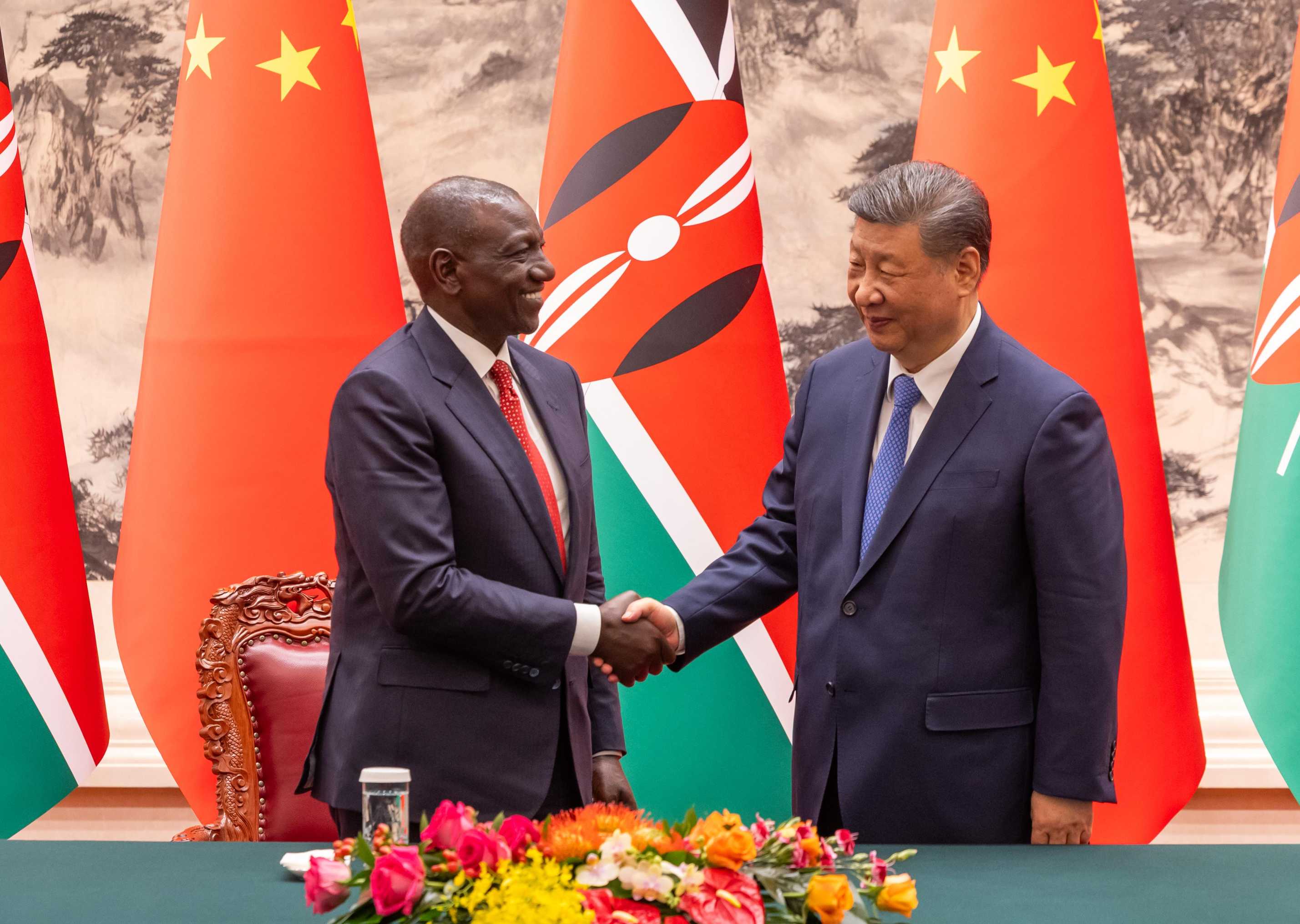
Throughout 2025, Kenya intensified its diplomatic efforts, positioning itself as a prominent actor on the international stage. President William Ruto’s administration recalibrated foreign policy to enhance global partnerships, attract foreign investment, and promote Kenya as a hub for trade, development, and regional leadership.
The updated foreign policy framework, approved in January, provided a blueprint for these initiatives, focusing on national sovereignty, economic growth, security, and international influence through diplomacy, commerce, and diaspora engagement.
Foreign Affairs Minister Musalia Mudavadi highlighted that the framework enables Kenya to respond effectively to shifting geopolitical realities, climate challenges, regional instability, and economic fluctuations.
By year-end, Kenya had shifted from primarily regional engagement to actively pursuing broader global partnerships, with potential to boost economic growth, reinforce Africa’s leadership role, and strengthen resilience against global uncertainties.
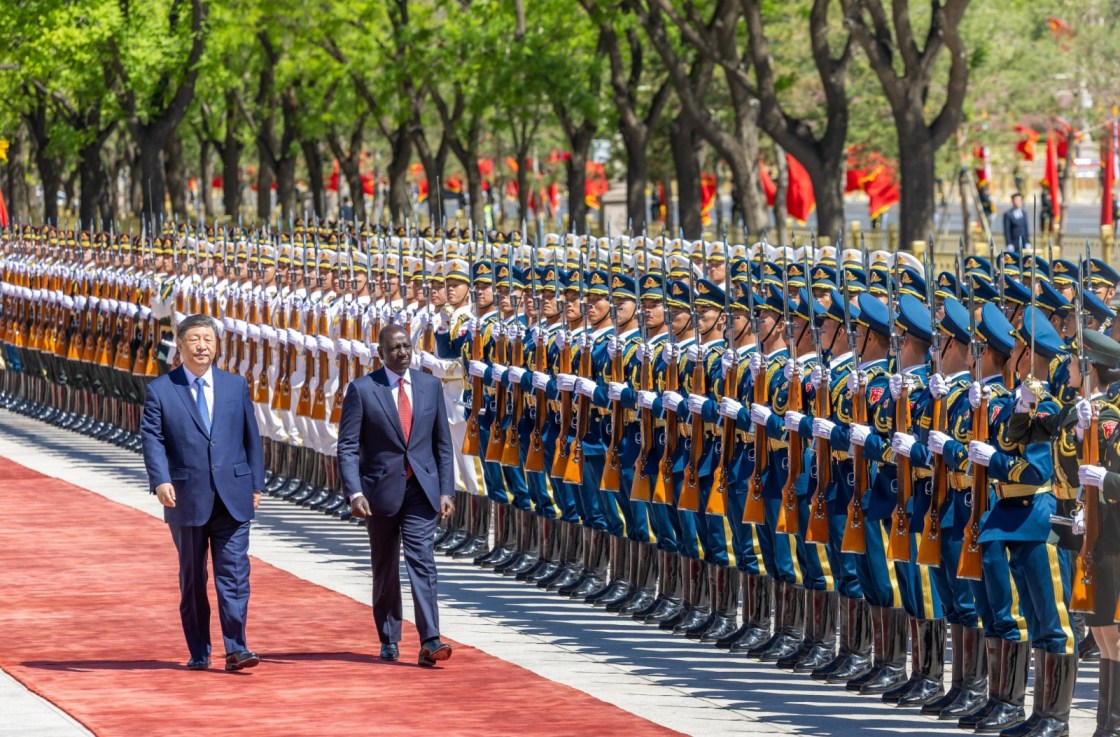 President William Ruto inspects a guard of honour alongside his counterpart Xi Jinping of China. PHOTO/PCS
Strengthening Ties with China
A major highlight of the year was President Ruto’s state visit to China from April 22–26, which upgraded Kenya–China relations to a “Comprehensive Strategic Partnership in the New Era.”
The visit produced more than 20 agreements spanning infrastructure, trade, education, health, agriculture, digital technology, and people-to-people exchanges.
At Beijing’s Great Hall of the People, Premier Li Qiang and President Ruto pledged to “expand all round mutually beneficial cooperation and jointly build what they described as a China–Kenya community with a shared future for the new era.”
Ruto described the collaboration as part of Kenya’s broader diplomatic strategy: “Kenya and China are co architects of a new world order.”
Key projects include expansion of transport networks, TVET development, agro-processing, and Nairobi’s Intelligent Transport System, which aims to modernize traffic management and reduce corruption in manual penalty collection.
While the strengthened partnership demonstrates Kenya’s intent to diversify alliances beyond Western partners, analysts caution about debt sustainability and geopolitical implications.
Bilateral Engagement with the United Kingdom
President Ruto also visited the United Kingdom to expand trade, enhance security cooperation, and promote infrastructure investment under the UK-Kenya Strategic Partnership framework.
Meetings with Prime Minister Keir Starmer at 10 Downing Street focused on scaling British investment in renewable energy, modernizing transport, and enhancing counter-terrorism collaboration.
“Kenya and the United Kingdom share a long-standing relationship built on mutual respect and common objectives,” Ruto said.
“Our discussions centred on unlocking new investment opportunities, particularly in green energy and manufacturing, and ensuring that Kenya remains a competitive destination for global capital.” Starmer acknowledged Kenya’s leadership on climate action and regional stability, stating, “We are committed to strengthening our cooperation, especially in areas that support sustainable development and security.”
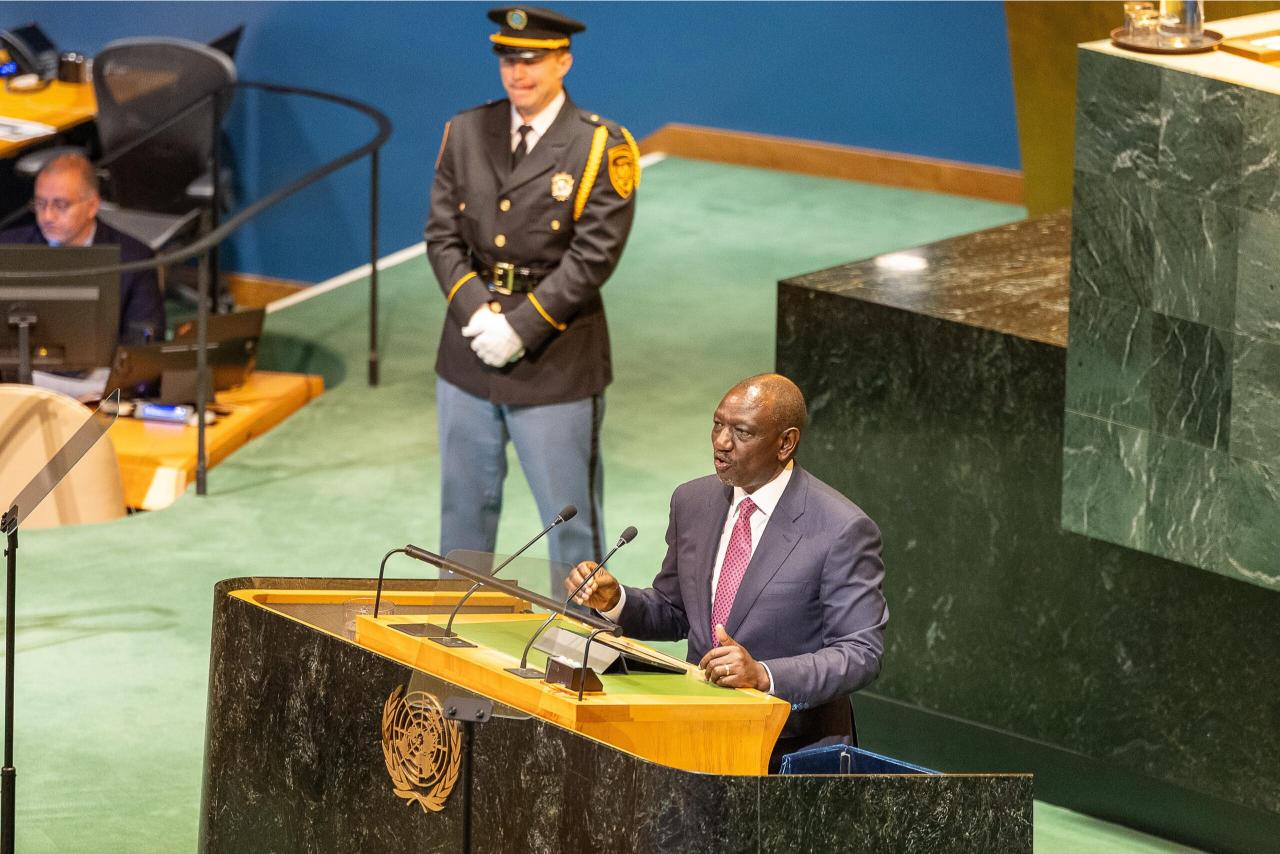 President William Ruto delivers his address at the 80th Session of the United Nations General Assembly in New York on September 24, 2025.PHOTO/PCS
Global Advocacy and Multilateral Engagement
In September, Kenya reinforced its global voice at the United Nations General Assembly, where Ruto called for Security Council reforms, arguing that Africa’s lack of permanent representation is “unacceptable, unfair and grossly unjust.”
He urged the body to allocate at least two permanent African seats with full veto rights, alongside two non-permanent seats: “You cannot claim to be the United Nations while disregarding the voice of 54 nations.”
Coinciding with UNGA, Kenya hosted a high-level Investment Forum in New York on September 22, drawing over 150 US companies and government representatives to showcase investment opportunities and promote Nairobi as a gateway to African markets.
Mudavadi reaffirmed Kenya’s commitment to transparency and proactive diplomacy through quarterly briefings and the “Foreign Policy Mashinani” initiative.
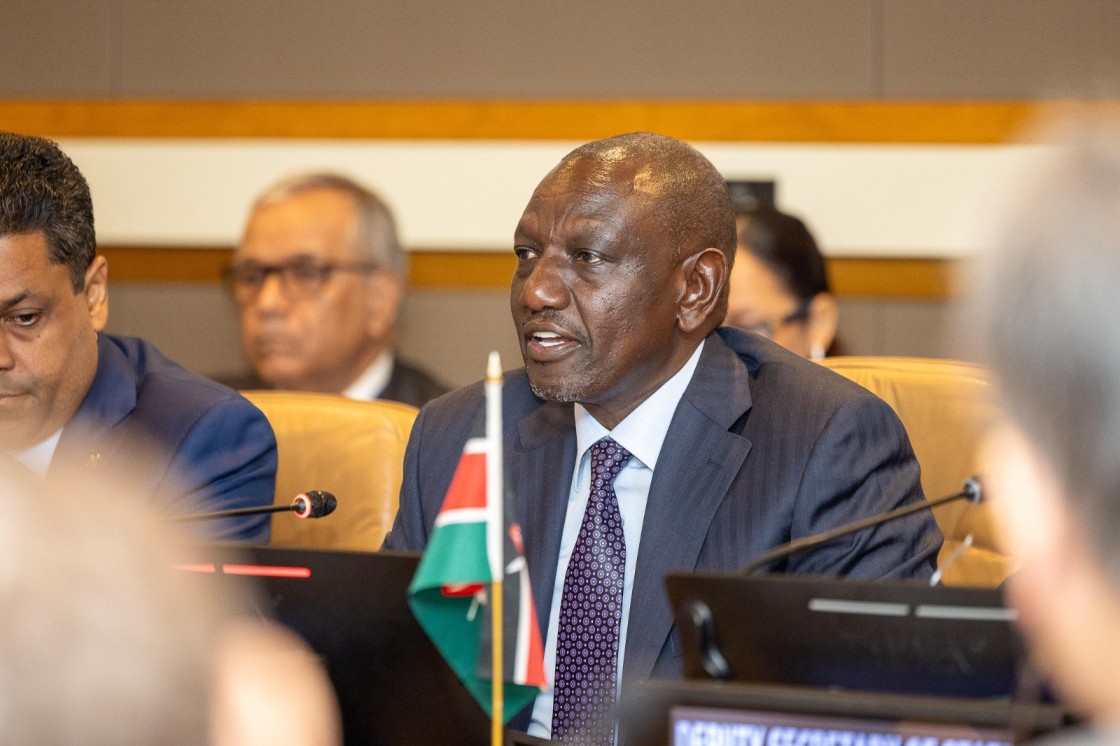 President William Ruto speaking during the High-Level Meeting on Haiti, New York, USA on September 22, 2025. PHOTO/PCS
Engagements with the United States, Japan, Spain, UAE, and Qatar
Kenya–US relations deepened further, with collaborations spanning counter-terrorism, trade, digital innovation, and regional diplomacy.
The US increased support for global health security, with Kenya serving as a hub for disease detection and advanced laboratory training under the CDC.
In August, President Ruto visited Japan during TICAD 9, advancing cooperation on investment, green energy, and trade.
Meetings with Prime Minister Ishiba included requests to remove trade barriers for Kenyan agricultural exports and expand investment in energy, industrialization, and digital initiatives. Japan committed a JPY 25 billion facility to support vehicle assembly, energy, and industrial projects.
In Spain, Ruto engaged Prime Minister Pedro Sánchez in talks covering renewab
le energy, infrastructure, and health systems, with both leaders signaling a “new chapter” in bilateral cooperation. Visits to the UAE in January and Qatar in November yielded agreements on investment, infrastructure, labour mobility, and economic collaboration. The Qatar pact emphasized fintech and Islamic finance integration, positioning both countries as hubs for capital flows between Africa and the Gulf.
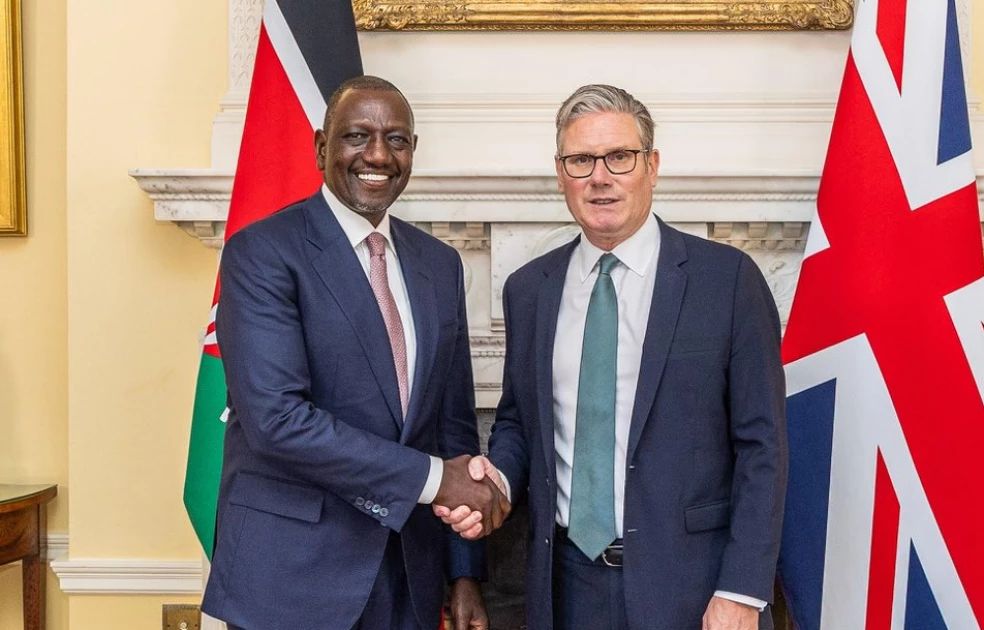 President William Ruto and UK Prime Minister Keir Starmer afer a meeting at 10 Downing Street in London on July 1, 2025. PHOTO | PCS
Expanding Diplomatic Footprint
Kenya also expanded its diplomatic presence by opening consulates in Guangzhou, China, and Jeddah, Saudi Arabia, and approved embassies in Denmark, Vietnam, and the Vatican. This outreach aims to strengthen diaspora engagement, boost trade, and deepen strategic partnerships worldwide.
Economic Diplomacy and Security Cooperation
Economic diplomacy remained central to Kenya’s foreign policy, focusing on attracting investment, supporting infrastructure development, and reducing reliance on aid. Security collaboration also featured prominently, addressing terrorism, cybercrime, wildlife trafficking, and environmental crime.
Kenya reaffirmed its commitment to regional stability and multilateral peace initiatives, strengthening its position as a proactive and reliable partner in Africa and globally.
By the close of 2025, Kenya had transformed from a regional actor into an influential global player—leveraging diplomacy to secure investment, enhance security, and promote continental and global stability.































Comments
Sign in with Google to comment, reply, and like comments.
Continue with Google