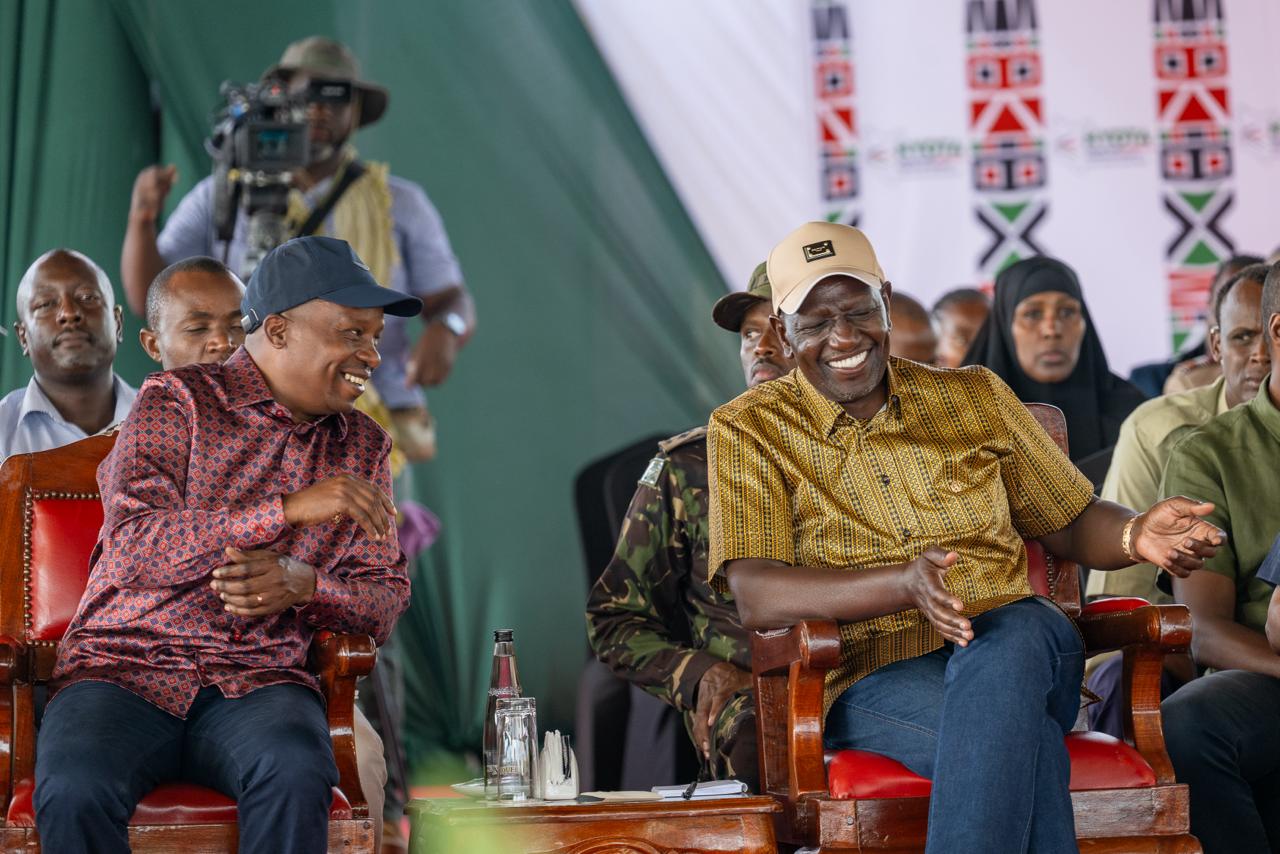
President William Ruto and Deputy President Kithure Kindiki have jointly defended the government’s drought relief efforts, pushing back against criticism from former Deputy President Rigathi Gachagua as millions in northern Kenya struggle with hunger and water shortages.
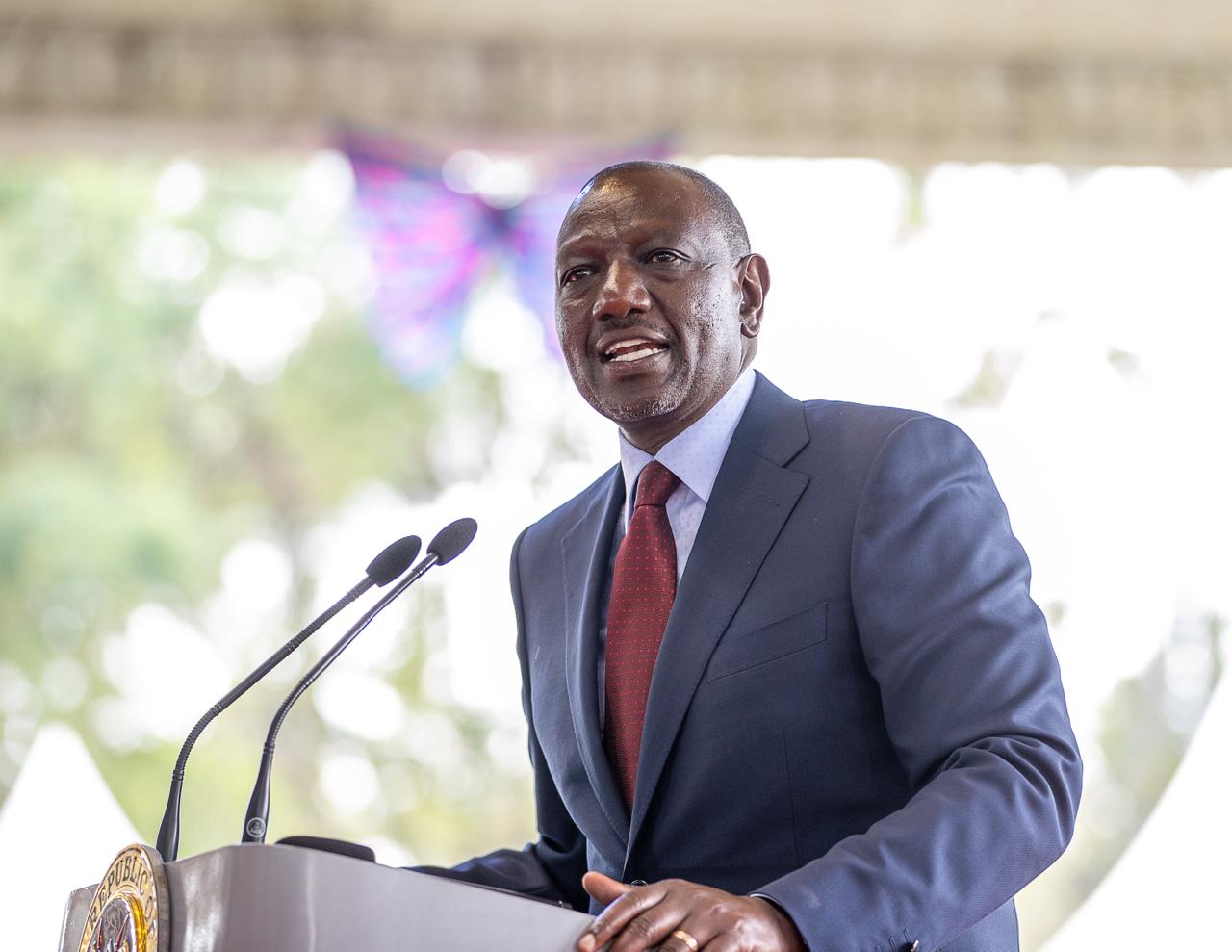
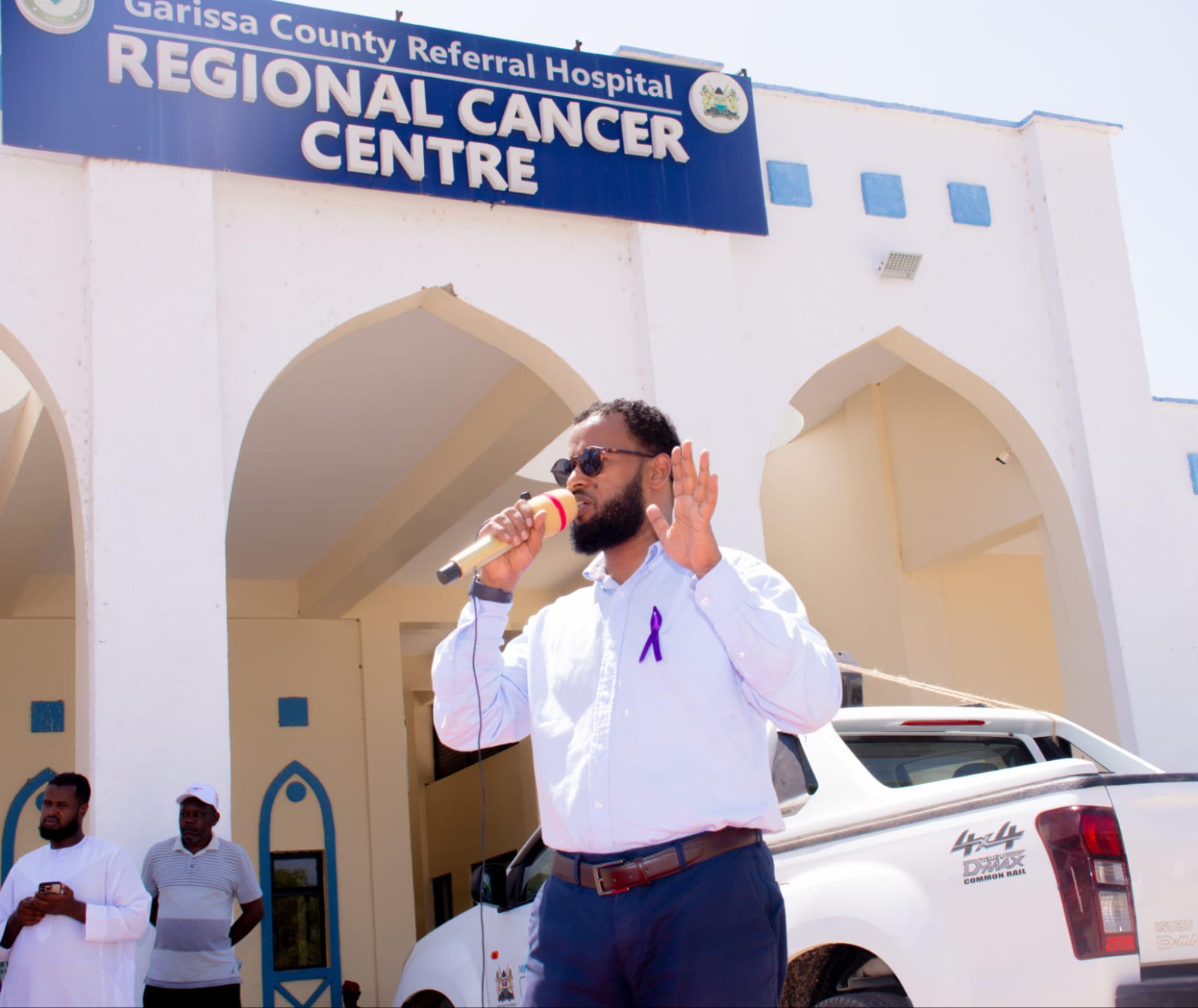
Speaking in Garissa at the start of his three-day visit to the region, Ruto dismissed Gachagua as an “idler,” questioning his ability to plan or execute development programmes.
He accused the former deputy of prioritising politics over solutions, reducing his intervention to the repeated chant, “Kasongo must go,” rather than offering practical measures to help affected communities.
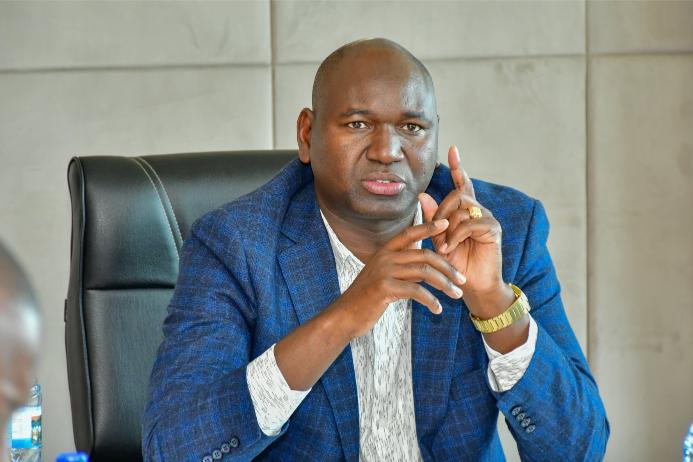
Deputy President Kindiki, meanwhile, emphasised that the government is focused on timely and targeted delivery of aid, urging politicians to avoid interfering in humanitarian operations.
“Those looking for political opportunities in the drought situation are wasting their time,” Kindiki said.
Kindiki highlighted that over Ksh. 10 billion has been disbursed over the past three months to provide food, water, medical support, livestock feed, vaccines, and other essential supplies.
The programme is expected to reach about 3.3 million people across 23 counties affected by the prolonged dry conditions.
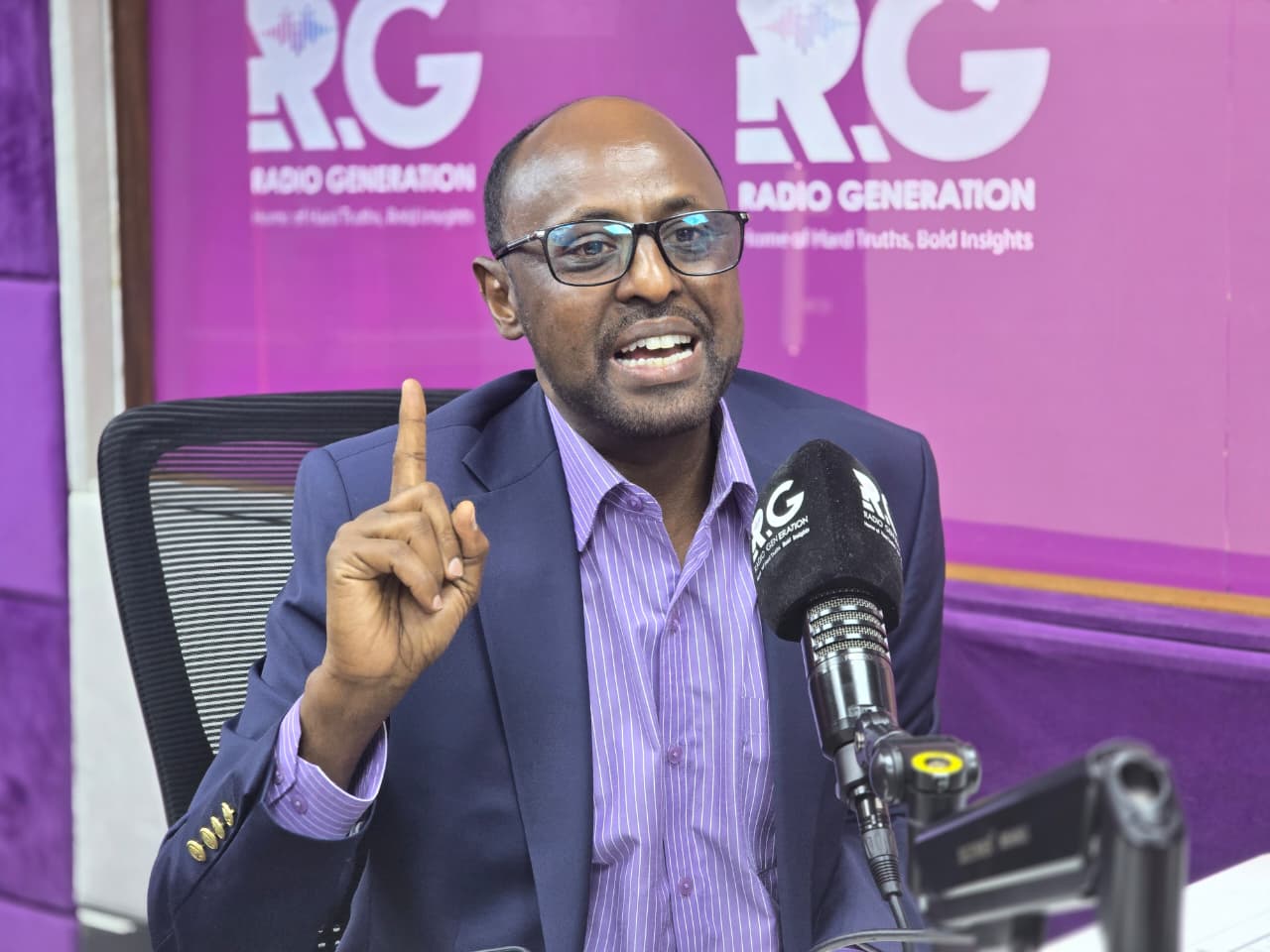
Gachagua, however, has maintained that the government’s response is inadequate.
Speaking at his DCP party offices in Nairobi, he noted that the Sh4 billion allocated for drought relief, alongside the Sb4.1 billion monthly expenditure approved by Cabinet, falls short of what is needed to support 3.3 million people.
He calculated that the allocation works out to roughly Sh1,200 per person, below the United Nations’ minimum food basket of Sh2,700 per individual.
Gachagua also called for the drought to be declared a national disaster, arguing that at least 10 counties are in critical condition and need urgent attention.
The former deputy further raised concerns over alleged misuse of resources, claiming that some relief supplies had been diverted for political purposes.
He also criticised what he described as excessive government spending, including the use of helicopters, while communities struggle to access basic necessities.
Despite the criticism, Ruto’s northern Kenya tour continues, with his agenda including relief and development projects aimed at easing the drought’s impact.
In Garissa, he has already participated in a Nyota disbursement forum to directly support residents in affected areas.