County governments across the country largely failed to invest in development projects during the first quarter of the 2025/26 financial year, with twenty devolved units reporting zero spending on growth programmes between July and September.
A new report by the Controller of Budget shows that while billions were paid out in salaries and running costs, development plans were either delayed or ignored, leaving many projects stalled. Isiolo, Kirinyaga and Murang’a stood out as the few counties that spent part of their development allocations during the period under review.
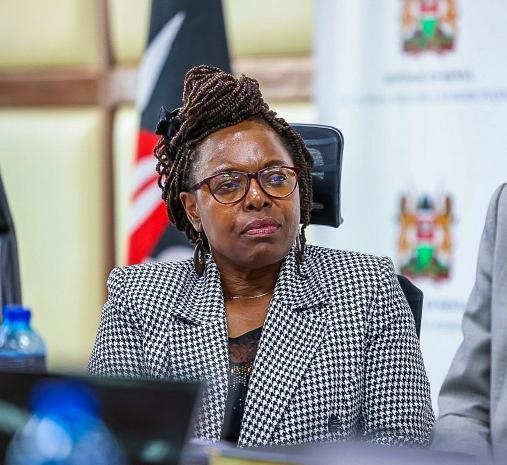
The County Governments Budget Implementation Review Report for the first quarter of the financial year ending June 30, 2026, released on Monday by Controller of Budget Margaret Nyakang’o, lists Kericho, Tana River, Turkana, Bomet, Siaya, Trans Nzoia, Baringo, Kilifi, Kwale, Kajiado, Kisumu, Mombasa, Vihiga, Busia, West Pokot, Bungoma, Uasin Gishu, Wajir, Laikipia and Kisii as counties that did not spend any money on development.
Wajir County either recorded no expenditure during the quarter or failed to submit its report to the Controller of Budget.
The report shows that the remaining 27 counties spent a combined Sh3.69 billion on development activities, accounting for just two per cent of the total annual development budget of Sh218.99 billion.
During the same period, counties spent more than Sh51 billion on recurrent expenses, with Sh43.7 billion going to compensation of employees and Sh7.76 billion to operations and maintenance. This marks a drop from the Sh6.71 billion spent on development in the same quarter of the previous financial year, despite an increase in the overall development budget.
“The Controller of Budget advises county governments to increase their expenditures from development budgets for the remainder of FY 2025/26,” Dr Nyakang’o said.
The Public Finance Management Act, 2012, requires county governments to allocate at least 30 per cent of their budgets to development expenditure over the medium term.
However, the report shows that even counties that recorded some development spending achieved absorption rates of 10 per cent or less. Isiolo County spent Sh191 million, which represents 15 per cent of its annual development allocation, making it the highest spender in proportion to its budget.
Kirinyaga followed with Sh201.7 million, representing seven per cent, while Murang’a, Makueni, Machakos, Mandera and Kitui spent about five per cent each.
Isiolo also recorded the highest overall budget absorption at 21 per cent, followed by Kitui at 18 per cent. Machakos, Nyeri and Uasin Gishu each absorbed 14 per cent of their annual budgets.
At the lower end, Turkana and Laikipia posted overall absorption rates of five per cent, while Tana River, Nyandarua and Kericho recorded four per cent each.
Murang’a Governor Irungu Kang’ata attributed the slow pace of development spending to a shift in focus towards smart city projects, youth programmes and agricultural support initiatives.
He also cited challenges arising from the rollout of the national e-Government Procurement system. “The e-GP system is important for transparency, but its early implementation phase has delayed procurement and, consequently, development spending in many counties,” he said.
Among counties that recorded no development expenditure, the report highlights heavy spending on salaries and day-to-day operations. Bungoma spent Sh2 billion on employee compensation and Sh125.1 million on operations and maintenance, without allocating any funds to development projects.
Kisumu spent Sh1.25 billion on compensation and Sh61.8 million on operations, while Kilifi spent Sh1.2 billion on salaries and Sh272.9 million on operations, also without any development spending.
Mombasa allocated Sh1.12 billion to employee compensation and Sh62 million to operations, while Uasin Gishu spent Sh1.14 billion on salaries alone.
Kwale reported Sh962.2 million in compensation costs and Sh89.6 million on operations, despite facing stalled development projects valued at Sh281 million, of which only Sh116 million has been paid. Siaya spent Sh712.4 million on compensation to employees and has three stalled development projects worth Sh46.8 million.
Tana River failed to spend on development for the second quarter in a row, even as it spent Sh404.8 million on employee compensation. West Pokot also recorded zero development spending for the second consecutive period.
Trans Nzoia reported no development expenditure despite having stalled projects worth about Sh80 million. Turkana committed Sh923.7 million to recurrent activities while grappling with 19 stalled development projects valued at Sh162 million.
Baringo spent Sh649.9 million on employee compensation and is dealing with 16 stalled projects worth Sh217.44 million, while Bomet spent more than Sh630 million on recurrent costs without funding development.
Busia allocated Sh1 billion to compensation and Sh136.6 million to operations, yet recorded no development spending. Kericho also failed to invest in development projects despite having 20 stalled projects valued at about Sh224 million. Vihiga cited challenges linked to the operationalisation of the e-GP system as the main reason for the lack of development expenditure.
The report raises renewed concerns about the direction of county spending, with growing gaps between development plans and actual implementation, and stalled projects continuing to weigh down service delivery across devolved units.































Comments
Sign in with Google to comment, reply, and like comments.
Continue with Google