KJSEA 2025: Age gaps clear across counties, Kilifi and Baringo stand out
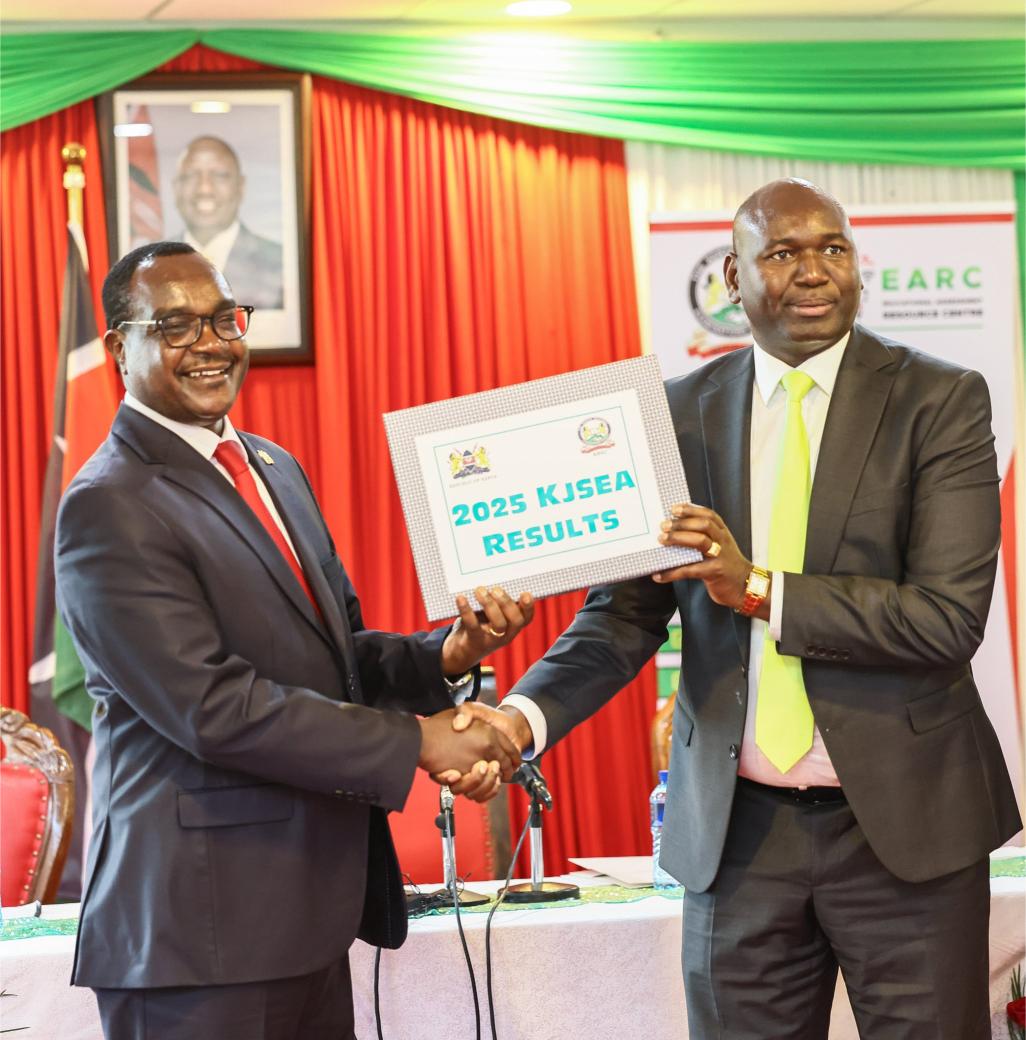
Nationally, the ministry’s data showed that 642,620 learners, representing 56.84 per cent of the total, were within the recommended age range of 14 to 15 years. Overall, 1,130,459 learners participated in the 2025 KJSEA, a key milestone in implementing the competency-based curriculum. Of these, 578,630 were male and 551,829 female, making up 51.19 per cent and 48.81 per cent respectively.
Kilifi County has emerged as the leader in the proportion of overage learners in the recently released 2025 Kenya Junior School Education Assessment (KJSEA), while Baringo recorded the highest share of underage candidates.
The analysis highlights sharp differences in age distribution among learners across the country.
Education Cabinet Secretary Julius Ogamba reported that 64.90 per cent of Kilifi’s candidates were aged 16 and above, placing the county at the top for overage learners. It was closely followed by Kwale at 64.78 per cent, Garissa at 63.38 per cent, Taita Taveta at 62.06 per cent, and Mandera at 62.05 per cent.
On the other end of the spectrum, Baringo County had 10.10 per cent of its learners aged 13 and below, well above the national average of 3.12 per cent. Other counties with notable shares of underage candidates included Bomet (7.56%), Marsabit (7.48%), Narok (7.28%) and Kericho (7.25%).
Nationally, the ministry’s data showed that 642,620 learners, representing 56.84 per cent of the total, were within the recommended age range of 14 to 15 years. Overall, 1,130,459 learners participated in the 2025 KJSEA, a key milestone in implementing the competency-based curriculum.
Of these, 578,630 were male and 551,829 female, making up 51.19 per cent and 48.81 per cent respectively.
A total of 415,059 learners (36.71%) were aged 16 to 17 years, while 35,270 learners (3.12%) were 13 and below. The assessment also included 37,638 adult learners aged 18 and above, accounting for 3.33 per cent of the total candidates.
The KJSEA grading system applied four performance levels: Exceeding Expectation, Meeting Expectation, Approaching Expectation, and Below Expectation. The final grade comprised 20 per cent from the Kenya Primary School Education Assessment, 20 per cent from school-based assessments in Grades 7 and 8, and 60 per cent from the summative Grade 9 evaluation.
Ogamba explained that performance was further grouped on an eight-point scale, with point 8 representing the highest level (Exceeding Expectation 1) and point 1 the lowest (Below Expectation 2). He said the categorisation helps distinguish strong and good performance.
Seven subjects recorded higher shares of learners performing at Meeting Expectation and Exceeding Expectation. These were Hindu Religious Education (84.62%), Integrated Science (61.77%), Social Studies (58.56%), Creative Arts and Sports (58.04%), Kiswahili (57.98%), Christian Religious Education (53.96%), and Agriculture (52.26%).
Across all subjects, 75 per cent of learners achieved at least Approaching Expectation. Creative Arts and Sports had the strongest results, with 96.84 per cent meeting this mark, followed by Agriculture at 96.2 per cent, Kiswahili at 93.11 per cent, and Social Studies at 92.92 per cent.
Ogamba noted that an Approaching Expectation grade is sufficient for progression to Senior School pathways that require basic subject competencies.
Female candidates outperformed males in Exceeding Expectation in ten out of 12 subjects, with the largest gap in Kiswahili, where 64.86 per cent of girls exceeded expectations compared to 51.41 per cent of boys.
Girls also recorded higher performance in Christian Religious Education, English, and Social Studies. Mathematics and Kenya Sign Language recorded the lowest shares of learners performing at Meeting and Exceeding Expectation levels, at 32.44 per cent and 22.14 per cent respectively.
Ogamba added that 59.09 per cent of learners showed potential for the STEM pathway, 46.52 per cent for Social Sciences, and 48.73 per cent for the Arts and Sports pathway in Senior School. Placement of learners will now be done based on their performance and selected pathways.
The 9,540 Senior Schools have been categorised as C1 (former national schools), C2 (former extra-county schools), C3 (county schools), and C4 (subcounty schools), depending on the pathways they offer.
Ogamba confirmed that these schools have sufficient capacity to admit the 2025 cohort. With 929,262 learners set to leave secondary school after this year’s KCSE, vacated classrooms are expected to ease congestion and accommodate the incoming students.



Comments
Sign in with Google to comment, reply, and like comments.
Continue with Google