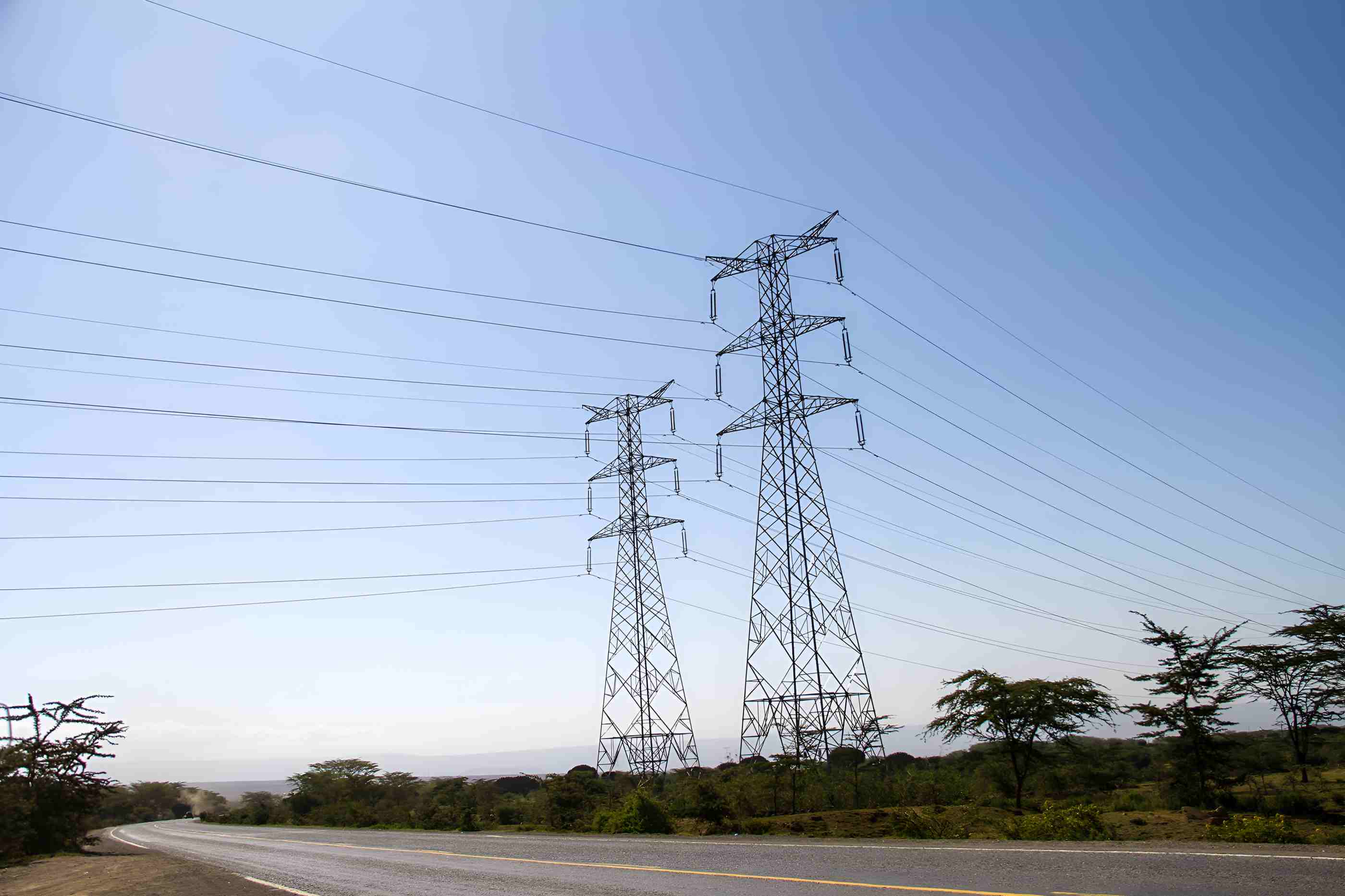
Kenya’s ambition to strengthen its electricity transmission network is facing a serious hurdle after it emerged that six major power lines may not be completed on schedule due to a financing gap of Sh49.6 billion.
According to a review by the Kenya Electricity Transmission Company (Ketraco), the total cost of these projects stands at Sh102.8 billion, but only Sh53.2 billion has been secured, leaving a shortfall that threatens timely completion.
The delayed funding puts at risk projects designed to expand the network, create new transmission routes, and increase the capacity to carry power from domestic sources and neighboring countries.
Ketraco says the funding gap could affect lines meant to strengthen areas where the grid is already overloaded and unreliable, highlighting the urgency of these developments.
The affected lines include the 220kV Loiyangalani-Marsabit line, which will evacuate electricity from Kenya’s largest wind farm, and a line aimed at boosting electricity imports from Uganda.
“Approximately $411.17 million of outstanding investments have been secured/committed through development assistance and EPC financing arising from Government-to-Government memorandum of understanding,” Ketraco says in its transmission strategy. “This implies that there is a financing gap of $383.23 million that relates to the 400kV Lessos-Tororo, 220kV Garsen-Hola-Bura-Garissa…”
Other projects threatened by the shortfall include the 220kV Isiolo-Marsabit line, the 220kV Kamburu-Embu-Thika line, the 132kV Makindu substations, the 220kV Olkaria 1-AU-Olkaria IV line, the line-in-line out on Juja/Naivasha, and the 132kV Mai Mahiu section. Altogether, the lines cover 1,709 kilometres, while the substations can handle 4,166 MVA, making them crucial to ensuring a reliable power supply across Kenya.
Ketraco has a history of delays in completing lines, often due to financial issues faced by contractors or slow compensation for landowners affected by wayleaves. In some instances, firms tasked with construction have collapsed before finishing the work, as was the case with the line connecting the Lake Turkana Wind Power project in Loiyangalani.
To address these challenges, Ketraco plans to rely on the Public Private Partnership model, as the government budget alone cannot meet the financing needs.
The company has indicated that PPPs will play a critical role in bridging a funding gap of over Sh517.8 billion over the next 20 years.
Plans are underway to start constructing the first transmission lines funded under this model, in partnership with Africa50 and the PowerGrid Corporation of India.































Comments
Sign in with Google to comment, reply, and like comments.
Continue with Google