In a major move to enhance staff welfare and uphold equality, the Judiciary has established two new units aimed at addressing workplace misconduct and promoting gender diversity.
The Employee Protection Unit (EPU) and the Gender, Inclusion and Diversity Unit (GIDU) are set to provide confidential systems for reporting harassment, discrimination, and other workplace violations while ensuring adherence to diversity and inclusion policies.
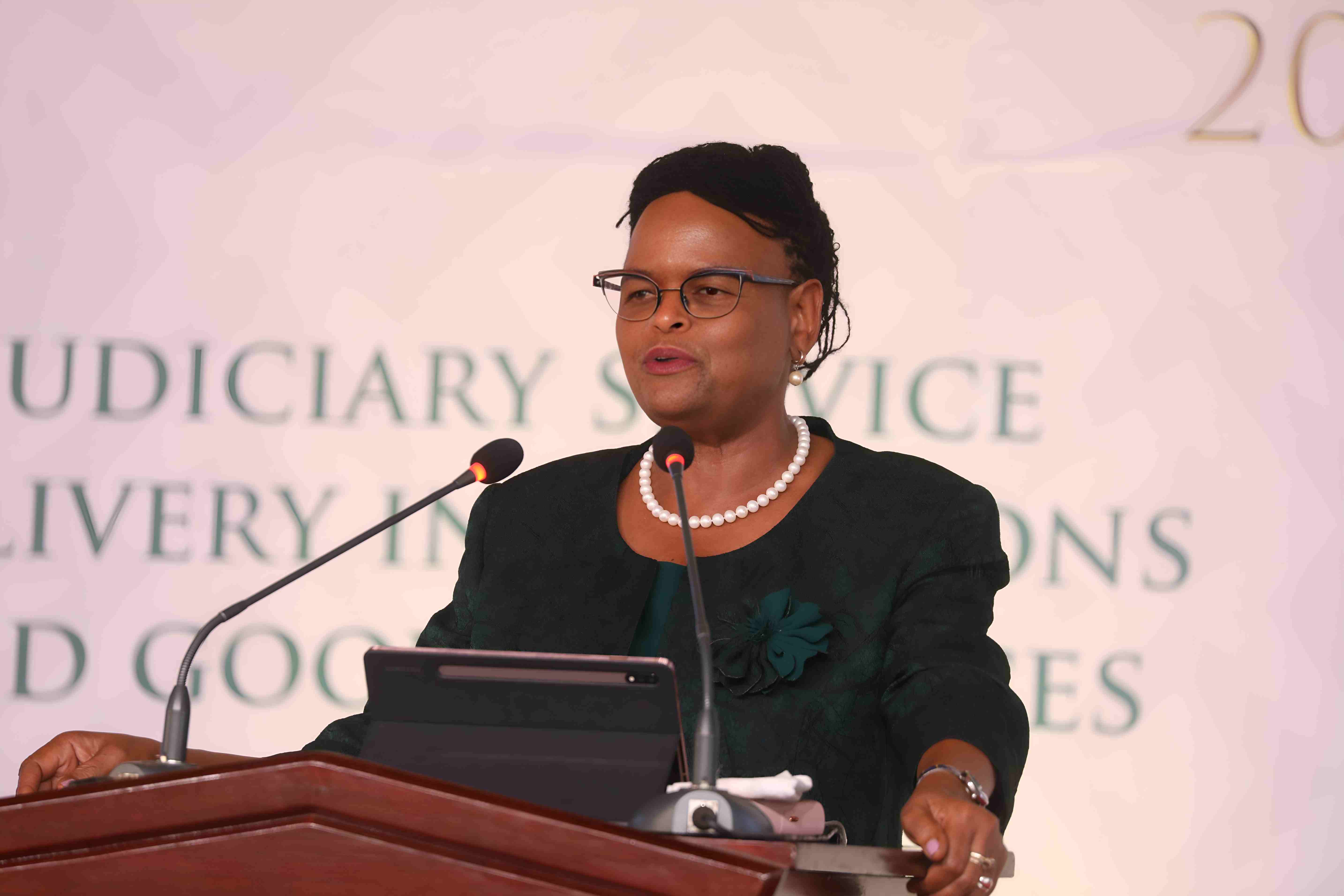
Chief Justice Martha Koome, speaking at Tuesday’s launch, said the new structures and accompanying policies demonstrate the Judiciary’s commitment to a safe and respectful environment for all staff and court users.
“Today marks a defining and historic moment in the life of our Judiciary. We are not just launching institutions and policies, but reaffirming our collective commitment to dignity, safety, inclusion and well-being,” Koome said.
She explained that the EPU will offer a professional and secure channel for handling complaints, emphasizing that accountability is compulsory and that no one should be forced into silence.
“The EPU provides a confidential, professional and trusted mechanism for reporting and addressing misconduct, whether affecting staff or court users. It reinforces the message that no one should be silenced and that accountability is not optional. Accountability is mandatory,” she added.
Koome also noted that the units and policies align with the Social Transformation Through Access to Justice (STAJ) Blueprint, especially Outcome II, which highlights employee wellbeing as central to performance, integrity, and public confidence in the Judiciary.
“Under STAJ, we are called to build not only efficient courts, but a humane institution where every Judge, Judicial Officer, and judicial staff can serve without fear, discrimination or harassment and with the assurance that their wellbeing matter. The establishment of the Employee Protection Unit gives life to these commitments,” she said.
She added that the reforms demonstrate the Judiciary’s integrity, showing that protecting employees strengthens public trust and reinforces its role as a defender of constitutional values.
The EPU will operate under the Chief Justice’s office, focusing on sexual harassment investigations, providing safe and confidential reporting mechanisms, promoting proper conduct, safeguarding whistleblowers, and supporting the implementation of gender affirmative action policies.
GIDU will lead diversity and inclusion initiatives, gender mainstreaming, and affirmative action to ensure compliance with the two-thirds gender rule in Judiciary staffing.
Judiciary leaders welcomed the reforms, describing them as long overdue. Justice Peter Mulwa, High Court Judge and President of the Kenya Magistrates and Judges Association, called the launch a milestone.
“This is not an administrative task; it is a moral promise that everyone in the Judiciary can work with safety, dignity, and respect,” Justice Mulwa said.
Justice Njoki Ndungu, Supreme Court Judge and Chairperson of the Employee Protection and Inclusivity Committee, said the launch signals the beginning of full implementation of the Sexual Harassment Policy, Gender Mainstreaming Policy, and Affirmative Action and Diversity Policy.
She highlighted Section 6 of the Employment Act, which provides a clear legal basis for addressing harassment, including by colleagues or single incidents that create hostile work conditions.
“Section 6 of the Employment Act provides one of the clearest statutory foundations for addressing sexual harassment in the workplace, adopts a broad definition, recognising that harassment can come from employers, their representatives, or even fellow employees, and that even a single incident can poison the workplace,” she said.
“It recognises that harassment is not only about abuse of authority but also hostile work environments created by colleagues. The launch today marks the beginning of a journey towards the full implementation of the Sexual Harassment Policy, the Gender Mainstreaming Policy, and the Affirmative Action and Diversity Policy. These are not optional add-ons. They are not simply desirable. They are mandatory commitments to justice, equality and dignity in every space we occupy.”
Chief Registrar Winfred Mokaya underscored the importance of clear structures, disciplined follow-up, and ongoing oversight to ensure success. She said the recent staff census will help establish a baseline for achieving an inclusive and safe workplace.
“We will work closely with the Units to ensure they are adequately resourced to operate optimally. We have taken note of areas requiring implementation refinement and periodic review. Most fundamentally, we have identified the need to adjust our data collection tools to capture relevant gender and inclusivity data internally and externally,” Mokaya said.
Justice Stephen Githinji, High Court Judge and member of the Employee Protection and Inclusivity Committee, added, “The process is not meant to scare people; it is meant to deter. Gender sensitive monitoring mechanisms will be developed and a robust database to track the implementation.”































Comments
Sign in with Google to comment, reply, and like comments.
Continue with Google