Health Ministry sounds alarm on unsafe water, poor hygiene

The Ministry of Health has warned that urgent interventions are needed from both national and county governments to safeguard households and ease the growing pressure on hospitals.
Rising cases of preventable illnesses are putting a heavy strain on Kenya’s health facilities, as unsafe water, poor hygiene, and inadequate sanitation continue to fuel disease outbreaks nationwide.
The Ministry of Health has warned that urgent interventions are needed from both national and county governments to safeguard households and ease the growing pressure on hospitals.
Speaking on Wednesday during the Epuka Uchafu, Afya Nyumbani stakeholder forum in Nairobi, Public Health Principal Secretary Mary Muthoni highlighted the direct link between poor sanitation, unmanaged waste, and the increase in treatable illnesses such as diarrhoea, cholera, typhoid, malaria, respiratory infections, and malnutrition in children.
Muthoni explained that beyond the human toll, the financial impact is huge, costing the country billions of shillings annually in medical bills, lost productivity, environmental harm, and premature deaths.
“Poor hygiene, unsafe water, weak sanitation systems, and unmanaged waste continue to fuel diarrhoeal diseases, cholera, typhoid, malaria, respiratory infections, and childhood malnutrition, placing avoidable pressure on health facilities and public resources,” she said.
She stressed that preventing diseases before they occur remains the most effective and economical investment for the health sector.
The PS described the Epuka Uchafu, Afya Nyumbani initiative as a nationwide programme anchored in Primary Health Care Networks and implemented through Community Health Promoters. The programme encourages safe water usage, proper disposal of waste, improved sanitation, hygiene, and overall household environmental cleanliness.
Muthoni urged counties to strengthen coordination with national efforts, expand access to protected water sources, implement efficient waste collection and segregation systems, ensure WASH facilities are functional in schools and public institutions, and run continuous awareness campaigns in local languages.
“Stakeholders must align resources and actions to reduce preventable illness, protect household incomes, ease pressure on health services and accelerate Kenya’s journey towards Universal Health Coverage,” she said.
The Ministry also highlighted progress in malaria control, reporting a drop in national incidence from 104 to 72 cases per 1,000 people between 2023 and 2025.
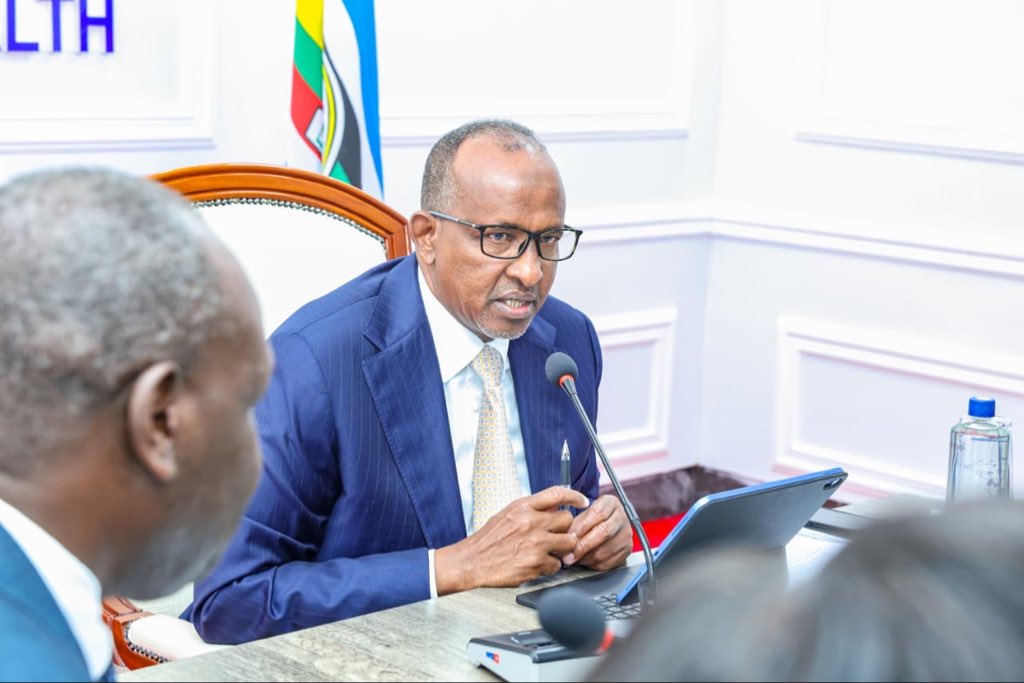
Health Cabinet Secretary Aden Duale said that integrated service delivery, supported by over 107,000 Community Health Promoters, has strengthened early detection, treatment adherence, referrals, and adoption of preventive measures at household level.
“This approach has enhanced child survival under five and maternal health outcomes, particularly in high-burden counties,” he said.
Under the Kenya Malaria Strategy 2023–2027, the government aims to reduce malaria incidence by 80 per cent, cut mortality by 90 per cent, and halt local transmission in selected counties by 2028.
Duale called for closer collaboration with ALMA to accelerate progress under the Universal Health Coverage framework. He highlighted support for the Reproductive-Age Mortality Survey, expansion of the Rapid Results Initiative to boost planning, budgeting, and accountability for maternal and newborn outcomes, and partnerships to mobilise sustainable funding for essential health interventions.
“Strengthening data systems, accountability, and sustainable financing is critical to reducing maternal and newborn morbidity and mortality while advancing towards a malaria-free Africa,” Duale said.
Kenya’s fight against malaria is further reinforced by broader health reforms such as the Digital Superhighway Programme, Social Health Authority, Practice 360, and the Green Charter. These initiatives aim to deliver efficient, affordable, and equitable healthcare while maintaining momentum toward Universal Health Coverage.



Comments
Sign in with Google to comment, reply, and like comments.
Continue with Google