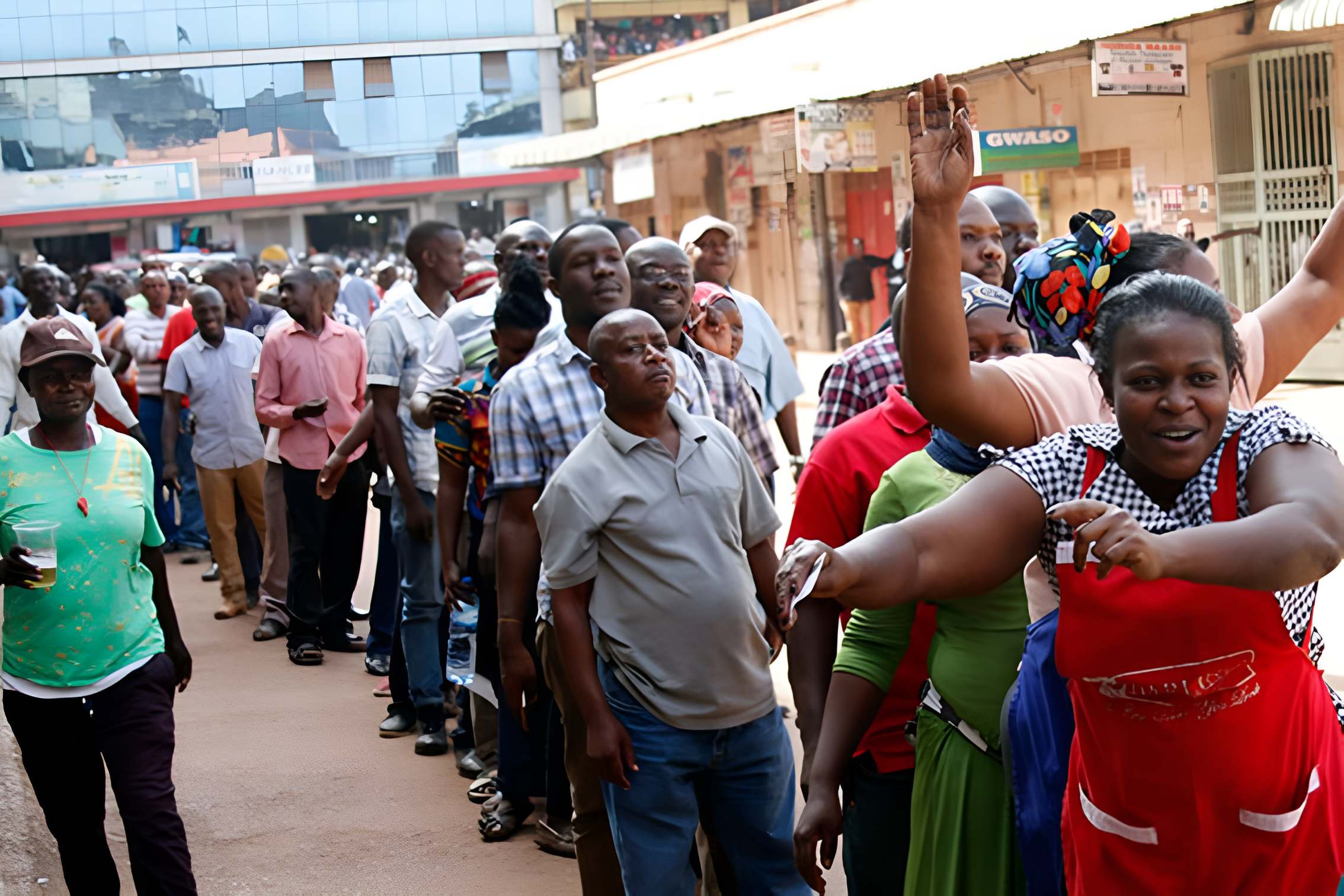
As Uganda prepared for another round of national polls, a coalition of Pan-African civil society organisations called on the international community to reject any results, pointing to widespread irregularities, intimidation of voters, and targeted attacks on opposition figures.
In a statement issued on Wednesday, the groups condemned the Electoral Commission of Uganda (EC) for actions they say have seriously compromised the fairness and transparency of the elections.
The coalition accused the EC of multiple failures, including tampering with the voter register, favouring ruling party candidates during nominations, and setting up polling stations in military-controlled areas.
These measures, they argued, created an environment where credible voting is impossible. They also highlighted that President Yoweri Museveni, the key beneficiary of the EC’s conduct, had admitted the commission oversaw a flawed 2021 election in which he lost more than 2.7 million votes.
“We strongly condemn the Electoral Commission of Uganda (EC) for its gross incompetence and apparent complicity in sabotaging the democratic process. There is a general consensus across the political aisle that the Electoral Commission cannot preside over a credible election. Even President Museveni, the main beneficiary of its fraudulent processes, claims the Electoral Commission presided over a 2021 election in which he lost over 2.7 million votes. The commission has demonstrated a total lack of preparedness and independence,” the statement reads.
According to the groups, the voter register is riddled with flaws. Deceased people remain listed as eligible voters, while young people and opposition supporters are excluded.
They also flagged duplicate entries and accused the EC of artificially boosting National Resistance Movement (NRM) membership to 20.1 million of 21.6 million registered voters.
The coalition also criticised the EC for introducing procedural changes at the last minute, including directing voters to leave polling stations immediately after voting—a move that goes against legal provisions.
They further condemned the rushed introduction of biometric voter verification technology without public consultation or proper legal approval.
“The Electoral Commission is abusing the law by issuing illegal orders to citizens to leave polling stations after voting, despite the law allowing them to stay. While the law requires providing polling station lists at nomination, the Electoral Commission was still requesting supplementary budgets for new polling stations from Parliament months into the campaign,” the statement said.
Opposition candidates have faced severe disadvantages. More than 20 National Unity Platform (NUP) candidates were removed from the ballot after investing heavily in campaigns, while over 20 NRM candidates were declared unopposed. The EC was also accused of withholding the final voter register until the last minute, preventing meaningful verification and audits.
Polling stations within military and police facilities further restricted oversight, the coalition said, creating opportunities for fabricated “100 per cent turnout” reports in favour of the ruling party.
The statement also condemned the government for criminalising dissent, noting that election observer accreditation has been handed to the military-led Crime Intelligence Department, violating the African Charter on Democracy, Elections and Governance.
“Following the 2021 ban on joint election monitoring, the regime has transferred observer accreditation to the military-led Crime Intelligence Department. This violates the African Charter on Democracy, Elections and Governance. Simultaneously, the government is criminalising social media engagement,” it read.
The coalition cited arrests of over ten activists who criticised the President, his family, or the Speaker of Parliament, Anita Annet Among, as evidence of state repression. They also highlighted raids on NUP offices and seizure of equipment, while NRM officials accused of corruption have faced no consequences.
The groups urged the East African Community, democratic nations, and global bodies to reject any election results, warning that recognition would legitimise repression and administrative manipulation. They also demanded sanctions, travel bans for officials, and sustained monitoring over the next 48 hours to protect citizens and opposition participants.































Comments
Sign in with Google to comment, reply, and like comments.
Continue with Google