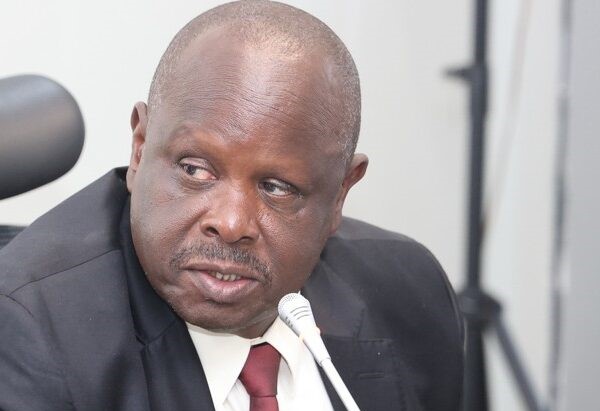
The Judicial Service Commission has refused to intervene in a complaint targeting its vice chair Isaac Rutto, saying the issues raised are already being addressed by the courts and Parliament, and are therefore outside its authority.
In a letter dated February 4, 2026, and sent to Consumer Federation of Kenya Secretary General Stephen Mutoro, JSC Secretary Winfridah Mokaya explained that ongoing legal processes and a parliamentary review prevent the commission from taking action.
The communication comes after COFEK filed a petition requesting scrutiny of Rutto and fellow commissioner Omwanza Ombati’s conduct.
“The Commission considered your referenced letter and, upon deliberation, noted that the matter is currently pending before a court of law and is therefore sub judice. The Commission further observed that a petition has been lodged with the National Assembly pursuant to the provisions of Article 251 of the Constitution, thereby placing the matter outside the purview of the Judicial Service Commission,” the letter reads.
The letter was also copied to the JSC chairperson.
COFEK had earlier raised concerns about Rutto’s attendance at political events and Ombati’s alleged partiality during judicial interviews, warning that such conduct could shake public confidence in the commission’s neutrality.
In its letter dated January 27, 2026, addressed to JSC Chairperson Martha Koome, the federation argued that the actions could breach constitutional and statutory standards for public officers.
Rutto came under scrutiny after attending a United Democratic Alliance National Governing Council meeting at State House, Nairobi.
Critics argued that his participation blurred the line between judicial independence and political activity, raising questions about whether senior judicial officials can openly engage with political parties.
Social media users said Rutto’s actions were inappropriate, with some calling for him to step down or for reforms to prevent such conflicts in the future. One comment suggested that constitutional provisions require a JSC member to recuse themselves from the commission if they intend to pursue political involvement, especially while judicial interviews are ongoing.
Another observer noted that no commissioner has previously been so publicly linked to a political party, warning that the move could erode public trust in the Judiciary.
COFEK’s letter cited Articles 10, 73, 75, and 232 of the Constitution, as well as the Leadership and Integrity Act, 2012, and the Public Officer Ethics Act, highlighting the commission’s key role in safeguarding judicial independence under Article 172.
“Given the central role of the JSC in safeguarding judicial independence under Article 172, even the appearance of partisan alignment by a Commissioner may undermine public confidence in the Commission’s impartiality. We, therefore, respectfully urge the Commission to consider whether this conduct falls below the constitutional threshold for a JSC member,” COFEK wrote.
Regarding Ombati, COFEK said there is credible information suggesting that a sitting Court of Appeal judge may have been treated unfairly during recent interviews, potentially linked to a previous ruling unfavourable to him.
“We have credible information suggesting that, during a recent interview process for Judges of the Court of Appeal, a candidate (who is a sitting Judge) may have been adversely treated in circumstances giving rise to a reasonable apprehension of bias, allegedly linked to a prior judicial decision unfavourable to Mr Ombati. We do not claim to represent that judicial officer, nor has a complaint been formally lodged with us by him; however, the integrity of the judicial appointments process is a matter of immense public interest,” the federation said.
The federation added that if these allegations are verified, they would amount to violations of Articles 47, 50, 73, and 75 of the Constitution, the Judicial Service Act, the Leadership and Integrity Act, and the legal principle nemo judex in causa sua, which governs impartiality and recusal standards.































Comments
Sign in with Google to comment, reply, and like comments.
Continue with Google