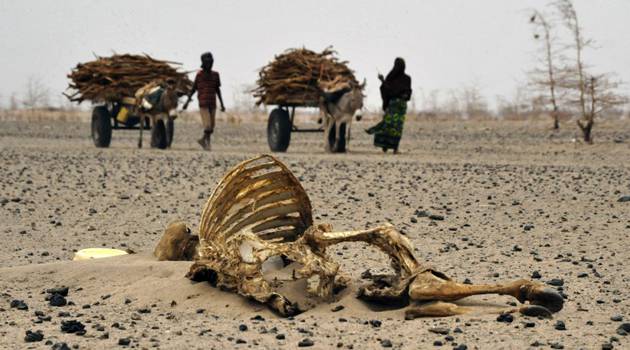
The Cabinet has authorised the release of Sh4.1 billion to scale up drought response interventions as conditions continue to deteriorate in several parts of the country, leaving millions of Kenyans facing acute food insecurity.
According to the Cabinet, the drought situation has worsened rapidly since January 2026 following the failure of the October–December 2025 short rains.
The impact is being felt across both traditionally arid regions and pockets of counties outside the arid and semi-arid areas, raising concern over the potential spread of humanitarian needs if urgent measures are not taken.
“On the drought in some parts of the country, the Cabinet authorised the release of Sh4.1 billion to scale up response interventions across affected regions,” the Cabinet said, noting that the funding is intended to support immediate life-saving actions.
An estimated 3.3 million people are currently facing acute food insecurity, a figure projected to rise to 3.6 million by June 2026 if additional interventions are not implemented.
The Cabinet warned that without swift action, the situation could escalate further, stretching already constrained relief resources.
Several counties are already experiencing severe conditions. Mandera, Wajir, Kwale and Kilifi have been classified in the Alarm phase, while 12 other counties are in the Alert phase, most of them on a worsening trajectory.
These classifications reflect deteriorating food security, water shortages and rising vulnerability among affected populations.
Acute malnutrition continues to increase, with children and mothers among the most affected. Over 810,000 children and approximately 104,000 pregnant and lactating women are currently suffering from acute malnutrition, alongside other vulnerable groups.
Health and nutrition services in some of the hardest-hit areas are under strain as cases continue to rise.
“Drought conditions have deteriorated rapidly since January 2026 following the failure of the October–December 2025 short rains,” the Cabinet said, highlighting the climatic shock that has driven the current crisis.
The newly approved funds will supplement allocations made in December 2025 and January 2026, which were used to support relief food distribution, logistics and limited non-food assistance.
However, the Cabinet cautioned that existing relief stocks are expected to last only two to three weeks, underscoring the urgency of scaling up support to prevent further deterioration.
Beyond food insecurity, the Cabinet expressed concern over the broader socio-economic impacts of the drought. Livestock conditions have worsened significantly, with increased livestock deaths and distress sales reported in affected areas.
These losses are undermining household livelihoods, particularly among pastoralist communities that rely heavily on livestock for income and food.
“Current stocks are expected to last only two to three weeks, underscoring the urgency of further support,” the Cabinet warned, signalling the need for sustained and coordinated intervention.
The Cabinet also flagged rising human-wildlife conflict linked to competition over scarce water and pasture, as well as the risk that the situation could escalate into an emergency phase if conditions continue to deteriorate.
The Government said the additional funding is aimed at averting a deeper humanitarian crisis while longer-term measures are considered to build resilience against recurrent droughts.
The scaled-up response is expected to focus on food assistance, nutrition support, water and livestock interventions, and coordination with county governments and humanitarian partners to reach the most affected populations.































Comments
Sign in with Google to comment, reply, and like comments.
Continue with Google