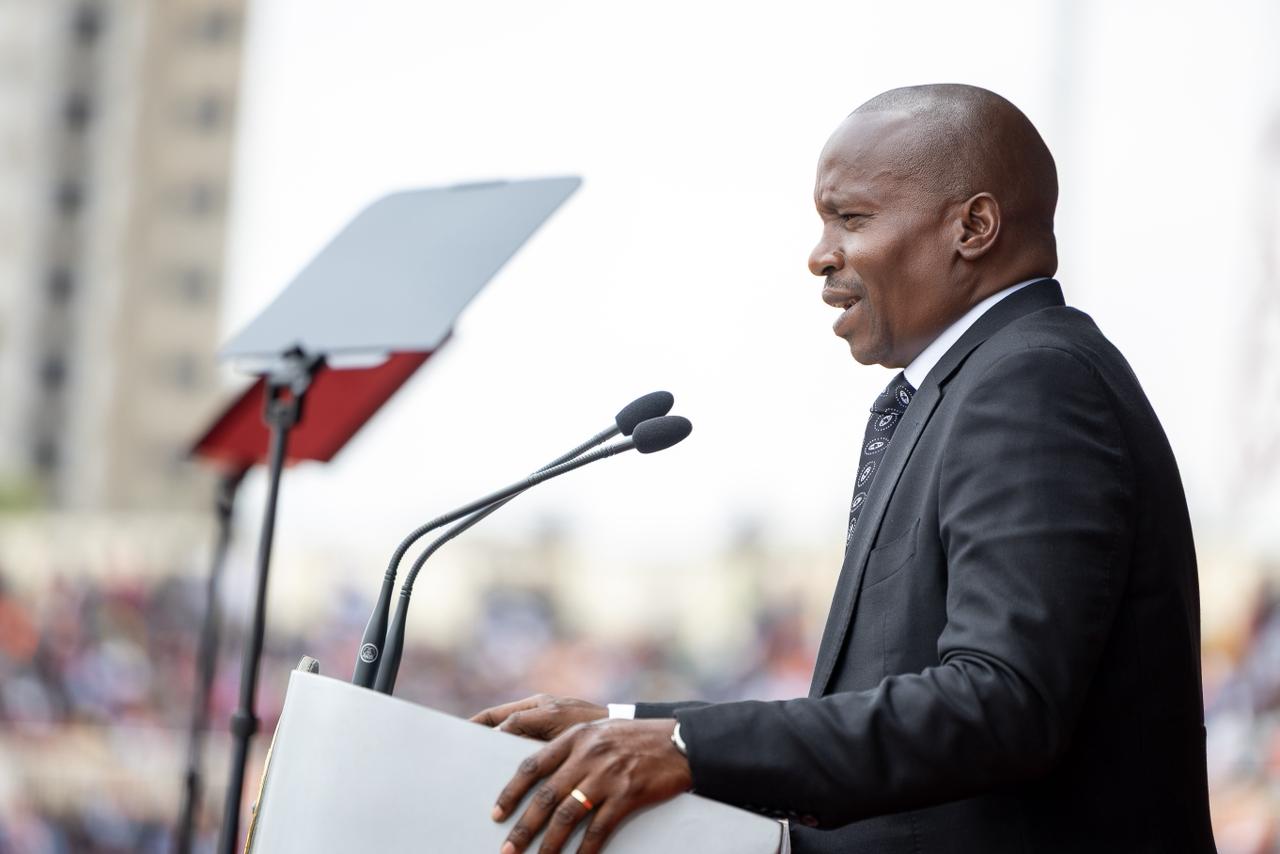
Only three months into the 2025/26 financial year, Deputy President Kithure Kindiki’s office has already consumed nearly half of its allocated funds, raising attention on the pace of expenditure.
Treasury figures show that by the end of September 2025, the office had spent Sh1.34 billion out of its Sh2.97 billion recurrent budget, leaving just Sh1.63 billion for the rest of the year.
The office’s total allocation in the national budget was Sh3.07 billion, with Sh100 million set aside for development projects, and the rest for day-to-day operations. If the current spending trend continues, officials warn the budget may be fully utilised by March 2026 unless adjustments or supplementary approvals are made.
Records indicate that the rate of expenditure under Kindiki is much higher than that of his predecessor, former Deputy President Rigathi Gachagua, who by September 2024 had spent only Sh331.8 million, representing 12.8 per cent of his annual recurrent budget.
The recurrent budget for the Deputy President’s office covers salaries, staff allowances, official travel, office operations and the management of government initiatives under his mandate. Since assuming office on November 1, 2024, Kindiki has rolled out a series of county-focused programmes aimed at boosting economic participation among local communities.
These programmes have included workshops on business development, mobilising cooperatives, and small enterprise support in counties such as Meru, Nyeri, Bungoma, Kisii, Narok and Kwale.
Despite the large outlay, a detailed account of how the Sh1.34 billion has been distributed remains unavailable, leaving unclear what portion directly supports empowerment programmes versus administrative costs.
Kindiki has defended the initiatives, emphasising their importance in lifting ordinary citizens and enhancing grassroots economic opportunities.
“The economy is built from the bottom going up. That is why we are empowering those at the bottom of the economic pyramid,” Kindiki said during a recent county visit.
He stressed that these efforts complement wider government projects in infrastructure, energy, healthcare, water supply, and agriculture.
“As we expand roads, increase electricity connections, improve medical services, and boost farm output, we remain committed to supporting ordinary wananchi with resources that improve their livelihoods,” he added.