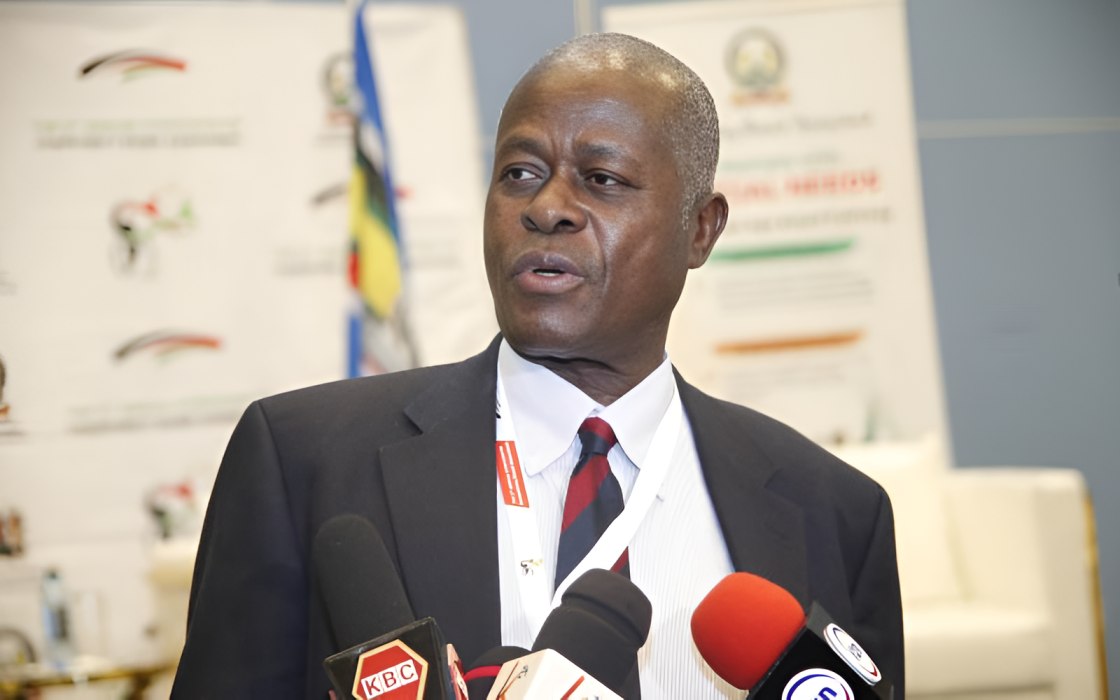
Kenya National Examinations Council (KNEC) Chairperson Prof. Julius Nyabundi has reaffirmed the Council’s commitment to maintaining the integrity and credibility of national examinations, noting that no paper leakages have been reported so far.
Speaking during a monitoring exercise in Kisumu on October 27, 2025, Prof. Nyabundi said KNEC has put in place robust security and logistical measures to safeguard the ongoing national exams and ensure fairness for all candidates.
“I’m glad to say that up to today, there has been nobody who has come to us with any leakage. So far, there has been no leakage at all in this examination, and that is the way we must continue—by maintaining the integrity of the papers,” he said.
Prof. Nyabundi highlighted several reforms designed to enhance the credibility of the examination process, including the double collection of exam papers.
“We introduced picking the papers twice, what is done in the morning is picked in the morning, and what is done in the afternoon is picked in the afternoon,” he explained. “This was an important measure to limit the time for exposure of the papers before exam time.”
He also revealed that KNEC has reduced the number of security officers present within examination centers to minimize disruptions while ensuring security remains intact.
“We are trying to reduce the amount of security presence in examination centers,” Nyabundi said. “The police will accompany the exam containers and buses, but in most cases, they don’t need to stay inside the centers.”
To ensure fairness during marking, KNEC has introduced additional safeguards, such as anonymizing scripts after grading to prevent bias.
“Each examination paper has the photographs of candidates, but once it’s marked, it is cut off so that the markers are not in any way disadvantaged or biased,” the KNEC Chair explained.
He further emphasized that only authorized officials — invigilators, supervisors, and center managers — are allowed inside the exam centers. “The exam is not for the school; the school is only an exam center,” he said.
Prof. Nyabundi assured the public that KNEC remains vigilant and fully committed to ensuring that all examinations reach centers safely and are conducted under the highest standards of integrity.
A total of 3,424,836 students are taking national exams across the country, with 996,078 students sitting for the Kenya Certificate of Secondary Education (KCSE), 1,298,089 for the Kenya Primary School Education Assessment (KPSEA), and 1,130,669 for the Kenya Junior School Education Assessment (KJSEA).
The KCSE exams started on October 21 when the candidates sat the elective papers in French, German, Kenya Sign Language (practical skills), Arabic, Music, and Home Science, while the assessment commenced today, October 27, and will end on November 3.